IB Grades Explained: A Parent's Guide to the 1-7 Scale
Navigating the world of IB assessment can feel like learning a new language. Unlike traditional percentage-based systems, the IB uses a 1-7 grading scale that focuses on what a student knows and can do, rather than how they rank against their peers. This guide is designed to help you decode your child's grades and, more importantly, understand the teacher feedback that drives real improvement.
Think of this as your Rosetta Stone for IB assessment. By the end, you'll be able to:
- Understand precisely what each number on the 1-7 scale represents.
- See how individual subject grades combine to form the final score out of 45.
- Translate teacher feedback into actionable steps for your child.
- Shift conversations from "what score did you get?" to "what did you learn from the feedback?".
Part 1: Decoding the IB 1-7 Scale
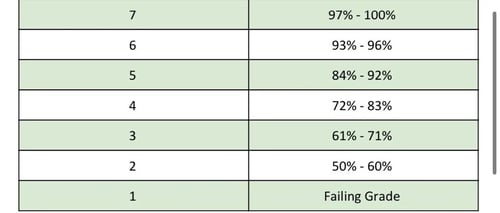
The first thing to know is that the IB is a "criterion-referenced" system. This means students are measured against a set of predefined standards for each subject. A 7 in Physics in May session exams has the same standard of excellence as a 7 in Physics last November, regardless of how the rest of the cohort performed. This ensures consistency over time, global consistency, and fairness. Here’s what each grade means:
7: Excellent
This indicates an outstanding, thorough, and often insightful understanding of the subject. The student demonstrates strong analytical skills, grasps complex concepts, and can apply their knowledge creatively in new situations.
6: Very Good
A very strong performance. The student has a comprehensive command of the subject matter with only minor gaps or mistakes. Their analytical skills are competent, and they consistently meet the demands of the course.
5: Good
This signifies a solid and consistent grasp of the key concepts. While there might be occasional errors, the student is generally proficient and has a good foundation in the subject.
4: Satisfactory
A 4 represents an acceptable level of understanding that meets the basic standards of the course. The student can grasp most concepts but may show inconsistencies or need development in certain areas. This is generally considered a basic passing grade.
3: Mediocre
This shows a limited understanding of the subject. The student may struggle with key concepts and often needs to improve their comprehension or application skills.
2: Poor
Indicates a superficial grasp of the material, with significant gaps in knowledge. A student at this level will require substantial support to meet the minimum course requirements.
1: Very Poor
The lowest grade, showing very rudimentary understanding and minimal achievement of the course objectives.
Part 2: The Big Picture - Calculating the Final 45
The famous "45" is the maximum possible score for the IB Diploma. It's a combination of subject performance and the IB Core. Here’s how it adds up:
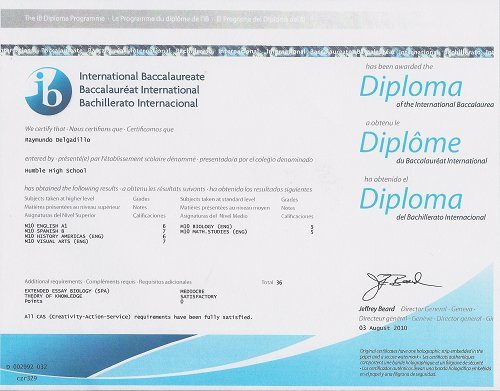
- Subject Scores (Max 42 points): Each of the six subjects (Standard and Higher Level) is graded on the 1-7 scale. The maximum combined score a student can achieve from their subjects is therefore (6 subjects x 7 points) 42 points.
- The Core (Max 3 Bonus Points): The remaining 3 points come from the Theory of Knowledge (TOK) essay/exhibition and the Extended Essay (EE). These are graded from A to E. The combination of these two grades determines the ''bonus points'', according to the official IB matrix (at least an A and B grade in each is required for the full 3 points).
- CAS (Pass/Fail): Creativity, Activity, Service (CAS) is the third core component. It does not contribute points, but a student must successfully complete all CAS requirements to be awarded the Diploma.
The Lanterna Tip: To be awarded the IB Diploma, a student generally needs a minimum of 24 total points and must satisfy all other conditions (like completing CAS). However, competitive universities often look for scores of 38-40+, with particular attention paid to the grades in Higher Level (HL) subjects.
Part 3: Beyond the Numbers - Interpreting Teacher Feedback
A grade is a snapshot in time; the feedback is the roadmap for improvement. IB teachers provide detailed comments that are directly linked to the assessment criteria. Learning to interpret this feedback is the key to growth.
| Type of Feedback | What It Sounds Like | What It Means & Next Steps |
|---|
| Content-Based | "Your analysis is shallow" or "Lacks supporting evidence." | Meaning: The student is describing what happened but not explaining why it's significant in context.
Action: Encourage them to ask "so what does this mean?" after every point they make and to link their evidence back to their main argument. |
| Structural | "The essay jumps between ideas" or "Lacks a clear line of argument." | Meaning: The work is disorganised and hard to follow.
Action: Work on outlining before writing. Focus on strong topic sentences for each paragraph that clearly link to the thesis statement. |
| Technical | "Incorrect citation format" or "Inconsistent use of terminology." | Meaning: The student is losing marks on presentation and academic conventions.
Action: This is often the easiest feedback to fix. Review the required citation style (e.g., MLA, APA) and create a glossary of key subject terms for each subject. |
Think TOK to aim for 7: the criteria descriptions for work scoring 7 in any subject often imply concluding assignments like Internal Assessments with the critical thoughts and implications that TOK study in the Areas of Knowledge develops.
Part 4: A Parent's Action Plan for Supporting Growth
Your role is not to be a supplementary teacher, but a supportive coach. Use these strategies to help your child turn feedback into fuel for success.
- Read the Rubric Together: This is what the examiner will be using. Ask the teacher for the assessment rubric. Sit down with your child and highlight the descriptors for the next level up. This makes the target clear and shows them exactly what "excellent" looks like compared to ''very good''.
- Look for Patterns: Review feedback from a few different assignments. Is the same point coming up? A recurring comment like "needs more depth" points to a core skill that needs focused practice.
- Encourage Self-Advocacy: The best person to clarify feedback is the teacher who gave it. Encourage your child not to be shy in discussing their feedback. This can begin with booking a 10-minute meeting to ask questions like, "Could you show me an example of what a more developed analysis looks like here?".
- Celebrate the Process, Not Just the Score: Praise the effort of redrafting an introduction based on feedback or the courage to try a new lab technique. Emphasising a growth mindset reduces anxiety and builds longer-term learning, plus the resilience needed for the ongoing demands of the IB.
-1.png?width=150&height=56&name=logotype_lanterna_education_blue%20(4)-1.png)

.png)