Decoding IB Results: A Parent's Guide
As results day approaches, the grades, points scores and acronyms of the International Baccalaureate can feel overwhelming. What does a '6' in HL Maths really mean? How are the 45 points calculated? And what do these scores mean for university applications?
This guide is designed to help you demystify your child's IB results. We'll break down the scoring system, explain what it takes to pass, and provide context for what universities are looking for. Think of this as your handbook for navigating one of the most important days of child's IB journey.
By using this guide, you will be able to:
- Understand the 45-point scoring system, from individual subject grades to the crucial 'core' points.
- Distinguish between a passing score and a competitive one for top universities.
- Know the minimum conditions required to be awarded the IB Diploma.
- Feel prepared and confident in supporting your child on results day and beyond.
Part 1: The Anatomy of an IB Score (Out of 45)
The maximum score in the IB Diploma Programme is 45 points. This total comes from two key areas: the six subjects and the DP Core.
A) The Six Subjects (Maximum: 42 Points)
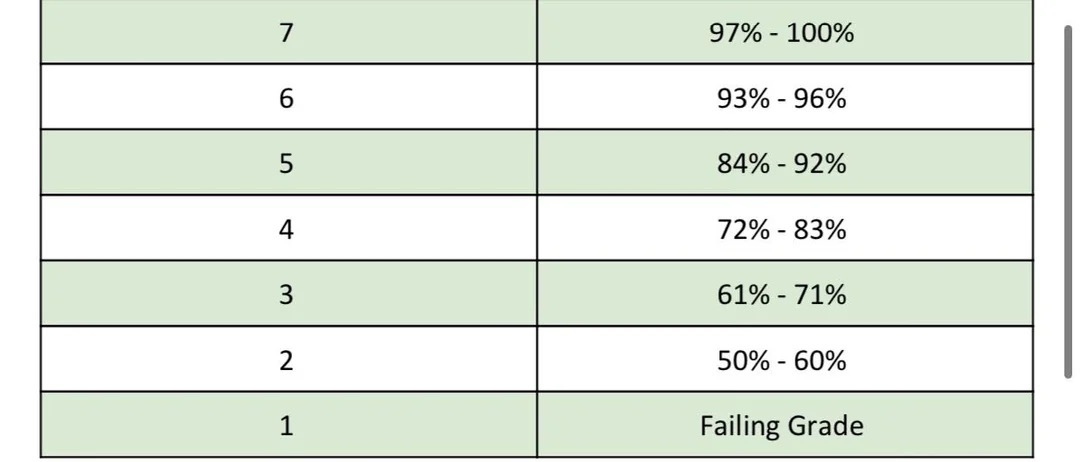
Your child takes six subjects, usually three at Higher Level (HL) and three at Standard Level (SL). Each subject is graded on a scale of 1 to 7. Here's a simple breakdown of what those grades mean:
| Score | Descriptor | What It Means for a Student |
|---|
| 7 | Excellent | Exceptional, deep understanding and mastery of the subject. |
| 6 | Very Good | Strong performance with a thorough grasp of the material. |
| 5 | Good | A solid, confident performance that meets all key objectives. |
| 4 | Satisfactory | Meets the basic requirements; generally considered a pass. |
| 3 | Mediocre | Shows some knowledge but has distinct gaps in understanding. |
| 2 | Poor | Indicates significant weaknesses and a lack of understanding. |
| 1 | Very Poor | Shows minimal understanding of the course content. |
Grades are determined by a combination of a student's Internal Assessments (IAs) and their final external exams. IA's can be broadly defined as coursework, either a report or a presentation (dependent on the subject), which are graded by teachers and moderated by the IB. For most subjects, the final exams account for 70-80% of the overall grade.
B) The DP Core (Maximum: 3 Bonus Points)
The remaining 3 points come from two of the three core components: the Extended Essay (EE) and Theory of Knowledge (TOK). The third component, CAS (Creativity, Activity, Service), has a pass/fail requirement but doesn't contribute to the bonus points score.
- Extended Essay (EE): A 4,000-word independent research paper. Graded A to E.
- Theory of Knowledge (TOK): Assessed via an essay and an exhibition. Graded A to E.
The combination of these two grades determines the bonus points. For example, getting an A in both the EE and TOK will earn the full 3 bonus points. Poor performance in both (i.e., an E in either component), means the student cannot be awarded their IB Diploma, regardless of what they have scored in their chosen subjects. We will explain this in more depth in the following section.
Here's a table to show how the bonus points are calculated:
Part 2: What Does It Take to Pass the Diploma?
"Passing the IB" isn't just about the final points score or chossen subject grades. In fact, students must meet several conditions to pass. While the most well-known rule is scoring at least 24 points, here are the other key hurdles:
- CAS must be completed.
- No grade of '1' in any subject.
- No more than two grades of '2' (HL or SL).
- No more than three grades of '3' or below (HL or SL).
- A minimum of 12 points from HL subjects is required for students taking three HLs.
- A minimum of 9 points from SL subjects is required for students taking three SLs.
- The student must not have received an 'E' grade for either Theory of Knowledge or the Extended Essay.
The Lanterna Tip: A student could score 28 points but still fail the diploma if, for example, they get an 'E' on their Extended Essay or a '1' in an SL subject. It's a holistic assessment, not just a numbers game.
Part 3: IB Scores & University Admissions
So, what's a "good" score? It depends entirely on the university and course. The global average IB score hovers around 30 points. Here is a general guide to what different scores can mean for university prospects.
| University Tier | Typical IB Score Range | What to Expect |
|---|
| Ivy League, Oxbridge, LSE | 38 - 42+ | Highly competitive. Offers almost always specify 7s and 6s in relevant Higher Level subjects (e.g., "41 points with 7,7,6 at HL"). |
| Top Russell Group (UK), Top US/Canadian Universities | 34 - 38 | A very strong and competitive score range. King's College London or Edinburgh often fall in this range. Subject-specific grades are crucial. |
| Good UK/European/Australian Universities | 30 - 34 | A solid score that opens doors to many excellent universities worldwide. This is comfortably above the global average. |
| Meeting Diploma Requirements | 24 - 29 | This score will secure the IB Diploma and meets the entry criteria for many universities, although options may be more limited. |
Beyond the Total Score: Remember, universities (especially in the US) often conduct a holistic review. They look at the rigor of the subjects chosen (e.g., Maths HL vs SL), the Extended Essay topic, CAS activities, recommendation letters, and the personal statement. The total point score is just one part of a much bigger picture.
Part 4: Your Role on Results Day: A Parent's Checklist
Results day is an emotional rollercoaster, so your reaction and support is crucial. Here’s how you can prepare to be the best support system possible.
- Stay Calm, Be a Mirror: Your child will likely mirror your reaction. Whether the results are better or worse than expected, a calm and steady presence provides a safe space for them to process their own emotions.
- Celebrate the Effort, Not Just the Number: The IB is a two-year marathon. Acknowledge the incredible hard work, resilience, and dedication it took to get to this point. The skills they've learned are far more valuable than a single number.
- Give Them Space: Your child might want to talk to their friends before they talk to you. Let them process the news on their own terms. Be available, but don't pressure them for an immediate deep discussion about "what's next."
- Have a Plan B (and C) Ready: Before results day, familiarize yourself with university clearing processes (UK), alternative pathways, or gap year options. Knowing there are other great options available can significantly reduce the pressure and anxiety for everyone.
- Maintain Perspective: This one set of results does not define your child's intelligence, worth, or future success. The IB has equipped them with critical thinking and time management skills that will serve them for life, no matter their path.
-1.png?width=150&height=56&name=logotype_lanterna_education_blue%20(4)-1.png)



.png)