Decoding the IB Report Card: A Guide for Students & Parents
When you get your first IB report card in your hands, it might look a little different from what you're used to. Although all schools report in their own way, in many it will contain terms like "Predicted Grades" and "ATL Skills," alongside the famous 1-7 scale. Don't worry, it's not as complicated as it seems. This guide is designed to break it all down, just like your tutor or teacher would, so you can understand exactly what you're looking at and how to use it to your advantage.
By the end of this guide, you'll be able to:
- Understand the critical role of Predicted Grades in university applications.
- Recognise the importance of ATL Skills as the foundation for "learning how to learn."
- Confidently interpret the IB 1-7 grading scale for each subject.
- See how the final IB score out of 45 is calculated and what makes a "strong" score.
Part 1: The All-Important Predicted Grades
This is probably the section that causes the most stress, and for good reason. Predicted Grades are one of the most significant parts of your IB journey, especially when it comes to planning for university.
What are they, exactly?
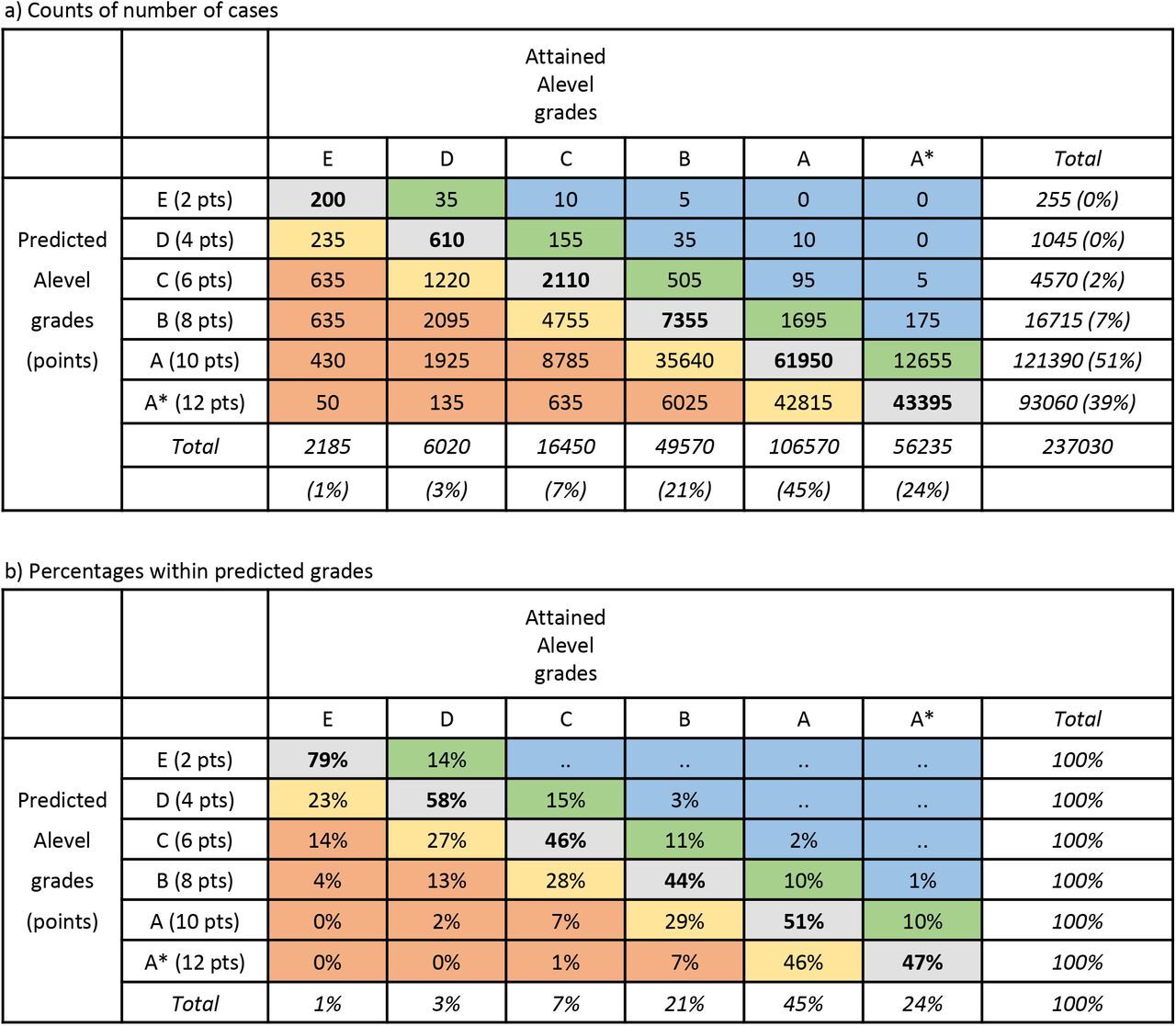
You can think of a Predicted Grade as your teacher's professional, evidence-based estimate of the final score you'll achieve in your May exams. It’s not just a random guess; it’s a holistic assessment based on your performance over time in various assessments.
How are they determined?
Your teachers look at a whole range of evidence to make their prediction as accurate as possible. The main factors include:
- In-Class Tests & Assignments: Consistent performance on regular ongoing assessments builds a solid picture of your understanding.
- Learning Trajectory: Are you showing improvement? Your effort and potential for growth are also considered.
- Mock Exams: This is often a big one. Your performance under exam conditions is a key indicator.
- Internal Assessments (IAs): The quality of your IA drafts shows your ability to handle major coursework.
Why Predicted Grades Matter So Much: For universities in the UK, Europe, the US, and Canada, your Predicted Grades are the main academic evidence they see. Conditional offers are made based on these predictions. Your goal is to ensure your final exam results meet or exceed these predictions to secure your university spot.
Part 2: Beyond the Numbers – The Approaches to Learning (ATL) Skills
You might see comments on your report about ATL skills. These are arguably the most important, long-term skills you'll develop during the IB. The programme isn't just about *what* you learn, but *how* you learn. These five skill sets are integrated into every subject.
Thinking Skills
This is your ability to think critically and creatively. It’s about asking "why," analysing arguments, and transfering or adapting knowledge and ideas instead of just memorising facts.
Communication Skills
How well do you express your ideas and understand others? This covers everything from writing clear essays and giving presentations to actively listening in class discussions.
Social Skills
This is all about collaboration. Are you effective in different roles in group projects? Can you listen to different perspectives and work with your peers to achieve a common goal?
Self-Management Skills
This is the big one for success. It’s your organisational skills, time management, and resilience. It's about meeting deadlines, staying motivated, and bouncing back from setbacks.
Research Skills
Crucial for your IAs and the EE. This is about finding reliable sources, citing them correctly, and evaluating information critically, rather than just taking the first thing you find on Google.
Part 3: The IB Scoring System Explained
The IB uses a very specific system to score your performance, from individual subjects all the way to your final diploma score.
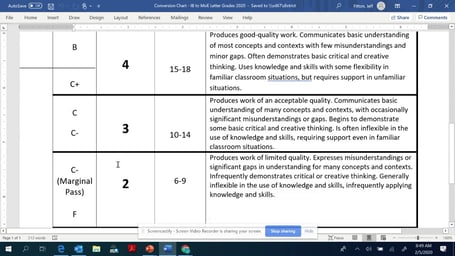
The 1-7 Scale for Subjects
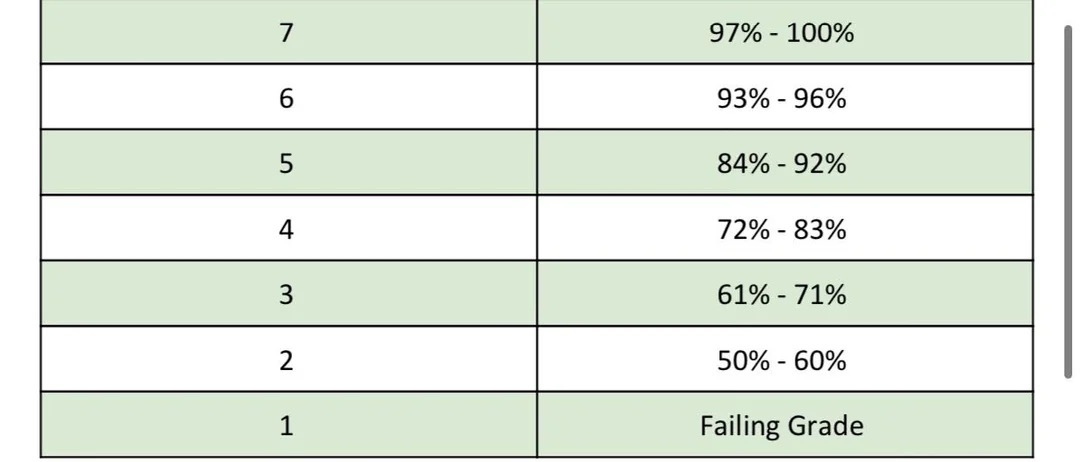
Each of your six subjects is graded on a scale from 1 (lowest) to 7 (highest). It's a criterion-referenced system, meaning your grade reflects your performance against set IB standards, not against the other students in your class.
| Grade | Descriptor | What it means |
| 7 | Excellent | You have an outstanding and comprehensive grasp of the subject. |
| 6 | Very Good | You show strong, thorough knowledge and mastery. |
| 5 | Good | A solid performance with a good understanding of key concepts. |
| 4 | Satisfactory | An acceptable, basic understanding that meets the minimum standard. |
| 3 | Mediocre | A limited understanding with noticeable gaps in knowledge. |
| 2 | Poor | A weak understanding of the course material. |
| 1 | Very Poor | Minimal understanding or engagement with the subject. |
From Subjects to the Final Score out of 45
Here’s how it all adds up:
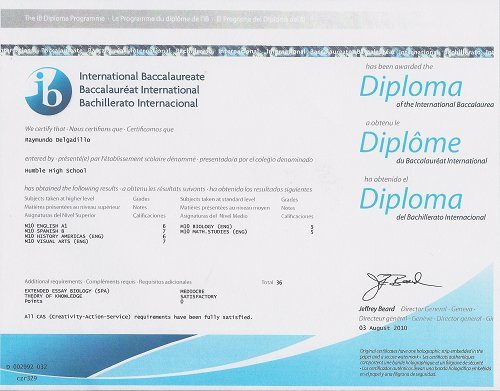
- Subject Points: You take 6 subjects. The maximum you can get in each is a 7. So, 6 subjects x 7 points = 42 maximum points.
- Core Points: Your grades in Theory of Knowledge (TOK) and the Extended Essay (EE) are combined using a matrix to give you up to 3 bonus points.
- Total: This gives you the final diploma score out of 45. (Note: CAS is a pass/fail requirement and doesn't contribute points).
So, what is a "Good" IB Score?
This is the million-dollar question! The answer depends entirely on your goals. Here's a general breakdown:
- 24 Points: This is the minimum score required to be awarded the IB Diploma.
- 30 Points: This is around the global average IB score. Achieving this means you're performing better than half of all IB students worldwide.
- 35-37 Points: This is a strong score that will make you a competitive applicant for a wide range of good universities globally.
- 38+ Points: This is the territory of highly competitive scores for top-tier universities (think Russell Group in the UK).
- 40-42+ Points: This is an elite score that puts you in the top ~10% of students globally. This is the range you should aim for if you're targeting places like Oxford, Cambridge, or Ivy League schools.
A Quick Tip: Remember that universities don't just look at the total score! They pay very close attention to your Higher Level (HL) subject scores. Getting a 6 or 7 in an HL subject relevant to your desired degree is often a specific requirement.
-1.png?width=150&height=56&name=logotype_lanterna_education_blue%20(4)-1.png)

.png)