-1.png?width=150&height=56&name=logotype_lanterna_education_blue%20(4)-1.png)
IB University Application Checklist
Get your free IB University Application Checklist: a timeline of key tasks (research, personal statements, recommendations) aligned with your IB schedule.
The Ultimate IB University Application Checklist & Timeline
Hey there! Juggling the demands of the IB Diploma while navigating the maze of university applications can feel like a full-time job. It’s one of the most stressful but exciting periods of your life. The key to staying sane and submitting applications you're proud of isn't working harder—it's working smarter.
Think of this guide as your personal roadmap. We've broken down the entire process into a clear, manageable timeline, from early research in DP1 to clicking 'submit' in DP2. This isn't just a list of dates; it's a strategic plan to help you leverage every part of your IB experience.
By using this guide, you will be able to:
- Master the timeline with a step-by-step plan from the start of DP1 to results day.
- Leverage your IB Core by effectively showcasing your EE, TOK, and CAS experiences.
- Secure powerful recommendations by knowing who, when, and how to ask.
- Craft a compelling Personal Statement that tells your unique academic story.
- Demystify deadlines across different countries and application systems (UCAS, Common App, etc.).
Part 1: The University Application Timeline
The secret to a stress-free application season is starting early. Don't wait until DP2. The groundwork you lay in your first year will make all the difference.
IB Year 1 (DP1): Laying the Groundwork
September - November: Exploration & Initial Research
- Start thinking broadly about your interests, potential career paths, and what you might want to study.
- Begin initial research into universities and programs. Don't worry about a final list yet—just explore.
- Focus on building a strong academic foundation in all your IB subjects. Your DP1 performance is crucial for your predicted grades.
- Engage meaningfully in your CAS activities. Universities want to see passion and initiative, not just box-ticking.
December - February: Deepen Academic Focus & Explore opportunities
- Choose your Extended Essay (EE) research area. Try to align it with a subject you're passionate about and might want to study further. Ask your teacher for help if needed.
- Review your IB subject choices. Do your HL subjects align with the entry requirements for courses you're considering?
- Look for leadership opportunities within your school or community.
March - May: Summer Planning & Skill Building
- Use your mock exam results to identify academic areas that need improvement.
- Plan a productive summer. Think about relevant work experience, internships, or online courses to develop new skills.
- If possible, plan university visits (virtual or in-person) during school breaks. If admission officers visit your school, take this opportunity to ask questions about the university application.
June - August: Intensive Research & Test Prep
- Conduct deep research on your target universities, noting specific entry requirements, application systems, and deadlines.
- Begin preliminary research and outlining for your Extended Essay (EE).
- If you're applying to the US, this is the ideal time to prepare for and take your first SAT or ACT.
IB Year 2 (DP2): Application Season
September: Finalize & Initiate
- Finalize your list of target universities. Be realistic, with a good mix of "reach," "match," and "safe" options.
- Meet with your teachers to discuss your predicted grades. These are vital for UK, US, and EU applications.
- Register for application systems like UCAS (UK) and the Common Application (US).
October: Early Deadlines & Essay Refinement
- Oct 15: This is the hard deadline for UCAS applications to Oxford, Cambridge, and most Medicine, Dentistry, and Veterinary Science courses.
- Finalize your main personal statement or essay. Get feedback from teachers and counselors.
- Ensure your chosen teachers have everything they need from you to write and submit their recommendations.
November - December: Main Application Submissions
- Nov 1 onwards: US Early Action (EA) and Early Decision (ED) deadlines typically begin.
- Submit your remaining applications, paying close attention to each unique deadline.
- Work on any supplemental essays required by US universities.
- Complete and submit financial aid and scholarship applications.
January: Final Deadlines
- Jan 1-15: Most US Regular Decision deadlines fall in this window.
- Jan 29: The UCAS "equal consideration" deadline for most other UK undergraduate courses.
- Deadlines for Canadian, EU, and Australian universities vary widely from January through the spring. Check each one!
February - April: Interviews & Offers
- Prepare for potential university interviews. Use your TOK skills to practice discussing your ideas critically.
- You'll start receiving offers! These may be conditional (requiring you to achieve certain IB scores) or unconditional.
May & July: The Finish Line
- May: Complete your final IB exams!
- By May 1: You typically need to make your final decision and accept an offer, especially for US universities. For UCAS, you'll select your "firm" and "insurance" choices.
- Early July: IB results are released. You will use these to confirm your university place. If things don't go as planned, options like UCAS Clearing (UK) or re-marks are available.
Part 2: How to Leverage Your IB Advantage
Your IB experience is your superpower in the application process. Admissions officers know the DP is rigorous. Here’s how to make sure they see how it has prepared you for success.
Predicted Grades: Your Academic Snapshot
Predicted grades are your teachers' best estimate of your final IB score. For universities in the UK and Europe, they are arguably the single most important part of your application, as they form the basis of any conditional offer. While part of a more holistic review in the US, they still matter greatly. Maintain strong performance in class, take mock exams seriously, and build good relationships with your teachers.
The Personal Statement: Telling Your IB Story
This is where you connect the dots for admissions officers. Don't just list what you've done; reflect on what you've learned. Here's how to use the IB Core:
- Extended Essay (EE): This is your ultimate proof of academic passion and readiness for university-level research. Discuss your research question, your methodology, and a key finding. Show that you can manage a long-term, independent project.
- Theory of Knowledge (TOK): Don't just name-drop "TOK". Instead, show how it's changed the way you think. Talk about how you evaluate evidence, understand different perspectives, or see connections between your subjects. It showcases intellectual maturity.
- Internal Assessments (IAs): Your IAs are perfect, bite-sized examples of your skills. Talk about a lab you designed in science, a historical investigation you conducted, or a mathematical model you explored. Be specific!
- CAS (Creativity, Activity, Service): Go beyond the activity itself. What skills did you learn? Did leading a project teach you about teamwork and responsibility? Did your service work give you a new perspective relevant to your chosen degree? Connect it back to your academic goals.
Recommendation Letters: Assembling Your Support Team
A great recommendation letter provides a perspective on you that can't be found anywhere else in your application.
- Choose Wisely: Ask two teachers from your DP1 or DP2 core subjects (ideally your HLs) who know you well and in whose class you are engaged.
- Ask Early: Ask them at least 3-4 weeks before the deadline. Good letters take time to write.
- Provide a "Brag Sheet": Don't assume they remember everything. Give them a document with:
- A list of the universities and courses you're applying to.
- Your draft Personal Statement/essays.
- Reminders of specific projects or contributions you made in their class.
- Details about your EE, TOK, and CAS projects.
- A summary of your proudest extracurricular achievements.
By staying organized and strategically using every element of your IB Diploma, you can present a powerful, authentic, and compelling case to any university in the world. Good luck!
.png?width=289&height=306&name=%E5%A4%B4%E5%83%8F%20copy%20-%20Siwen%20(Rose).png)
Hi, I’m Huaijin (Rose), an IB graduate with 42 points who works as a part-time IB tutor. I achieved 7s in Chemistry, English B, Math, and Geography, and I’ve been tutoring IB students for over 5 years. I like to use concrete examples to explain abstract concepts and to provide structured support to my students. I also enjoy getting to know my students personally and accompanying them with emotional encouragement throughout their academic journey. Outside of tutoring, I love writing, reading, travelling, and playing guitar.
Why Lanterna?
Ideally, you should begin in IB Year 1 (Grade 11). This involves exploring interests, researching universities, and building a strong academic and extracurricular profile. However, it's never too late to get organized. Our guide provides a clear timeline, and a free consultation with a Lanterna Student Success Expert can help you create a strategic plan, no matter what stage you're at.
Admissions officers love seeing how the IB has shaped you. Go beyond just listing your subjects. Discuss your Extended Essay (EE) to show research skills, your Theory of Knowledge (TOK) reflections to highlight critical thinking, and your CAS projects to demonstrate leadership and passion. Our tutors, who are top IB graduates, can help you weave these elements into a compelling narrative that grabs attention.
Don't panic. First, speak with your teachers to understand their predictions. Then, focus on delivering outstanding work in your remaining Internal Assessments and mock exams, as this can sometimes influence final predictions. A Lanterna tutor can provide targeted support to strengthen weak areas, helping you boost your performance and confidence when it matters most.
It's a free, 20-30 minute online meeting for IB students and parents with one of our Student Success Experts. The goal is to understand your specific challenges and ambitions, whether it's university applications, exam revision, or IAs. You'll leave with a clear, actionable plan to achieve your goals.
The consultation is for any IB family seeking clarity and a strategic advantage. It’s perfect for DP1 students wanting to build a strong foundation for applications, DP2 students finalizing their strategy, and parents looking for the best way to support their child through the demanding final years of the IB.
Yes, absolutely. It's completely free and there is no obligation to purchase tutoring afterwards. Our primary aim is to provide genuine value, offering families expert insights and a clear plan to navigate the university application process and the broader IB Diploma.
Our support covers the entire application journey. Tutors can help you prepare for university interviews, provide guidance on choosing recommenders, and most importantly, help you secure the strong predicted grades needed to be a competitive applicant. We cover a wide range of IB subjects at both SL and HL to ensure you meet your conditional offers.
Our Student Success Experts are IB specialists who act as your personal guide. Many are high-achieving IB graduates themselves and have extensive experience helping families globally. They listen to your needs, build your personalized success plan, and, if you choose, match you with the perfect tutor to execute that plan.
Following your free consultation, your Student Success Expert will send you a summary of your personalized plan, including clear priorities and next steps. If you decide that tutoring is the right fit, they will find the ideal tutor for you. If not, you are free to use the strategic plan and insights you've gained to move forward with confidence.
More free resources

IB Parents Guide to University Applications
IB parents: Navigate college applications with this guide. Get expert tips on deadlines and proofreading while supporting your IB student's ownership of the process.

IB Score for Top Universities
What IB Score Do You Need for Top Universities? See the breakdown: 24 (Pass), 30-34 (Good), 38+ (Elite). Set realistic goals for top-tier universities.
.png)
IB Predicted Grades Demystified: Your Ultimate Guide
Learn how IB predicted grades work and why they're vital for university offers. Understand the role of mock exams and IAs, and discover what steps you can take.
Killer University Motivation Letters
Master your university application with "Before vs. After" motivation letter examples. Learn what admissions officers want to see and how to showcase your IB experience.
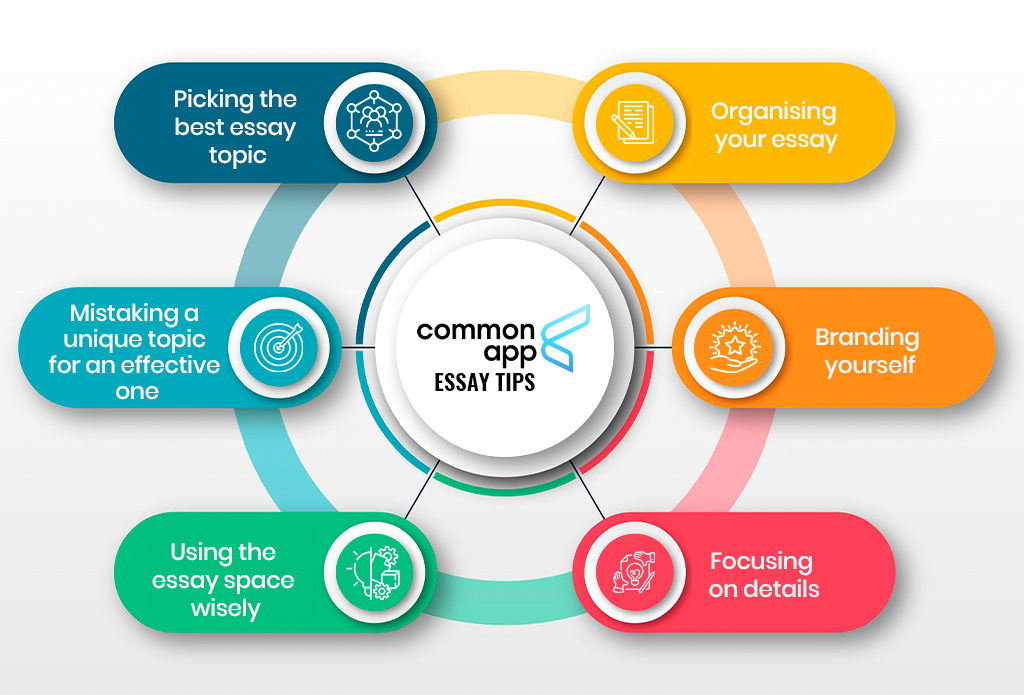
Common App Essay Tips for IB Students
Master the Common App Essay as an IB student. Learn how to leverage your CAS, EE, and international mindset in your Personal Statement for US universities without sounding arrogant.

How to Use the IB to Get Into Your Dream University
Learn how to use your IB Extended Essay, CAS, and subject choices effectively to maximize your university application success and get into your dream college.
How to Ace Your IB UCAS Application: Step-by-Step Guide
Learn how to ace your IB UCAS Application with this expert, step-by-step guide. Master your Personal Statement and ensure your predicted IB grades match your school's reference.
How to Ace Your Oxbridge Interview (IB Tips)
Learn how to ace your Oxbridge interview with expert IB tips from an Oxford alumnus. Get crucial advice on aptitude tests, reading, and interview day preparation.
Professional Support for the Final Push
GRADUATES
TEACHERS
EXAMINERS
BOOK A FREE CONSULTATION TODAY
Stockholm based, supporting students worldwide. We are IB experts committed to achieving your academic goals.
ABOUT US