The IB Parent's Essential Guide to University Applications
Navigating the university application process alongside your IB student can feel like a full-time job. Between understanding global deadlines, providing essay feedback, and managing everyone's stress levels, it's a lot to handle. This guide is your roadmap. We'll break down your role, clarify deadlines, and show you how to provide high-impact support without taking over.
Your child is in the IB for a reason—universities worldwide recognise its rigour and how well it prepares them for higher education. Let's make sure that advantage shines through in their applications.
This guide will help you:
- Understand key application timelines for the UK, US, and beyond.
- Define your role in proofreading to enhance, not overwrite, your child's voice.
- Foster student ownership while providing a strong support system.
- Leverage the unique strengths of the IB Diploma in the application.
Part 1: The Global Application Timeline
Unlike a single national curriculum, IB students apply all over the world, which means deadlines are not one-size-fits-all. Getting organized early is the single most important first step.
United Kingdom (UCAS)
The UCAS system is centralized, meaning one application for up to five university choices. Predicted grades are critical here.
- Early October: The "early bird" deadline for Oxford, Cambridge, and most Medicine, Dentistry, and Veterinary courses.
- Late January: The main deadline for the majority of undergraduate courses.
United States (Common App)
The US process is more holistic, looking at essays, extracurriculars, and recommendations alongside scores.
- Early November: Deadlines for "Early Decision" and "Early Action" applications.
- January 1st - 15th: The main deadline period for "Regular Decision" applications.
The Lanterna Tip: Create a shared family spreadsheet with columns for University, Country, Application System (e.g., UCAS, Common App), Deadline, and a checklist for required documents (Personal Statement, Recommendations, Transcripts). This visual tracker is a lifesaver.
Part 2: Your Role in the Application Itself
Your most important job is to be a guide and a resource, not the project manager. The goal is to empower your child to take the lead. Here’s how to strike that balance.
Proofreading the Personal Statement: The Do's and Don'ts
The essay is your child's chance to speak directly to the admissions committee. Your role is to help them sound like the best version of themselves, not like you.
What You Should Do
- Spot the Errors: Read for grammar, spelling, and typos. A polished essay shows attention to detail.
- Ask Guiding Questions: If a point is unclear, ask "What did you mean by this?" or "Can you give an example?" This encourages them to deepen their reflection.
- Lead with Positivity: Start with what you liked about the essay before offering constructive feedback.
- Check for Flow: Does the essay tell a coherent story? Does it connect their experiences to their future goals?
What You Should Avoid
- Writing a Single Sentence: Admissions officers have read thousands of essays. They can spot a parent's phrasing a mile away. Do not rewrite sections.
- Over-Editing: Too many changes can strip the essay of its authenticity and your child's unique voice.
- Projecting Your Wishes: This is their story and their future. Let the essay reflect their genuine passions, not the ones you wish they had.
Fostering Ownership: Student vs. Parent Responsibilities
This process is one of the first major steps into adulthood. Delineating roles clearly from the start prevents friction and builds crucial life skills.
| The Student's Job | The Parent's Job |
|---|
| Driving the entire process: researching universities, writing drafts, and hitting "submit". | Providing a supportive environment: a quiet study space, healthy meals, and encouragement. |
| Requesting teacher recommendations and school transcripts well ahead of deadlines. | Managing the financial conversation: discussing budgets, student loans, and scholarship searches. |
| Communicating directly with university admissions offices to ask questions. | Facilitating logistics: helping to plan and schedule campus visits if possible. |
| Maintaining strong academic performance in their IB courses. This is non-negotiable. | Being the emotional backstop: listening to their stresses and celebrating small wins along the way. |
Part 3: Showcasing the IB Advantage
The IB curriculum is tailor-made for creating impressive application material. Encourage your child to explicitly connect their IB experience to their university aspirations.
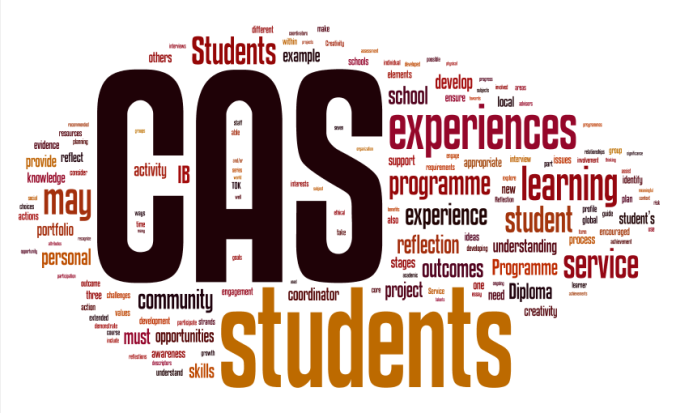
- Talk About the Core: The Extended Essay isn't just a long paper; it's proof of independent, university-level research skills. TOK isn't just a philosophy class; it shows they can think critically about knowledge itself. CAS isn't just volunteering; it demonstrates commitment, creativity, and a balanced character. These are major selling points!
- Connect HL Subjects to their Major: If they're applying for Engineering, they should be highlighting challenging topics from their Physics or Maths HL courses. This shows genuine, sustained academic interest.
- Use IB Terminology (Sparingly): Mentioning their EE research question or a powerful TOK discussion shows they are proud of their IB journey and understand the skills it has given them.
Part 4: The Parent's Wellness Checklist
During the peak application season, your most critical role is managing the household environment. Your student is juggling the IB's demands with planning their entire future. Keeping things calm and structured at home is invaluable.
- Create "Application-Free" Zones: Ban all talk of university applications during dinner or after 9 PM. The brain needs time to decompress.
- Prioritize Sleep: Sacrificing sleep for essay writing is a bad trade. A tired brain can't produce good work or handle stress effectively. Protect their sleep schedule.
- Celebrate Submission, Not Just Acceptance: The act of completing and submitting an application is a huge achievement in itself. Acknowledge the hard work and effort, regardless of the outcome. This builds resilience for the journey ahead.
-1.png?width=150&height=56&name=logotype_lanterna_education_blue%20(4)-1.png)






.png)