-1.png?width=150&height=56&name=logotype_lanterna_education_blue%20(4)-1.png)

Pt. 7 – The Areas of Knowledge: Mathematics, the Natural Sciences, The Human Sciences and History
What are the Areas of Knowledge?
The Areas of Knowledge are a bit different; these are about what we know. There are 8 Areas of Knowledge: Mathematics, the Natural Sciences, the Human Sciences, History, The Arts, Ethics, Religious Knowledge and Indigenous Knowledge.
Understanding the Areas of Knowledge Framework
Each Area of Knowledge is a system. Within each AoK system there are agreed ways to investigate things. There are also agreed standards of proof and argument that are different in each Area of Knowledge. So we can think of an Area of Knowledge as a body of knowledge that seems to fit together in one system.
The Areas of Knowledge are the ways we categorise the knowledge that we have. In this post we’re going to run through the first four of the Areas of Knowledge and talk about the features of each of these systems. It signifies human knowledge, and it’s important to understand correctly.
Mathematics
Maths is a fascinating topic to think about, largely because it works differently than many other areas of human reasoning. For example, in maths we start from a set of axioms that we all agree on.
Mathematics Areas of Knowledge
An axiom is a basic fact or idea that we say cannot be changed. You might have also heard of the work premise. This is similar to an axiom as both are starting points for an argument. In mathematics, the idea that the addition of two positive whole numbers can only ever lead to a positive whole number is axiomatic.
No matter what positive whole numbers we add together they will always produce a positive whole number.
Why Mathematics?
Maths is unusual because it is founded on axioms which are more or less universally accepted. This means that across time and culture mathematics seems to be universal. One discussion that surrounds this is the debate over whether maths is discovered or invented.
Whilst some claim that it is the product of human thinking and thus must by definition be an invention, others refute this perspective. It can be argued that maths is simply a description of the real world.
The area of a circle is equal to pi times the radius squared. This is a description, not an invention, some would argue.
What do you think? Click here for an excellent video on this topic!
Traditional Knowledge
We should also link this Area of Knowledge to reason as a Way of Knowing. Indeed, part of the universal nature of math is due to the fact that it works according to deductive reasoning (see our previous post on the ways of knowing if you aren’t sure what deductive reasoning is).
This means that many people from very different backgrounds are able to follow mathematical arguments, as they possess this deductive ability. This is part of what constitutes knowledge.
If you’re thinking about discussing maths in your work you can use this feature to begin an argument about whether all people possess the same reasoning ability in the same degrees. Some might argue that our reasoning ability fundamentally differentiates us from the rest of the animal kingdom.
They might point to the clever things people have done using reason. But you could point to people who have a diminished capacity for reasoning, such as the mentally disabled, and ask if they are not human.
An interesting debate is sure to follow!
Producing Knowledge in Mathematics
Another discussion that can be had with regards to mathematics is about its relation to reality. After all, if we accept that mathematics is discovered rather than created, we have to deal with an awkward fact.
Pure mathematics does not rely on any prior sense perception! Isn’t it strange to think that something can be discovered entirely without the senses? How might we explain this? You could contrast this with the appliance of mathematics to the real world.
Get Support from A Top Tutor Today
At Lanterna we have over 300 tutors who smashed TOK. They know exactly how to get an A in your TOK Essay and can give you tips and tricks on how you can do the same. What are you waiting for? Get your own tutor today!
The Natural Sciences
The natural and human sciences want to investigate the natural world around us. Their methods include observation and testing of hypotheses.
This is the scientific method. One of the most interesting questions in this field is about the removal of the human element.
Why is Scientific Knowledge Important?
Scientists try to design experiments to reduce the effect that the human observer has on the outcome. Asking how possible this is in different fields can tell us something about the strengths and weaknesses of the natural sciences.
Science is different from mathematics in that it combines sense perception and deductive reasoning. Reasoning must be present in relevant argumentation, but theories must also be able to survive the test of real life experiment or observation. This combination allows us to open up interesting questions about what science is.
Understanding Scientific Methods
The line between the human and natural sciences is a thin one, and is often debated. Indeed the very name ‘natural sciences’ contains an implication that human beings are outside of nature. Human action also can produce more insight in non-scientific areas, such as language and moral fact.
Does this make sense to you? Do you think that this assumption is an objective one or has cultural roots? If science contains cultural assumptions do these impact its supposedly objective work?
Thinking about these questions will help you form an argument in your ToK essay or presentation. You can even think about how the different AoKs interact with each other.
If science is non-human, because it is objective, then should it be constrained by ethics? What justifies a scientific experiment and what ethical concerns might stop such an experiment?

The Human Sciences
For IB students the human sciences include many of your group 3 subjects. The human sciences are meant to study the reality of being human. That means that this topic looks at things like the social aspects of human life and how people live together. They also explore culture and human thinking. Subjects like sociology, politics, anthropology and psychology fall into this category.
So what are the differences between human science and social science? Well, one of the big differences is what we mean when we use the word ‘science’. In a way human sciences do count as science because they use the scientific method. That is, they create a hypothesis and then test it against reality.
Understanding Different Kinds of Science
A psychologist might hypothesise that classical music tends to make people perform better in IQ tests. They could devise an experiment, try this out and find that indeed, if people listen to Mozart before a test they tend to score a higher mark.
The use of hypothesis and experiment might remind you of the natural sciences. There are some differences from the natural sciences though. For example, the psychologist would struggle to call this a ‘law’ as in the law of gravitational attraction. This is partly because the psychologist could not reliably show that all people were affected the same way by this music.
Then there would be questions of which cultures responded in this way, and whether responses changed over time. The predictive accuracy of the human sciences tends to be lower than in the natural sciences – although this is a controversial topic and one you could certainly explore.
A Look at Humans: Areas of Knowledge
You might also want to consider what constitutes proof in the human sciences. Often we find that the human sciences will rely on statistical probability. They often also discuss moral values, moral knowledge, visual arts, shared knowledge, historical facts and causal relationships, particular culture or human behaviour and many other things that are not part of natural science lessons.
In the natural sciences, there may be more times where that probability approaches one hundred percent.
Do you think there are any problems involved in using statistics in the human sciences? Perhaps you could ask questions about human existence.
Grab Free TOK Resources!
History
History as an area of knowledge does not simply refer to everything that has ever happened. Instead it is about the past that has been recorded by human beings. One of the major debates that you should consider in history is interested in the idea of the ‘historical fact’.
At first it might seem obvious what this is – a fact telling us something that has happened. But think about it, there is a lot of human involvement in defining the past when it comes to history.
History and Historical Writing
You might have heard about the notion that the winners of a war write the history books. What do we think they are likely to record? Should it be called a fact? You should ask yourself whether it is possible to be objective when writing about history. The historian Max Weber thought that it was not. He argued that in every situation there were endless things that could be described.
The fact of having to choose which ones to discuss already stopped one from being objective. After all, focussing on the role of one person rather than another will affect how the past is perceived.
Shared and Personal Knowledge in History
We can also draw attention to another interesting debate in history. Rather than considering which facts are being described, we might consider whether we can have any facts at all. If we think of an historical event, such as a great war, we might think we know much about that war.
But ToK invites you to ask how we know such things. Did you see the war, using your own senses? If not, how did you find out about it? Perhaps you heard from a friend or a family member, but how reliable is their knowledge?
Maybe you read about the war in a text book? But who wrote that book and for what reason.
Do you think that text books in North Korea will write much about the mass starvations that has happened to their people? Are your text books more reliable? Why? These are the sorts of questions that show you are reflecting critically in subjects like ToK.
Summary
If you’ve read and understood each of these Areas of Knowledge then you are not far off mastering this area of ToK. By thinking about some of the questions involved here, you should be able to start developing your own perspective on these subjects.
Remember that religious knowledge systems (and religious knowledge itself), personal knowledge and knowledge questions form part of a knowledge system. This is a social-centred approach, known as social or human sciences. It often looks at a particular group and understands a diverse range of their characteristics.
Meanwhile, history looks at the recorded past, and includes a variety of key concepts, including European culture, the history of Southern Africa and important events that took place on any given day.
It is now your job to defend and grow your perspective throughout ToK essay and presentations. The things you have learned here should be a first step in mastering ToK and acing those assessments.

We’re the Lanterna Team — a group of 600+ IB expert tutors, ranging from 45/45 IB graduates to IB teachers with 30+ years of teaching and examiner experience.
For over 20 years, we’ve supported tens of thousands IB students worldwide with one clear focus: making high achievement feel more doable. Our team of experienced tutors have come together to combine their deep curriculum knowledge with practical strategies that are proven to work.
Whether you’re building strong foundations in DP1, pushing for a final stretch in DP2, or looking for clarity on what to prioritise, we’re here to help you study smarter, stay confident, and get results.
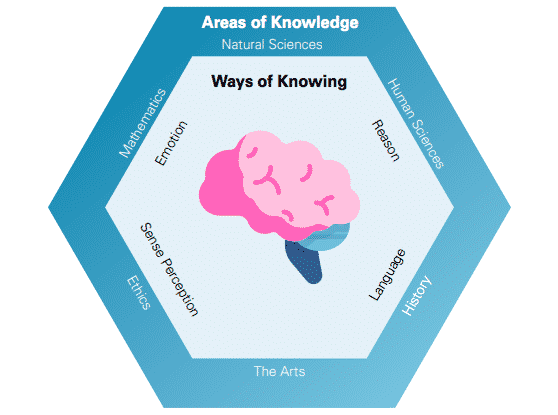
Complete Guide to IB Theory of Knowledge Frameworks
Master IB Theory of Knowledge Frameworks. Learn how to apply the structure of the Areas of Knowledge (AoKs) in your essays and presentations for top results.
Complete Guide to IB ToK Areas of Knowledge: Arts & Ethics
Master the IB ToK Areas of Knowledge: Arts, Ethics, Religious Knowledge, and Indigenous Knowledge. Learn critical approaches and key concepts for ToK success.

Complete Guide to IB TOK Ways of Knowing
Master the IB TOK Ways of Knowing with this expert guide. Learn how Imagination, Faith, Intuition, and Memory shape knowledge for your next essay.
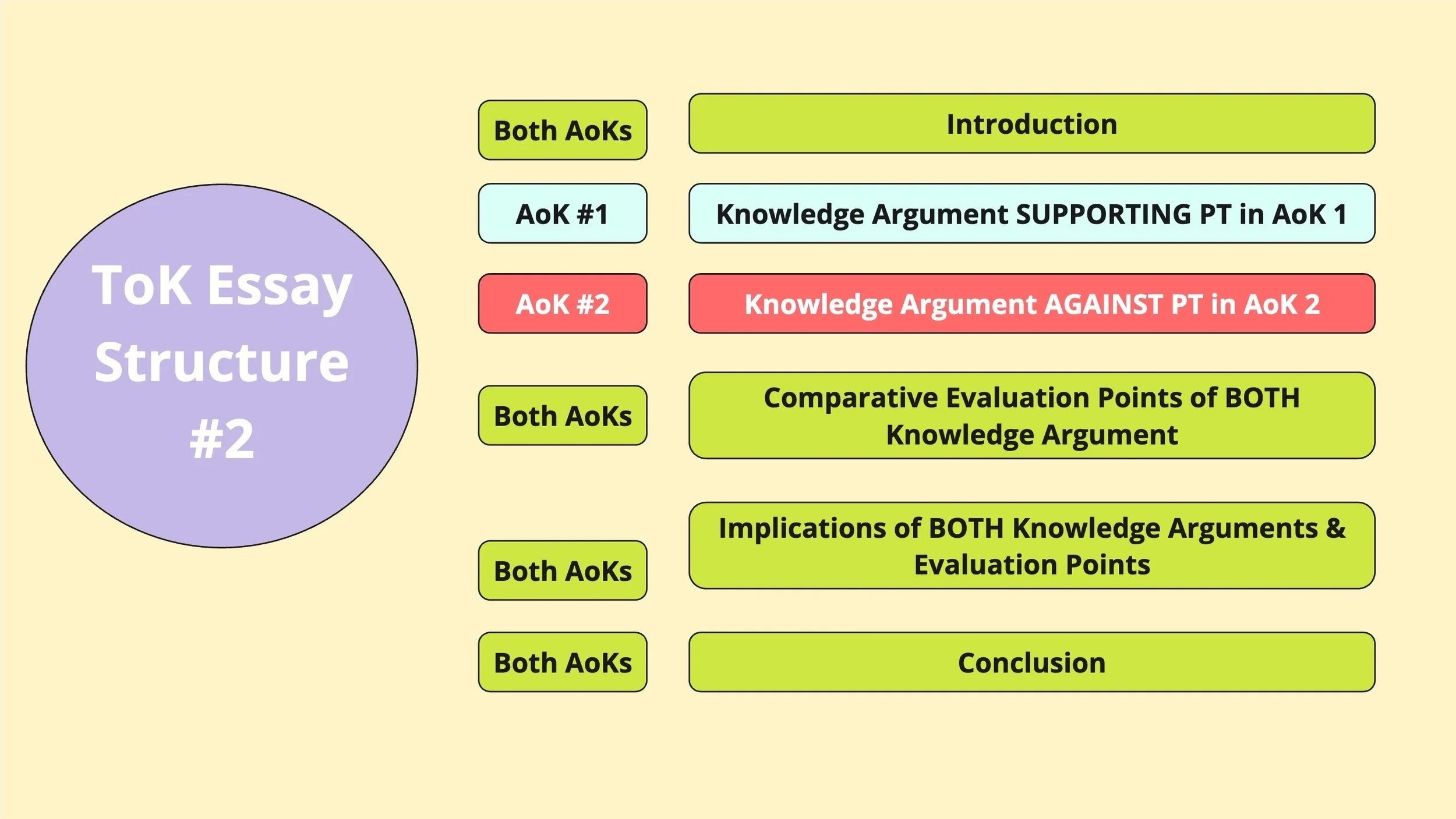
IB TOK Essay Structure Guide
Master the IB TOK Essay structure with our complete guide. Get step-by-step outlines for your introduction, AOK paragraphs (claims/counterclaims), and conclusion to hit top markbands.
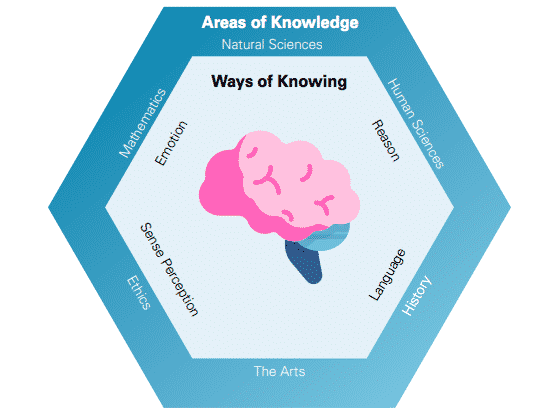
Master IB TOK Guide
Master IB Theory of Knowledge (TOK) with our complete guide. Learn about the curriculum, areas of knowledge, and ace your TOK exhibition and essay with structure tips and examples.

How to Get a Top Grade in IB ToK
Learn how to get a top grade in IB ToK with expert tips covering Shared/Personal Knowledge, Ways of Knowing, and Areas of Knowledge. Achieve those crucial core points!
IB TOK Exhibition: How it Differs from Presentations
Understand the new IB TOK Exhibition. Learn how it differs from the old presentations, including objects, individual work, and the standardized assessment/grading method.

How to Structure Your IB TOK Essay Step-by-Step
Learn how to structure your IB TOK Essay step-by-step with this expert guide. Understand how examiners think and increase your TOK essay grading score with clear format tips.