-1.png?width=150&height=56&name=logotype_lanterna_education_blue%20(4)-1.png)

Complete Guide to IB ToK Areas of Knowledge: Arts & Ethics
Master the IB ToK Areas of Knowledge: Arts, Ethics, Religious Knowledge, and Indigenous Knowledge. Learn critical approaches and key concepts for ToK success.
Pt. 8 – The Areas of Knowledge: The Arts, Ethics, Religious Knowledge, Indigenous Knowledge
This is the final blog post in this ToK series. If you’ve followed the series so far then well done! We’ve been through so much in the last few posts. If you haven’t been following along, go check out the previous posts. We discuss everything that comes up in the IB ToK guide. So if you’re familiar with everything in these posts, you will have a really good idea of how ToK works in the IB. This is vital to you achieving great success and getting as many core points as possible!
What are the Areas of Knowledge
The Areas of Knowledge are about what we know as opposed to how we know it. There are 8 Areas of Knowledge, these are: Mathematics, the Natural Sciences, History, The Arts, Ethics, Religious Knowledge and Indigenous Knowledge.
Each Area of Knowledge is a system. Within each AoK system there are agreed ways to investigate things. There are also agreed standards of proof and argument that are different in each Area of Knowledge. So we can think of an Area of Knowledge as a body of knowledge that seems to fit together in one system.
The Areas of Knowledge are the ways we categorise the knowledge that we have. In the last post we went through four Areas of knowledge: Mathematics, Natural Sciences, Human Sciences and History. We talked about the features of each of these Areas of Knowledge. In this post we’re going to run through the remaining four Areas of Knowledge and talk about the features of each of these systems.
The Arts
What is art? What are ‘the arts’? If you saw an oil painting you would probably know that it is art, but how do we decide on such things, and how do we create a category called ‘the arts’? Well these questions might seem abstract or unanswerable, but, as always, the IB Organisation has the answer! When we think of the arts in ToK we are talking about the creative productions of humans. This is very broad but things are narrowed down significantly we note that ‘the arts’ encompasses the visual arts, the performing arts and the literary arts. So actually, it is not too difficult to get an idea of what the arts usually involve. There may be some argument about specific cases, but this definition ‘the creative production of humans, encompassing the visual arts, performance and literature’ is a good starting point.
If the Natural Sciences explore physical reality, then what do the arts look at? Well, while the natural sciences look outward, the arts look inward. They try to explore the experience and reality of being human – the arts are a way to explore what it is like for people to live life. Of course this may involve looking outward as well. A landscape photography, for example, necessarily uses nature to convey its meaning. But its meaning is about human experience because the photographer is making a statement that this matters, in his or her opinion. That opinion is a human one and thus taking landscape photo is a statement about what matters to humans (or at least to one of them).
The Arts have an interesting position within human knowledge because they are a part of culture, which is shared. However, art has subjective elements and a unique meaning for every observer. Three people may listen to the same piece of ‘sad’ music. They may all agree it is sad because of certain objective features that we notice in music that cause the same feelings in many different people. Perhaps the piece is particularly slow, and contains many minor chords, and so on. However, one of the listeners may say that the artist who wrote this was certainly experiencing despair. Another listener may say that the music was melancholic. The third listener may feel that the piece captures the idea of rejection. Each listener has their own interpretation. Just as the artist chose notes which seemed right, so each listener chooses which parts of the music to focus on. Each listener’s life and experiences will tell him what those sounds mean and these interpretations will always differ. Clearly, there is something shared within the Arts. However, there is also something unique to each listener. This means that the Arts can be thought of as a bridge between personal and shared knowledge. If you choose to discuss this unique aspect of the arts in your work, you might mention that often the arts involve many people working together. Making a film may involve hundreds of people. On the other hand, writing a poem may be a very solitary experience.
If you do want to talk about the fact that the Arts are a bridge between the shared and personal knowledge, you might want to discuss the Ways of Knowing involved. One way to think of this is that the arts use emotions as a way to connect on the personal level, but that they are bound by reason because many people must be able to understand their content. This is one way of explaining how the arts work. What are the weaknesses of this argument? How would you describe the Ways of Knowing used in the Arts?
Ethics
What does it mean to be ethical? You might say being ethical means making moral decisions. That is a good connection to recognise, but does it really answer the question? What does it mean to make moral decisions? It might sometimes seem that in ToK one question just leads to another – what’s the point?! But in fact that is the point. For without asking these questions, then we cannot meaningfully say that an action is ethical. Until we really uncover what these things mean, they won’t mean anything when we claim them. So what is ethical knowledge?
Ethical knowledge is often seen as separating humans from animals. This gives us a clue as to what being ethical means. In nature we don’t normally think of the ideas of ‘right’, ‘wrong’, and ‘justice’ as being important. What does a lion or an eagle know of justice. So it might be these ideas of right and wrong that are the defining factors of ethics. But there is another extremely unusual thing about ethical knowledge. It is the only kind of knowledge which, once obtained, commands us what to do. For example, if I think it is wrong to steal a Koala bear from the zoo, then I necessarily shouldn’t steal that cuddly critter. The fact that it is ‘wrong’ makes it clear how I should behave. No other form of knowledge contains these commands about what we should do, or what Kant calls our ‘duty’. This also raises questions about whether morality is objective or subjective.
If you’re asking about whether ethical rules are created, rather than discovered, then another question arises. Some people would ask if moral rules really exist at all. Perhaps they are not really a type of knowledge at all. Maybe ethical thinking is created by society to control individuals and make sure they behave. Perhaps they should be ignored when this is beneficial. You could strengthen this argument by pointing out that ethics don’t exist ‘out there’ in the universe, in the same way, we think scientific facts do. But perhaps a counter-argument might be that by our shared understanding and belief in ethical systems, they are just as real as our belief, in stars or trees or the moon.
This debate raises a very interesting question. Even if we accept that ethical knowledge is ‘real’ in some sense, we also should recognise that ethical ideas are not fixed. It is likely that in many years our understanding of the relationship between the radius and areas of a circle will be more or less the same, as it has been for thousands of years now. But will our ethical knowledge be the same on such issues as abortion, gay marriage and crime and justice? It seems very unlikely. In that sense ethics are flexible. And that poses a question to each individual which also affects society: when, if ever, should you violate ethical rules? Questions such as this can be an excellent driving force behind a ToK investigation.
Religious Knowledge
Religion is an interesting topic to study within ToK. You may find in class, and even in your essays and presentations, that it can be difficult to approach the subject. ToK is by its nature a critical subject. However, religion is something many people feel very strongly about. However, while showing sensitivity, you should not avoid discussing or being critical of religious knowledge systems. In fact, it is very important that we examine religious belief critically. After all, religion provides a fundamental background of knowledge for some people. Everything else they believe is seen in this religious light. As such it is important that we open up these deeply held beliefs to critical examination.
What is the purpose of religion? What can religious knowledge systems tell us about the world? Primarily they are intended to answer the really important questions about the meaning and purpose of human life. What are we here for? How were we created? How should we try to live? These are all questions that the most popular religions in the world try to answer.
It is important to recognise the vast diversity in this Area of Knowledge. A silly mistake would be as if religious belief systems were all the same. It is true that most of the world’s religious believers follow a belief system which is monotheistic and has its roots in Judaism. However, each of these systems is different and, importantly, there are many religious systems outside of this tradition. So how do we classify and think about these different systems of belief?
Well, we can break up people into groups called theists, people who believe that at least one deity exists, atheists who reject the idea that deities exist and agnostics – those who neither believe, nor disbelieve in the existence of deities. The thesis can then be broken up into smaller groups. Deists are a category of theists. They believe that God/s set up the universe and now do not interact with it, but simply watch it unfold. Pantheists believe that the universe is divine, that the universe itself is divine and this is, in some sense, God. Monotheism strongly contrasts these previous views by describing the existence of a single, all-powerful God. Such a God is found in Islam, Judaism and Christianity. Richard Dawkins describes some of these inclinations in this video – remember to always be aware of the perspective of someone delivering information on the topic.
Indigenous Knowledge Systems
Indigenous knowledge systems look at the knowledge that is unique to a particular culture. It is important to recognise that indigenous knowledge systems are changing all the time. They change because humans are not perfect at preserving and transmitting entire systems of knowledge used by a culture. Indigenous knowledge systems as cultures interact with each other. As information is passed back and forth and new ideas take hold and influence the beliefs of the day. We might consider how the 20th century significantly changed the cultures of the Maori people of New Zealand. Similar changes happened worldwide for indigenous cultures in Canada, Australia, Africa and so on. Indeed, only this year one of the world’s last ‘uncontacted’ tribes emerged from the Brazillian rainforest, probably due to pressure from drug traffickers and illegal loggers. Such contact means that indigenous knowledge systems tend to be a mix of traditional and knowledge structures, and well as knowledge inherited from cultures more influenced by global communications.
Two interesting ways of thinking about this AoK could be used for you to start a discussion in your essays or presentations. One way of discussing this AoK would be to talk about the diversity of indigenous knowledge systems in the world. It may not be immediately apparent why we should spend time trying to understand the variety of knowledge systems in the world. After all, we already have a great deal to think about with the AoKs already covered. How and why should we add to these all the unique systems that people all over the world use? However, the fact that there are so many ways of understanding reality cannot be overlooked. Fully embracing this AoK reminds us that our own perspective is just one amongst a truly huge number. Your subject studies in the IB will tell you that the world is full of incredible things to look at. ToK will tell you that the world is full of incredible ways to look at them.
A second way of examining this AoK is to really try to understand a particular indigenous knowledge system. This will be a challenge, but it could make for some truly amazing ToK work. Thinking about how native people of Alaska see the world would really show that you understand the value of ToK. How would you evaluate such a thing? It would be no easy task but we can start thinking about how other people see the world by asking a few primary questions. How do these people communicate? How do they make decisions? What are their thinking processes? How do they view knowledge? Identifying the similarities and differences between your own thinking and those of other people will show a high level of awareness when it comes to ToK issues.
What do you know?
There you have it. We have finished looking at the last four Areas of Knowledge. If you managed to read through that whole post, I’m impressed. If you understood most of the content, then that’s even better. Best of all is if you read every section of the ToK guide. If you managed to do that then you are really in a good position to master your ToK work. We have discussed the secrets of tackling ToK, we talked about shared and personal knowledge. A little later we covered knowledge questions and knowledge claims, so you would know what ToK is based on. In the next post, we talked about language, sense perception, emotion and reason as Ways of Knowing. The next post talked about imagination, faith, intuition and memory. The post that followed this was a bit more critical. It explained the best ways to interrogate different areas of knowledge. It showed us how to ask questions about areas of knowledge which are critical and interesting.
Last week’s post was about mathematics, natural science, human science and history – the first four Areas of Knowledge. And this week’s post rounded things off by discussing the final Areas of Knowledge: the arts, ethics, religious knowledge and indigenous knowledge. And that’s it! If you really understood all of that then you should have no problem with your ToK work. The things we’ve discussed are an excellent starting point and now your job is to go away with two things: curiosity and knowledge. Use your curiosity to find a topic that interests you. Use your knowledge to guide your research, and be critical. If you do all these things you will ace your ToK work and become a ToK master in no time at all!
Good luck!
How to ace your TOK Presentation!

We’re the Lanterna Team — a group of 600+ IB expert tutors, ranging from 45/45 IB graduates to IB teachers with 30+ years of teaching and examiner experience.
For over 20 years, we’ve supported tens of thousands IB students worldwide with one clear focus: making high achievement feel more doable. Our team of experienced tutors have come together to combine their deep curriculum knowledge with practical strategies that are proven to work.
Whether you’re building strong foundations in DP1, pushing for a final stretch in DP2, or looking for clarity on what to prioritise, we’re here to help you study smarter, stay confident, and get results.
Why Lanterna?
The Areas of Knowledge in IB ToK are categories that explore what we know, as opposed to how we know it. There are eight AoKs: Mathematics, Natural Sciences, Human Sciences, History, The Arts, Ethics, Religious Knowledge, and Indigenous Knowledge Systems. Each AoK has its own agreed ways of investigation and standards of proof.
The Arts, encompassing visual, performing, and literary arts, are considered the creative productions of humans. They explore the human experience and reality, often acting as a bridge between personal and shared knowledge due to their subjective interpretation and shared cultural elements.
Ethics is unique because, unlike other forms of knowledge, it often commands us what to do, guiding moral decisions and defining concepts of right and wrong. ToK explores whether ethical rules are objective or subjective, created or discovered, and how they evolve over time.
Religious Knowledge Systems attempt to answer fundamental questions about the meaning and purpose of human life. While approaching with sensitivity, ToK encourages critical examination of these systems because they form a foundational worldview for many, influencing all other beliefs. It also highlights the vast diversity within religious beliefs.
Indigenous Knowledge Systems refer to knowledge unique to a particular culture, which are dynamic and constantly evolving through interaction and transmission. Their relevance in ToK lies in demonstrating the incredible diversity of ways humans understand reality, challenging our own perspectives, and encouraging an understanding of different thinking processes.
A deep understanding of each Area of Knowledge allows you to effectively analyze knowledge questions, identify connections and distinctions between different fields, and develop nuanced arguments for your ToK essay and presentation. It equips you with the critical tools to explore how knowledge is constructed, evaluated, and used across various domains.
Lanterna's expert ToK tutors, many of whom scored 40+ in the IB or have examiner experience, can provide personalised guidance on understanding complex ToK concepts like the Areas of Knowledge. They help you develop strong arguments, structure your essay and presentation effectively, and ensure you meet the IB's specific criteria for top marks.
Absolutely. Our tutors are highly experienced in guiding students through the ToK essay and presentation. They can help you refine your knowledge questions, brainstorm relevant real-life examples, develop a coherent argument, and understand the assessment criteria, all while upholding academic honesty.
The Lanterna IB consultation is a free, no-pressure 20-30 minute session with an IB Student Success Expert. It's designed to help IB students and parents gain clarity on their academic situation, understand upcoming challenges, and receive a personalised plan for success, without any obligation to book tutoring.
Yes, the Lanterna IB consultation is genuinely free, with no obligation to purchase tutoring. Our goal is to provide valuable support and a clear roadmap for your IB journey. We believe that by offering this initial guidance, families can make informed decisions about their academic needs, whether that includes tutoring or not.
Lanterna’s Student Success Experts are experienced professionals with deep knowledge of the IB Diploma Programme. They are dedicated to helping students and parents navigate the IB, offering strategic advice, clarifying doubts, and helping to identify the most effective approaches to achieve academic goals.
During your free consultation, you'll get a clear understanding of your current standing, a personalised plan outlining key priorities, and actionable next steps to improve your performance in ToK and other IB subjects. You'll walk away with increased confidence and a strategy backed by experts who have supported thousands of IB students.
More free resources
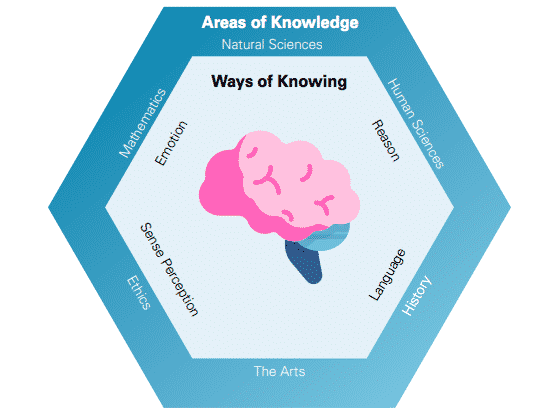
Master IB TOK Guide
Master IB Theory of Knowledge (TOK) with our complete guide. Learn about the curriculum, areas of knowledge, and ace your TOK exhibition and essay with structure tips and examples.
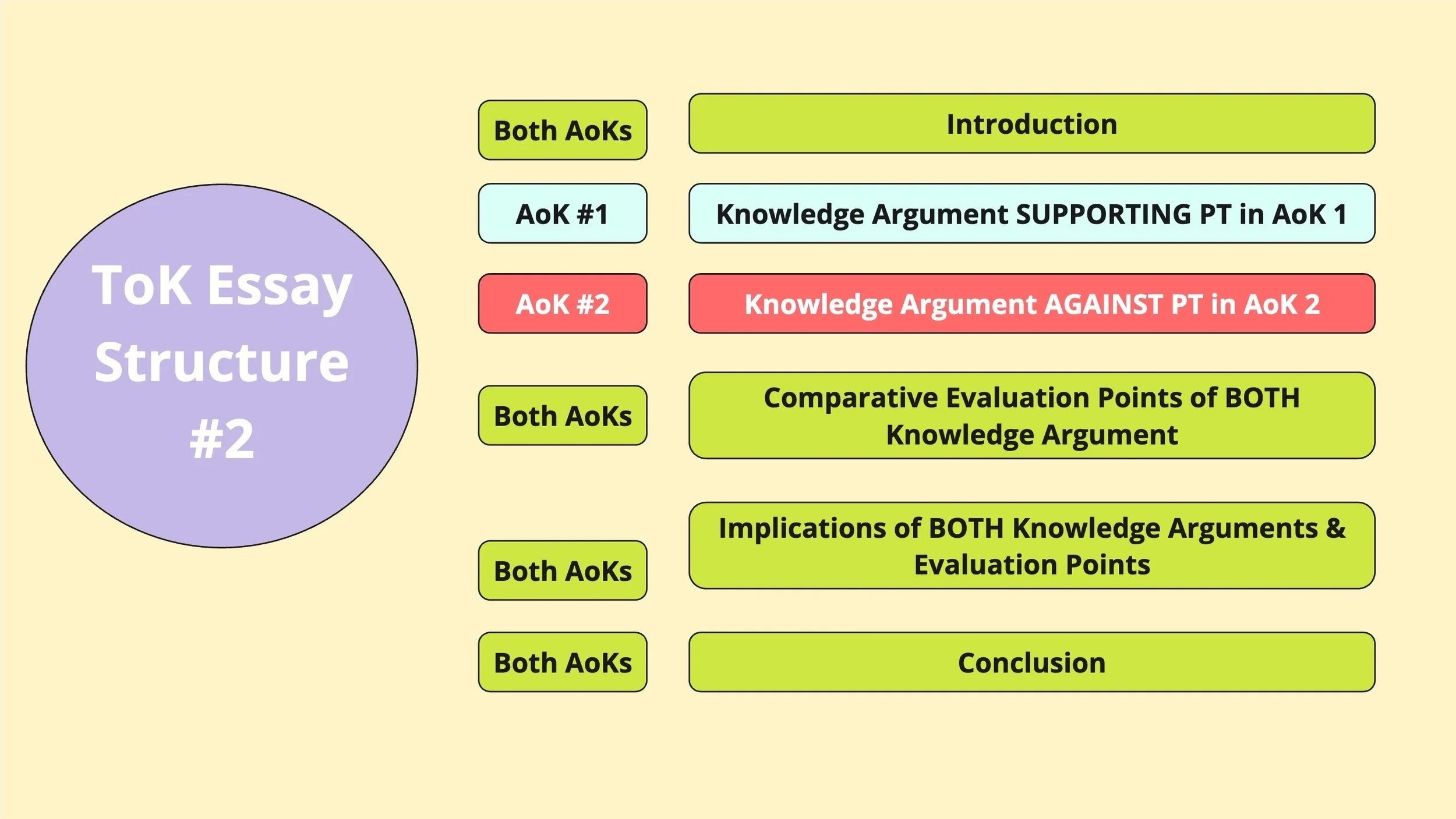
IB TOK Essay Structure Guide
Master the IB TOK Essay structure with our complete guide. Get step-by-step outlines for your introduction, AOK paragraphs (claims/counterclaims), and conclusion to hit top markbands.
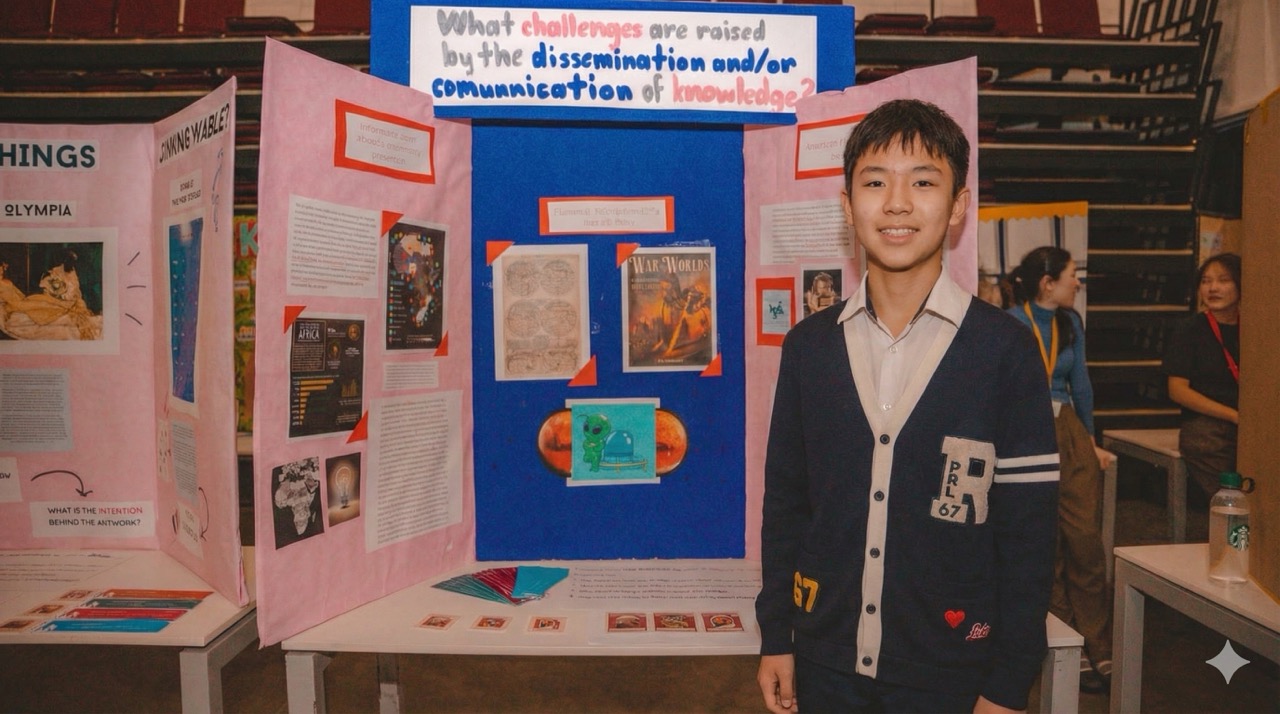
35 TOK Exhibition Object Ideas
Master your TOK Exhibition! Get 35 diverse object ideas (tweet, toy, map projection) and guided questions to effectively link them to your IA prompts and core themes.
20 IB TOK Presentation Ideas with Examples
Struggling with your IB TOK Presentation? Discover 20 successful TOK Presentation Ideas with examples and expert tips to ace your internal assessment.

TOK Exhibition Guide (DP1)
Master the IB TOK Exhibition (DP1) with this guide. Learn structure, view examples, and get tips on connecting real-world objects to knowledge questions for top marks.

How to Get a Top Grade in IB ToK
Learn how to get a top grade in IB ToK with expert tips covering Shared/Personal Knowledge, Ways of Knowing, and Areas of Knowledge. Achieve those crucial core points!

TOK Essay: A Complete Guide to Acing the IB TOK Paper
Master the IB TOK Essay with this complete expert guide. Learn how to structure your paper, understand grading criteria, and use critical thinking skills to achieve your diploma.
Complete Guide to IB TOK Basics: Ways of Knowing
Understand IB TOK Basics: Learn the core concepts of Theory of Knowledge, including the 8 Ways of Knowing and Areas of Knowledge, with expert tips for success in the IB.
Professional Support for the Final Push
GRADUATES
TEACHERS
EXAMINERS
BOOK A FREE CONSULTATION TODAY
Stockholm based, supporting students worldwide. We are IB experts committed to achieving your academic goals.
ABOUT US