-1.png?width=150&height=56&name=logotype_lanterna_education_blue%20(4)-1.png)

For me, one of the most challenging aspects of my IB Diploma was the Science IA. The thought of designing and conducting an experiment independently was a daunting prospect! Moreover, it was worth a big chunk of my final grade – 20% for Biology, Chemistry and Physics, or 25% for ESS. But once I found a question and began researching, the science Internal Assessment became less of a burden.
Getting started is often the hardest part of any assignment. With that in mind, I want to ease your concerns and help you over that big initial hurdle of starting a science IA. Here are my 5 top tips will hopefully give you a little push to stop procrastinating and get going!
Why am I doing this?
Science IAs are a time-consuming and challenging task. So, it’s useful to know exactly what the purpose of it is. No, despite popular belief, the IB examiners didn’t design the IA as a sadistic ploy to watch you squeal under the pressure of it all. Primarily, the IA is a way for you to show off your experimental skills. After all, experimental science is the driver of progress and discovery. So, teaching science without experimentation is like trying to bake a cake with no flour.
What are the examiners looking for?
The examiners want to see inquisitiveness, interest, and engagement with the subject. The best way to ensure this is by picking a topic you actually find interesting. Something you are genuinely excited to investigate. Do you really care about at what wavelength of light pondweed photosynthesises best? If not, it’s probably best you don’t try to find out!
Right, now it’s time for my 5 top tips…
1. Coming up with an Idea

The truth is, you want to choose a relatively simple idea. Something that you are confident will produce results. I recommend starting by making a list of all the experiments you’ve already done in class. From this, you’ll get a feel for what a good experiment entails. Then, pick the one you find most interesting and give it a twist. Think outside the box – you want your idea to be original and even a little wacky! The best science IAs are those which take a well-established experiment (so you can be confident you’ll generate a good amount of data), and put a spin on it. Beware, you can’t just copy an existing experiment. You need to adapt it, personalize it, and come at it from a new angle. Essentially, make it your own!
2. Personal Engagement with your Science IA
One of the five assessment criteria is ‘Personal Engagement’. You will be assessed on how your chosen topic relates to you and your interests. At first this might seem a bit confusing (I certainly was!). But really, it’s looking at how your personal experience has shaped the design of your experiment. So, the way to score highly here is to ensure you are genuinely interested in your project. Rather than looking at the rate of breakdown of hydrogen peroxide (which I bet doesn’t have much relevance or significance to your daily life), measure the caffeine content of your favourite type of coffee compared with others. Your justification for choosing such a topic could be as simple as you’re a coffee fiend and have always wondered which type would give you the biggest kick in the morning!
3. Setting your Research Question
So, you’ve decided on a general topic for your experiment. Now you need to set a clear, focused research question. I would argue that the research question is the most important part of the whole assessment. It needs to be concise and informative. Whoever is marking your science IA should be able to tell immediately what you are investigating. Put this to the test by handing it to a friend or family member; see if they’re able to quickly grasp the essence of your experiment. A fresh pair of eyes is always good for these things. What may seem obvious to you may be ambiguous out of context.
4. What does a Good Research Question Look Like?
Your research question must include the independent variable (what you are changing) and the dependent variable (what you are measuring). Something like this:

As you begin designing your project and carrying out preliminary experiments (which I would highly recommend!), you may find certain parts, procedures and variables need adjusting. This is okay! Tweaking your experiment and/or question demonstrates you’ve taken time and care to make your experiment as successful as possible. Check out this video here, for more guidance on how to come up with a research question.
5. Keeping on Track!
Here is my final piece of advice. Make sure to record everything you do as you go along. Each time you set up apparatus, try out a new formulation for your solution, use a specific indicator or accidentally spill some of your mixtures – note it down. Or take photos. This will make it far easier not only to write your Methods and Materials sections, but also to explain any anomalies in your results and evaluate errors more effectively.

We’re the Lanterna Team — a group of 600+ IB expert tutors, ranging from 45/45 IB graduates to IB teachers with 30+ years of teaching and examiner experience.
For over 20 years, we’ve supported tens of thousands IB students worldwide with one clear focus: making high achievement feel more doable. Our team of experienced tutors have come together to combine their deep curriculum knowledge with practical strategies that are proven to work.
Whether you’re building strong foundations in DP1, pushing for a final stretch in DP2, or looking for clarity on what to prioritise, we’re here to help you study smarter, stay confident, and get results.
.png)
50 IB Math AA IA Topic Ideas
Master your IB Math AA IA with this comprehensive guide. Find perfect topic ideas that allow deep mathematical exploration, expert examples, structure tips, and common mistakes to avoid for a 7-level score.
.png)
The Ultimate Guide to the IB Math AI Internal Assessment
Struggling with your IB Math AI IA? Our complete guide breaks down the marking criteria and structure. Find a great topic with our expert tips and successful examples.
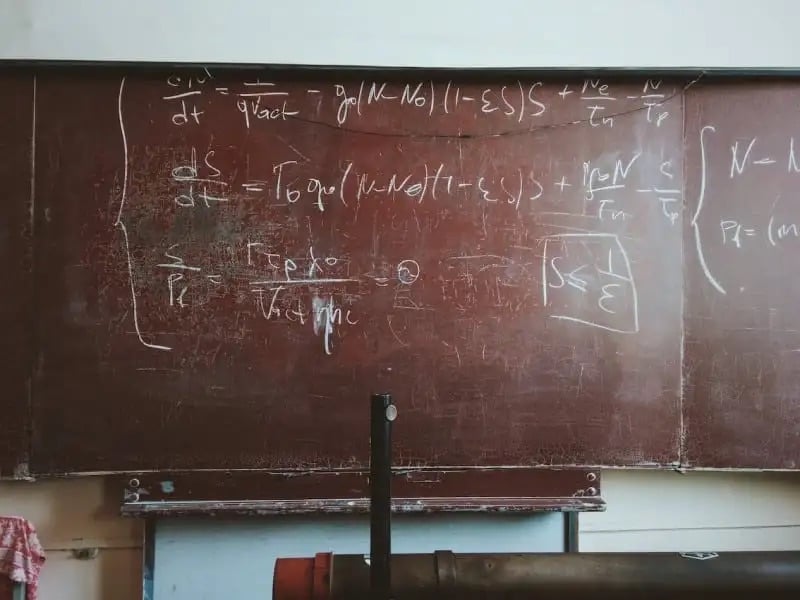
The Ultimate Guide to the IB Physics IA: 50+ Topic Ideas & Pro Tips
Discover top IB Physics IA topic ideas from Mechanics to Modern Physics. Learn how to choose a strong research question that meets the latest IB assessment criteria.

How to Structure and Format Your IB Math IA
Learn how to structure and format your IB Math IA for top marks. Understand the grading criteria and optimal layout used by high-scoring students.
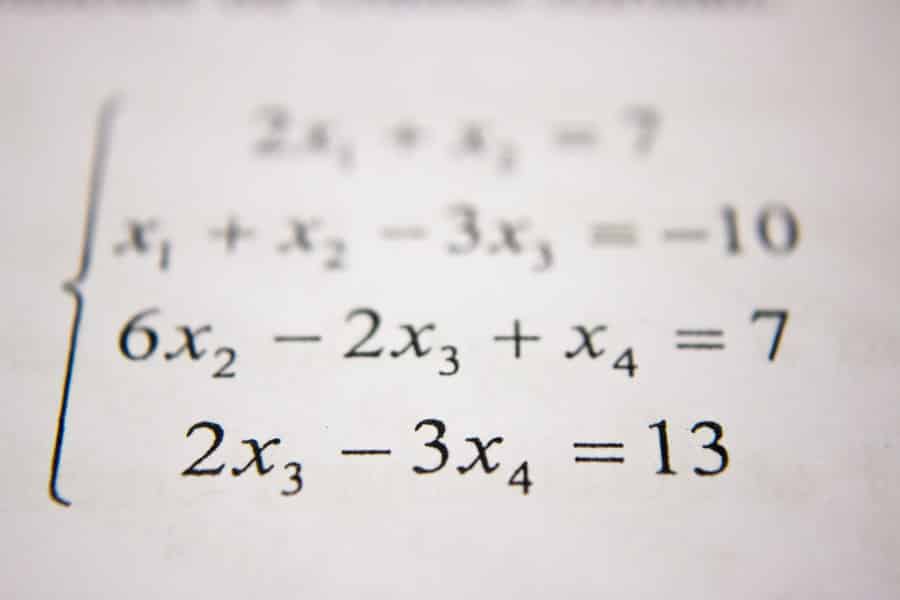
50 IB Maths IA Topic Ideas: Complete Guide
Struggling to find an IB Maths IA topic? Explore 50 proven Maths IA topic ideas, hand-picked by an IB expert to inspire your exploration and help you score highly.
25 Chemistry IA Topic Ideas for IB Students
Get 25 Chemistry IA Topic Ideas to boost your IB grades. Discover expert advice on choosing a winning topic for your Chemistry lab report and scoring high.

IB Biology IA Topic Ideas: 30+ Examples to Inspire You
Struggling with your IB Biology IA? Discover 30+ expert-curated IB Biology IA Topic Ideas and examples to inspire your research and help you secure a top grade.
How to Get Top Marks on Your IB Biology IA
Get top marks on your IB Biology IA. Learn the 5 crucial components, from personal engagement to data collection, with expert tips on grading criteria.