Skip to content
IB Theory of Knowledge (TOK): A Complete Guide to Demystifying TOK

IB Theory of Knowledge (TOK): A Complete Guide to Demystifying TOK

5 min read | Manmohini Tiwari | August 23, 2025

Understand the core components of IB Theory of Knowledge (TOK). This guide breaks down the curriculum, the areas of knowledge, and the two key assessments: the TOK exhibition and essay.

Demystifying TOK: Your Guide to the Theory of Knowledge

Let's be honest, Theory of Knowledge (TOK) can sound intimidating. It's the one part of the IB Diploma that doesn't feel like a normal "subject." You don't just memorize facts and formulas; you're asked to question the very nature of facts and formulas themselves. But here's the secret: TOK isn't about having all the answers. It's about learning to ask brilliant questions.

Think of it this way: your other subjects give you a map of the world (this is a historical fact, this is a scientific law). TOK teaches you how to be a cartographer—to understand how that map was made, who made it, what its biases might be, and how it shapes your view of the world. This guide will break down the components of TOK into simple, manageable parts so you can stop being confused and start thinking like a philosopher.

The Core Idea: What Is a "Knowledge Question"?

The entire TOK course revolves around exploring "knowledge questions". These aren't questions about specific content (like "When was the French Revolution?") but open-ended questions about knowledge itself. They are general, not subject-specific, and use TOK vocabulary.

  • Content Question: "What is the formula for calculating gravitational force?"
  • Knowledge Question: "How does the scientific method help separate valid claims from invalid ones?"
  • Content Question: "What themes are present in Picasso's Guernica?"
  • Knowledge Question: "How can art be a more powerful way to convey knowledge than a historical account?"

Your job in TOK is to explore these bigger questions, using examples from your IB subjects and your own experiences as a "knower."

The Building Blocks of the TOK Curriculum

The course is structured around a few key concepts that give you a framework for your exploration.

1. The Core Theme: Knowledge and the Knower

This is where you start. It's all about introspection. You're prompted to think about yourself as a thinker. What shapes your perspective? How do the communities you belong to (your family, your school, your culture) influence what you believe and know? This theme sets the stage by making you aware of your own biases and lenses through which you see the world.

2. Optional Themes (You'll study one of these)

These themes allow you to apply TOK thinking to specific, real-world contexts. You'll choose one to focus on with your class:

  • Knowledge and Technology
  • Knowledge and Language
  • Knowledge and Politics
  • Knowledge and Religion
  • Knowledge and Indigenous Societies

This is your chance to dig deep into an area that interests you. For example, if you choose "Knowledge and Politics," you might explore how political language is used to shape public opinion or the role of "fake news" in what we claim to know.

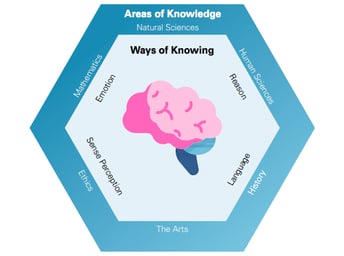
3. Areas of Knowledge (AOKs)

These are the big categories of human knowledge—essentially, your school subjects on a grander scale. You'll explore all five of these to understand what makes them different and what they have in common.

  • History: How can we know what happened in the past?
  • The Human Sciences: How can we study complex human behaviour in a systematic way?
  • The Natural Sciences: What counts as a "scientific" explanation?
  • Mathematics: Is math invented or discovered? Is it a language?
  • The Arts: How do the arts create knowledge and understanding?
The Lanterna Tip: The best TOK students constantly make links. When you're in your History class, think about the AOK History. When you're scrolling through social media, think about the theme of Knowledge and Technology. Don't keep TOK in a separate box in your brain—let it connect everything else you're learning.

How You're Assessed in TOK

There is no final, sit-down exam for TOK. Instead, your grade is based on two key projects that showcase your thinking skills.

1. The TOK Exhibition (33% of your grade)

This is an internal assessment where you demonstrate how TOK concepts manifest in the real world. You will:

  • Choose one of 35 "IA Prompts" provided by the IB (e.g., "What is the relationship between knowledge and culture?").
  • Select three specific real-world objects (or images of them) that connect to your chosen prompt.
  • Write a commentary of up to 950 words in total, explaining the link between each object and your prompt.

This is about showing, not just telling. You're curating a mini-exhibit to prove a point about knowledge.

2. The TOK Essay (67% of your grade)

This is an external assessment and the bigger of the two components. You will:

  • Choose one of six prescribed essay titles issued by the IB for your exam session.
  • Write a formal, structured essay of up to 1,600 words in response to the title.
  • Develop your argument using claims, counterclaims, and evidence drawn from the Areas of Knowledge and themes you've studied.

This is your chance to build a sophisticated, nuanced argument about the nature of knowledge.

Next Steps: Mastering the Essay

The TOK Essay is often the most challenging part of the course. It requires a unique style of writing and a deep understanding of how to build a philosophical argument. To get a head start, you need a clear strategy from the beginning.

Ready to tackle the biggest part of your TOK grade? Check out our comprehensive guide on how to plan, structure, and write a high-scoring essay.

Read Our Ultimate TOK Essay Guide
Manmohini Tiwari
Manmohini Tiwari
Hi, I’m Manmohini, an IB graduate with 40 points, now studying International Relations and Global Affairs in Italy. I earned 7s in HL History and HL English A, along with an A in TOK, and I’ve been tutoring these subjects for around four years. My experience working with organisations like NATO and the United Nations has deepened my understanding of global issues — something I love bringing into my lessons to make learning more relevant and thought-provoking. I focus on helping students see connections between ideas, develop strong essay and critical thinking skills, and approach the IB with confidence and curiosity rather than stress. My lessons are interactive and tailored to each student’s goals, whether that’s improving analysis, refining writing, or mastering exam techniques. I see tutoring as more than academics — it’s about building perspective and empowering students to express themselves clearly while staying balanced.. When I’m not tutoring, you’ll usually find me hiking, playing new music, or planning my next travel adventure.

Why Lanterna?

Lanterna Education is the largest IB-focused education provider worldwide, supporting students in over 150 partner schools across 50+ countries. Based in Stockholm, we have over 20 years of experience helping IB students achieve the best possible score in the IB.
15,000+
IB students tutored
1.5+
Avg. IB Subject grade Increase
36/45
Median final IB score for students
4.7
Trustpilot score

Many students find the TOK Essay and Exhibition challenging because they require abstract thinking and strong analytical skills. The essay demands a well-structured argument based on one of six prescribed titles, while the exhibition requires you to connect real-world objects to TOK concepts. A Lanterna tutor can help you break down these tasks into manageable steps.

The best objects are personal to you and have a clear, specific real-world context. They should serve as strong evidence for the arguments in your commentary. If you're struggling to find objects or link them to a prompt, a free consultation with a Lanterna Student Success Expert can be a great first step to brainstorm ideas.

A strong TOK essay requires a clear thesis, well-supported claims and counterclaims, and links to different Areas of Knowledge (AOKs). The key is to directly and consistently address the prescribed title. Our tutors, who are all high-scoring IB graduates, specialise in helping students develop a logical and persuasive essay structure.

Lanterna tutors act as mentors who guide you through the complexities of TOK. They can help you understand core concepts, refine your essay arguments, provide feedback on your exhibition commentary, and ensure your work meets the IB's assessment criteria. They don't give you the answers, but rather the tools to find them yourself.

The Lanterna IB consultation is a free, 20-30 minute online call with a Student Success Expert. It's an opportunity for students and parents to discuss their specific IB challenges, including TOK, and receive a personalised plan with clear priorities and next steps to improve grades and reduce stress.

Yes, it is completely free. The consultation is designed to provide genuine value and clarity on your IB journey. There are no hidden costs and absolutely no obligation to purchase tutoring afterwards. Our goal is to help you build a concrete plan for success.

The consultation is for any IB student (DP1 or DP2) or parent seeking to gain clarity, confidence, and a strategic advantage. It's especially useful if you're feeling overwhelmed by core components like the TOK, the Extended Essay, or struggling to balance your subjects.

Our Student Success Experts are IB specialists who have an in-depth understanding of the programme's demands. They are your first point of contact and lead the free consultation, using their expertise to help you identify your strengths and weaknesses and create a tailored action plan.

After your call, you'll have a much clearer understanding of your priorities and the immediate steps you can take. If you feel that one-on-one support would be beneficial, your Student Success Expert can recommend one of our expert IB tutors. However, there is no pressure or obligation to continue with us.


More free resources

How to Structure a TOK Essay: A Complete Guide

How to Structure a TOK Essay: A Complete Guide

Master the IB TOK essay structure with our complete guide. Get a step-by-step outline for your introduction, AOK paragraphs with claims/counterclaims, and conclusion.
IB Subject Selection: The Complete Guide

IB Subject Selection: The Complete Guide

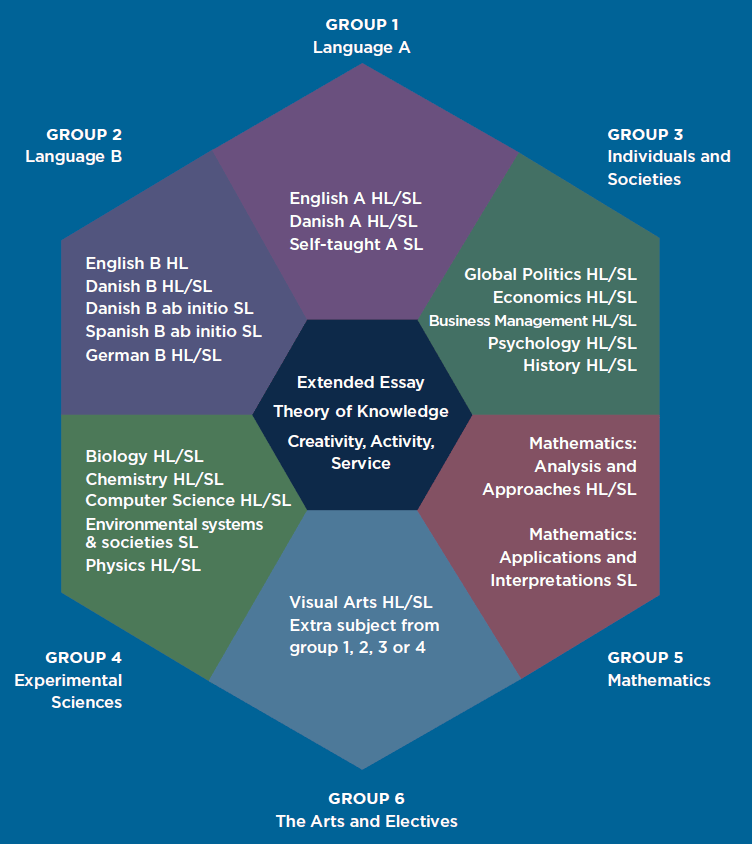
Learn how to choose the right IB subjects with our strategic playbook. Discover university requirements, HL vs SL workload, and our expert interest audit.

The IB Diploma Timeline: Your Two-Year Roadmap

The IB Diploma Timeline: Your Two-Year Roadmap

Navigate the two-year IB Diploma Program with our complete timeline. Understand the key deadlines for the Extended Essay, TOK, IAs, and CAS from DP1 to final exams.

The Ultimate IB Organisation System: Your Guide to Juggling it All

The Ultimate IB Organisation System: Your Guide to Juggling it All

Overwhelmed by the IB? Master organization with our expert guide. Learn to manage EE & IA deadlines, prioritize tasks, and build a balanced schedule without burnout.

A Parent's Guide to the IB Middle Years Programme (MYP)

A Parent's Guide to the IB Middle Years Programme (MYP)

Is the IB MYP right for your child? Our guide explains the curriculum and assessment, and directly compares the Middle Years Programme with the GCSE system.
Decoding IB Scores: What's a 'Good' Score for Your Dream University?

Decoding IB Scores: What's a 'Good' Score for Your Dream University?

Learn what a good IB score is for your university goals. This guide breaks down score ranges from the minimum pass to what's needed for competitive universities like Oxford, Cambridge, and the Ivy League.

IB English Lang & Lit vs. Literature: The Ultimate Decision Guide

IB English Lang & Lit vs. Literature: The Ultimate Decision Guide

Is IB English Literature harder than Lang & Lit? Compare both courses in our guide. We break down the syllabus, SL/HL assessments, and reading lists to help you choose the right fit.

IB vs. A-Levels vs. AP: Which Pre-University Path is Right For You?

IB vs. A-Levels vs. AP: Which Pre-University Path is Right For You?

Choosing between the IB, A-Levels, and AP? Learn the core differences in curriculum, assessment, and university recognition to decide which path best fits your goals.


Professional Support for the Final Push

For over 21 years, we at Lanterna have guided over 15,000 students to success in the IB. We have 500+ expert tutors that can support you in any subject.
 

GRADUATES

Scored 40+ in the IB and 7s in the subjects they teach
Best for: skill-building & relatable mentorship
 

TEACHERS

Certified educators with 10+ years’ IB experience
Best for: curriculum clarity & confidence building
 

EXAMINERS

Current or former IB examiners & senior markers
Best for: exam preparation & top-band results


BOOK A FREE CONSULTATION TODAY

Our student success experts give you personalised advice on how to best succeed in your journey.
100% Free · No obligation

Stockholm based, supporting students worldwide. We are IB experts committed to achieving your academic goals.

ABOUT US

Get In Touch

Sibyllegatan 47, Stockholm Sweden, 114 42

Contact us

ALL RIGHTS RESERVED. COPYRIGHT 2025. LANTERNA EDUCATION LTD, NOT AFFILIATED WITH THE IBO