-1.png?width=150&height=56&name=logotype_lanterna_education_blue%20(4)-1.png)
.png?width=500&height=256&name=Generated%20Item%20(13).png)
IB Predicted Grades Demystified: Your Ultimate Guide
Learn how IB predicted grades work and why they're vital for university offers. Understand the role of mock exams and IAs, and discover what steps you can take.
IB Predicted Grades Demystified: Your Ultimate Guide
Let's focus on one of the most stressful parts of DP2: predicted grades. It can feel like your academic future is being decided by a number your teacher comes up with months before you even sit the final exams. And while they are definitely important, they aren't the final word on your ability or your university prospects.
Think of this guide as a conversation with your tutor. We're going to break down exactly what predicted grades are, how they're decided, and most importantly, what you should do to influence them (and how to react if they’re not what you hoped for).
Part 1: What's the Big Deal with Predicted Grades?
Simply put, a predicted grade is your teacher's professional, evidence-based estimate of the final grade you'll achieve in their subject. Because most university applications are due long before your final IB exams, these predictions are often the main academic data universities use to assess you.
- University Admissions: This is the big one. In many countries, universities use predicted grades to gauge if a student is a good academic fit for their courses.
- Conditional Offers: For many universities, especially in the UK and Europe, your offer will be "conditional" on you achieving a certain score following your final exams. Predicted grades are what get you that conditional offer in the first place.
- Academic Feedback: They act as a crucial check-in, showing you where you're tracking and which subjects might need more focus before the final push.
How Universities See Your Predictions: A Global Snapshot
Not all universities treat predicted grades the same way. It's crucial to know how your target region views them.
| Region | How Predicted Grades Are Used |
|---|---|
| UK & Europe | Heavily relied upon. They are the primary academic indicator for making conditional offers. For top universities like Oxford and Cambridge, you'll need predictions in the 38-45 point range, with 7s in specific HL subjects. |
| United States | Part of a "holistic" review. They are important, but considered alongside your GPA, essays, recommendations, and extracurriculars. Strong predictions support your application, but they won't make or break it on their own. |
| Canada | A key factor. Canadian universities use them to make conditional offers, similar to the UK system. |
Part 2: The Formula: How Are Your Predicted Grades Calculated?
It is really important to realise that your teachers don't actually pick a number out of thin air. They act like detectives, gathering evidence from your entire time in the DP. Schools have to report predicted grades to the IB and they are monitored. So, a school's goal is to be as accurate as possible, and teachers therefore base their judgment on a few key pieces of evidence:
1. Mock Exams
In many schools this is the traditional heavyweight champion of prediction factors. Mocks are designed to simulate the real thing, so a strong performance here is the best evidence you can provide that you're capable of getting a top grade.
2. Internal Assessments (IAs)
The quality of your IA drafts and your final submitted piece is a huge indicator of your skill. It's a major project, and the only item a teacher sees that directly contributes to your final grade, so it heavily influences your teacher's prediction.
3. Consistent Performance
Your outcomes in class tests, essays, and assignments throughout DP1 and DP2 matter. Teachers look at your trajectory: Are you improving? Are you consistent? Has there been a 'blip' along the way? This body of work paints a picture of your work ethic and understanding.
4. Engagement & Participation
While not a direct calculation, your consistent attitude matters. A student who actively participates, asks thoughtful questions, and seeks feedback shows a commitment that a teacher will notice and factor into their professional judgment.
Part 3: The Game Plan: How to Positively Influence Your Predictions
Okay, so you're not a passive bystander in this process. You have agency. Here’s how to build a strong case for the grades you want:
- Start Your IAs Early: Don't leave them to the last minute. Give yourself time to draft, get feedback, and refine your work, asking verbal questions along the way. A polished IA is a guaranteed way to impress.
- Create a Medium-Term Mock Exam Revision Plan: Work backwards from your mock exam dates. Complete past papers under timed conditions and ask for the markschemes for review. Identify your weak spots and tackle them head-on. Don't just cram.
- Communicate with Your Teachers: If you're struggling with a topic, ask for help. If you want to know how to improve, ask for specific feedback. This shows initiative and a desire to succeed.
- Sweat the Small Stuff: Hand in homework on time. Prepare for your regular class tests. Consistency builds trust and demonstrates you're a serious student.
- Use AI Wisely: This is where AI can be a real game-changer: use prompts that ask it to coach you through your revision.
Part 4: "I'm Not Happy With My Predictions"—What Now?
It can be a gut punch to receive a predicted grade that’s lower than what you 'need' or what you feel you deserve. It's okay to be disappointed, but it's not the end of the road. Here is a productive, step-by-step approach to handle it.
- Stay Calm and Avoid Pleading: Your teacher has made a professional judgment based on evidence. Approaching them emotionally or demanding a change disresepects their position and will not lead to a constructive conversation.
- Schedule a Meeting: Ask for a 15-minute meeting to discuss your grade. This is organised, respectful of their time, and shows you are taking this seriously.
- Come Prepared with Evidence: Gather any recent tests, strong essays, or an improved IA draft to support your case. The goal is to be able to make a case that your recent performance suggests a higher potential than your past record.
- Ask the Right Question: Instead of "Can you please change my grade?", the question MUST be: "What evidence would I need to show you over the next few weeks to give you the confidence to reconsider my prediction before the final deadline?" This transforms the conversation from a confrontation into a collaboration, and shows that you take your own responsibilities seriously.
- Focus on the Final Exams: This is the most important step. A predicted grade is an estimate. Your final exam is a fact. Universities, especially if you narrowly miss a conditional offer, will look at your final results. Outperforming your prediction is the ultimate proof of your ability. Use a disappointing grade as fuel to power your revision.

I'm Mark Buckley, an IB educator and DP Coordinator with 20 years of experience teaching Visual Arts and TOK. My goal is to help students understand themselves and their own approaches to learning. By empowering and inspiring students, I support them to get the best out of themselves and really own their learning, regardless of the subject. Away from education, I love running, skiing and stimulating podcasts.
Why Lanterna?
IB predicted grades are your teachers' official estimates of your final IB exam scores. They are crucial because many universities, especially in the UK and Europe, use them to make conditional offers of admission before your final results are released. Strong predicted grades are often essential to be considered for competitive courses.
You can positively influence your predicted grades by consistently performing well in class, excelling in mock exams, and submitting high-quality Internal Assessments (IAs). Teachers look for evidence of your potential, so treating mocks and IAs with the seriousness of final exams is key. A Lanterna tutor can provide expert guidance to help you master your subjects and boost your performance on these key assessments.
First, schedule a calm conversation with your teachers to understand their reasoning and ask what specific improvements are needed. Focus on excelling in your upcoming assessments to demonstrate your capabilities. For a structured approach, a free IB consultation with Lanterna can provide a clear, personalised plan to help you strengthen your academic profile and get back on track.
The Lanterna IB consultation is a free, 20–30 minute online call with a Student Success Expert. It’s an opportunity for students and parents to discuss specific IB challenges, such as predicted grades or university applications, and receive a personalised action plan to achieve their goals.
Yes, completely free. The 20-30 minute consultation is designed to provide genuine value and clarity on your IB journey. There is no obligation to purchase tutoring afterwards; our goal is to help you identify your priorities and next steps for success.
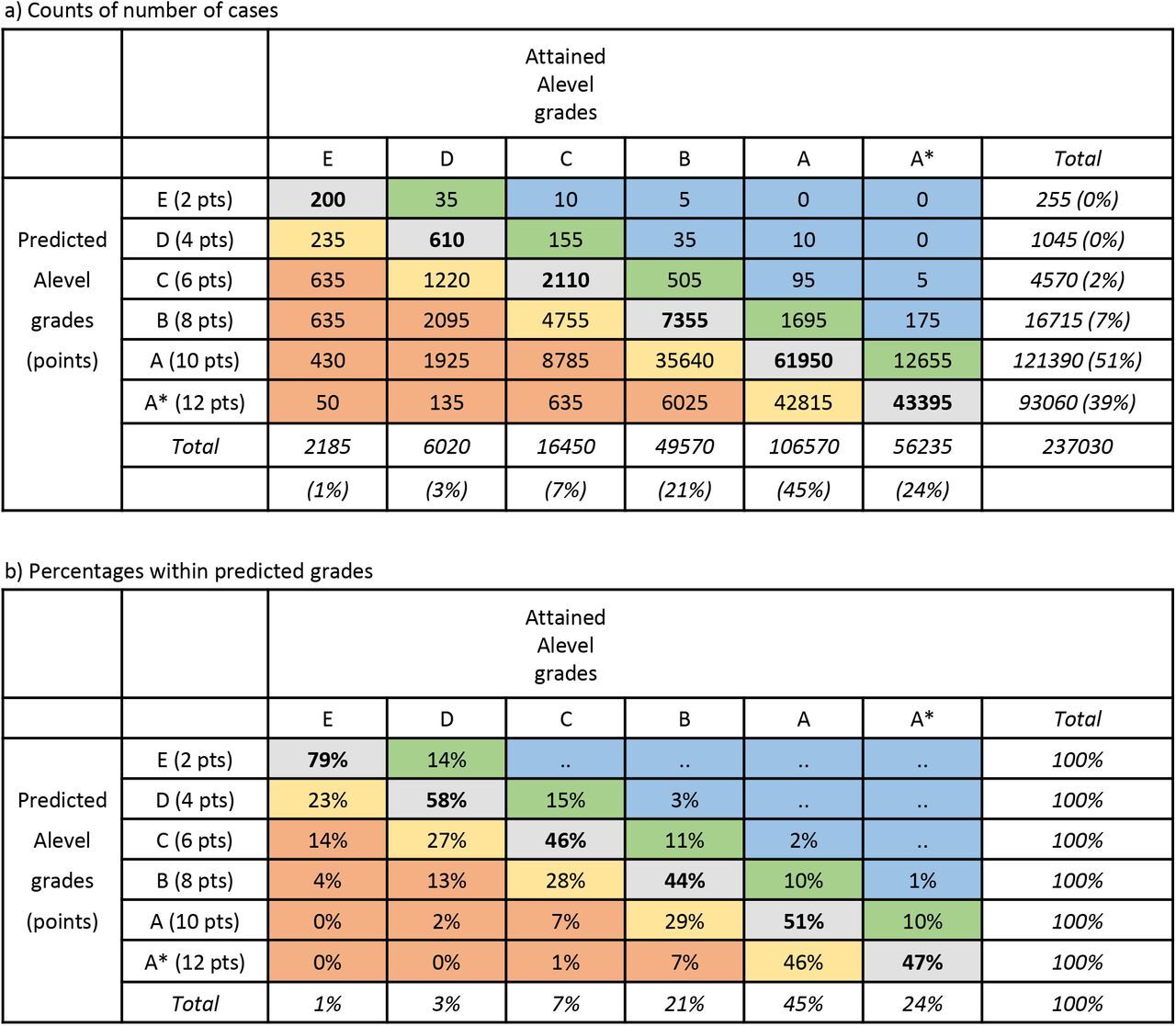
Historically, there's often a discrepancy. Only about 50-60% of predicted grades exactly match final results, with over-prediction being more common than under-prediction. This is why focusing on your final exams is crucial, as your actual results determine whether you meet university offer conditions. Lanterna's tutors can help you build a solid revision strategy to ensure your final grades reflect your true ability.
Our Student Success Experts are IB specialists who have extensive experience guiding families through the Diploma Programme. They are not tutors, but rather academic advisors who help you understand your challenges, set goals, and create a strategic plan, whether it's for improving predicted grades, managing IAs, or preparing for final exams.
Absolutely. Our tutors are all high-achieving IB graduates (scoring 40+ points) who are experts in their subjects. They provide one-on-one, personalised support to help you master difficult concepts, refine your exam technique, and build the confidence needed to turn your predicted grades into reality for any IB subject, at SL or HL.
After the call, you will have a clear understanding of your academic priorities and a concrete plan of action. If you decide that tutoring would be beneficial, your Student Success Expert will match you with the perfect tutor for your needs. If not, you are free to use the insights and plan from the consultation on your own. There is no pressure or obligation.
While it varies by school, official predicted grades are typically finalised and submitted to universities between September and October of your second IB year (DP2). This timeline is designed to align with major university application deadlines, like UCAS in the UK.
More free resources
The Importance of IB Predicted Grades
Learn how your IB predicted grades are calculated using mocks and IAs. Understand their crucial role for university offers and get expert tips for discussing them with teachers.

What's a 'Good' Score for Your Dream University?
Decoding IB Scores: What's a 'Good' Score for Your Dream University? Find score ranges from minimum pass to competitive entry requirements for Oxford, Cambridge, and Ivy League.

IB Score for Top Universities
What IB Score Do You Need for Top Universities? See the breakdown: 24 (Pass), 30-34 (Good), 38+ (Elite). Set realistic goals for top-tier universities.
Decoding the IB Report Card: A Guide for Students & Parents
IB Report Card Guide for Parents: Decode "Predicted Grade," "ATL Skills," and the 1-7 scale. Learn why a '5' is a strong IB score and understand your child's progress.

IB Parents Guide to University Applications
IB parents: Navigate college applications with this guide. Get expert tips on deadlines and proofreading while supporting your IB student's ownership of the process.

IB University Application Checklist
Get your free IB University Application Checklist: a timeline of key tasks (research, personal statements, recommendations) aligned with your IB schedule.

Killer University Motivation Letters
Master your university application with "Before vs. After" motivation letter examples. Learn what admissions officers want to see and how to showcase your IB experience.

IB Results Day Guide
IB Results Day Guide for Parents: Prepare for July 6th with tips for celebrations, handling a "near miss," calling universities, and using the remark strategy.
Professional Support for the Final Push
GRADUATES
TEACHERS
EXAMINERS
BOOK A FREE CONSULTATION TODAY
Stockholm based, supporting students worldwide. We are IB experts committed to achieving your academic goals.
ABOUT US