How to Structure a TOK Essay: A Complete Guide
Master the IB TOK essay structure with our complete guide. Get a step-by-step outline for your introduction, AOK paragraphs with claims/counterclaims, and conclusion.
Mastering the TOK Essay: The Only Structure Template You'll Need
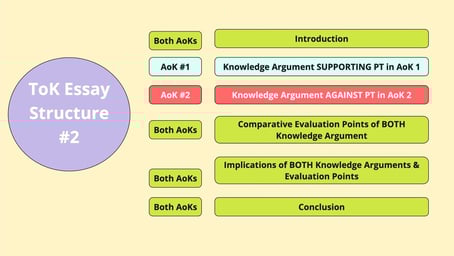
Let's be honest, staring at a blank page with a TOK Prescribed Title (PT) can feel overwhelming. The key to unlocking a high-scoring essay isn't some secret knowledge; it's a rock-solid structure. While the IB doesn't enforce one single way to write, this tried-and-tested framework will ensure your essay is clear, coherent, critical, and hits every point on the mark scheme.
Think of this not as a rigid set of rules, but as a scaffold. Your goal is to build a compelling argument within this framework, staying focused on the PT and the 1,600-word limit. Let's break it down, section by section.
Part 1: The Introduction (Approx. 150 words)
Your introduction is your first impression. Its job is to grab the examiner's attention, clarify your interpretation of the title, and state exactly what you're going to argue. No waffle, just focus.
- The Hook: Start with a broad, engaging sentence that introduces the central theme of the PT.
- Unpack the Title: Identify and define the key terms and concepts in the PT. How are you interpreting them for this essay? Acknowledge any tensions or assumptions within the question.
- The Thesis Statement: This is the most important sentence of your introduction. State your central claim—your direct, debatable answer to the question posed by the PT. It shouldn't be a simple yes/no, but a nuanced position.
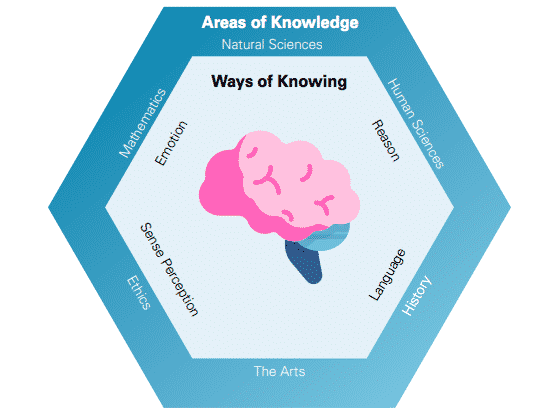
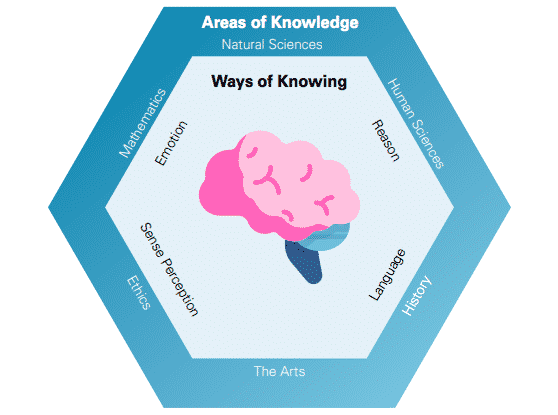
- The Roadmap: Briefly signpost which two Areas of Knowledge (AOKs) you will use to explore your thesis. This tells the examiner what to expect.
Part 2: The Body - AOK 1 (Approx. 600 words)
This is where you build your argument. You'll dedicate a large section to each of your two chosen AOKs. The magic formula is simple: Claim, Example, Analysis, Counterclaim, Example, Analysis, Link.
Step 1: The Claim
Your claim is your first main argument related to the PT, explored through the lens of this AOK.
- Topic Sentence: Start with a clear sentence stating your claim. For example: "Within the Natural Sciences, the production of knowledge relies heavily on a methodology designed to minimize ambiguity, as the PT suggests."
- Real-Life Example (RWE): Provide a specific, concrete example to support this claim. Don't just say "gravity"; talk about the LIGO experiment detecting gravitational waves. The more specific, the better.
- Explanation & Analysis: Explain how your example proves your claim. Crucially, explicitly connect this analysis back to the keywords and question of the Prescribed Title. How does this RWE illuminate your thesis?
Step 2: The Counterclaim
Now, you show the examiner you're a nuanced thinker. A counterclaim isn't about proving your first claim wrong; it's about exploring a different perspective, a limitation, or an alternative context.
- Topic Sentence: Introduce the opposing or alternative viewpoint. For example: "However, the interpretation of data in the Natural Sciences can still be shaped by existing paradigms, introducing an element of ambiguity that challenges the claim."
- New Real-Life Example (RWE): Support this counterclaim with a different specific example. Perhaps discuss the initial resistance to the theory of plate tectonics or the debate around interpreting climate models.
- Explanation & Analysis: Explain how this second example supports your counterclaim. Why does this alternative perspective matter?
- Mini-Conclusion / Link: Briefly evaluate the claim and counterclaim. Show how they both contribute to a more sophisticated understanding of the PT within this AOK. This is your transition sentence, wrapping up the AOK before you move on.
Part 3: The Body - AOK 2 (Approx. 600 words)
You've got this. Now, do it all again for your second AOK. The structure is exactly the same. By using a different AOK (e.g., The Arts), you'll demonstrate the breadth of your TOK understanding.
- Claim (within AOK 2) with its own specific RWE and analysis.
- Counterclaim (within AOK 2) with its own specific RWE and analysis.
- Mini-Conclusion / Link that synthesizes the discussion in AOK 2.
By comparing how the PT applies differently in two distinct AOKs (like History and Mathematics), you create a powerful, comparative essay.
Part 4: The Conclusion (Approx. 250 words)
Time to bring it all home. Your conclusion should be a powerful synthesis of your entire argument. Do not introduce any new claims or examples here.
- Restate Your Thesis: Start by restating your thesis from the introduction, but in new words, reflecting the insights you've gained through your analysis.
- Summarize Main Points: Briefly summarize the key insights from your exploration of AOK 1 and AOK 2. How did they support your overall thesis? What was the outcome of your claim vs. counterclaim discussions?
- Highlight Implications: This is where you score big marks. What are the broader implications of your conclusion? Why does your answer to the PT matter? What does it reveal about the nature of knowledge itself?
- Final Thought: End with a sophisticated, thought-provoking statement that leaves a lasting impression. You could suggest a remaining question or highlight the complexity of the issue.
Your TOK Essay Blueprint: Word Allocation
Stay disciplined with your word count to ensure a balanced essay.
| Essay Section | Recommended Word Count | Primary Goal |
|---|---|---|
| Introduction | ~150 words | Define terms, state thesis, provide roadmap. |
| Body Section (AOK 1) | ~600 words | Develop claim & counterclaim with specific RWEs. |
| Body Section (AOK 2) | ~600 words | Develop contrasting claim & counterclaim with specific RWEs. |
| Conclusion | ~250 words | Synthesize arguments, state implications, provide final answer. |
| Total | 1600 words | A clear, coherent, and critical exploration. |

Hi, I’m Manmohini, an IB graduate with 40 points, now studying International Relations and Global Affairs in Italy. I earned 7s in HL History and HL English A, along with an A in TOK, and I’ve been tutoring these subjects for around four years. My experience working with organisations like NATO and the United Nations has deepened my understanding of global issues — something I love bringing into my lessons to make learning more relevant and thought-provoking. I focus on helping students see connections between ideas, develop strong essay and critical thinking skills, and approach the IB with confidence and curiosity rather than stress. My lessons are interactive and tailored to each student’s goals, whether that’s improving analysis, refining writing, or mastering exam techniques. I see tutoring as more than academics — it’s about building perspective and empowering students to express themselves clearly while staying balanced.. When I’m not tutoring, you’ll usually find me hiking, playing new music, or planning my next travel adventure.
Why Lanterna?
A clear, logical structure is critical for a high-scoring TOK essay. While the IB doesn't enforce one single template, the Introduction-AOK1-AOK2-Conclusion format is a proven path to success. It ensures you develop your arguments coherently, using claims, counterclaims, and real-world examples to meet the assessment criteria effectively.
A frequent mistake is failing to link everything back to the prescribed title. Students might have a good structure and interesting examples, but if their claims and analysis don't consistently address the specific question asked, the essay loses focus. Another common issue is using descriptive examples rather than analysing them to explore knowledge questions.
Absolutely. Finding specific and insightful real-world examples is often the hardest part of the TOK essay. Lanterna's expert tutors, who are all high-achieving IB graduates, can help you brainstorm powerful examples relevant to your AOKs and show you how to analyse them effectively to support your claims and counterclaims.
Our TOK specialists can provide one-on-one support at any stage. They can help you deconstruct the prescribed title, refine your thesis, perfect your claim-counterclaim structure, and ensure your conclusion synthesises your arguments powerfully. It's personalised feedback designed to turn a good essay into an outstanding one.
Lanterna’s IB consultation is a free, 20–30 minute online call with a Student Success Expert. It's a chance for you and your parents to discuss your IB journey, challenges like the TOK essay, and academic goals to receive personalised guidance and a clear plan for improvement.
Yes, it is completely free. There is no obligation to purchase tutoring. Our goal is to provide valuable, expert advice to help your family navigate the IB. You will leave the call with a clear understanding of your priorities and actionable next steps, whether you choose to work with us or not.
The consultation is for any IB student or parent seeking clarity and a strategic advantage. Whether you're a DP1 student starting your TOK journey or a DP2 student finalising your essay draft, our experts can help you build a plan to improve your grades and reduce stress.
Our Student Success Experts are academic advisors who specialise in the IB Diploma Programme. They are not tutors, but rather strategists who listen to your specific needs and use their deep knowledge of the IB to help you map out a personalised plan for achieving your goals.
You'll leave the call with a clear strategy and defined next steps for your TOK essay and other IB subjects. If personalised tutoring seems like a good fit, your Student Success Expert may suggest one of our expert tutors. However, the primary goal is to empower you with a plan, and there is never any pressure to continue.
Yes, this is a perfect situation where a Lanterna tutor can help. They can review your teacher's feedback with you, clarify the comments, and help you create a concrete plan to revise your essay effectively. Booking a free consultation is a great first step to discuss how we can support you.
More free resources

The DP2 Comeback: Your Strategic Guide to Transforming IB Grades
Master your exams with our guide to the best IB revision techniques. Learn how to use active recall, spaced repetition, and past papers to study smarter and improve your scores.

Decoding IB Scores: What's a 'Good' Score for Your Dream University?
Learn what a good IB score is for your university goals. This guide breaks down score ranges from the minimum pass to what's needed for competitive universities like Oxford, Cambridge, and the Ivy League.
.png)
IB English Lang & Lit vs. Literature: The Ultimate Decision Guide
Is IB English Literature harder than Lang & Lit? Compare both courses in our guide. We break down the syllabus, SL/HL assessments, and reading lists to help you choose the right fit.

IB Subject Selection: The Complete Guide
Learn how to choose the right IB subjects with our strategic playbook. Discover university requirements, HL vs SL workload, and our expert interest audit.

Parent's Guide to IB DP2 Mock Exams
Support your child through IB mock exams with our DP2 Consolidation Guide. Access a 4-week revision plan, IA tracker, and wellness tips to boost confidence.

IB IA & EE Foundation Kit
Kickstart your IB research projects with our IA & EE Foundation Kit. Learn to choose viable topics, define measurable questions, and create a stress-free plan.

IB Past Paper Strategy: The Sprint Planner
Turn practice exams into top grades with our DP2 Sprint Planner. Master pacing, decode command terms, and fix mistakes using our proven 4-week schedule.

IB Chemistry: The Ultimate Study Guide
Master the 2025 IB Chemistry syllabus with expert tips from top-scoring tutors. Discover strategies for IAs, exams, and effective revision in this guide.
Professional Support for the Final Push
GRADUATES
TEACHERS
EXAMINERS
BOOK A FREE CONSULTATION TODAY
Stockholm based, supporting students worldwide. We are IB experts committed to achieving your academic goals.
ABOUT US