-1.png?width=150&height=56&name=logotype_lanterna_education_blue%20(4)-1.png)

Mastering IGCSE Science: Expert Study Hacks
No one can say that taking an IGCSE Science isn’t challenging! Unlike Maths or English, the Sciences seem to have an endless number of things to take into account and understand if learners want to get the results they’re really hoping for (and need!).
Often IGCSE Science students feel overwhelmed. But remember, you’re only human, and putting extra pressure on yourself won’t make things stick in your head. It’ll actually make your revision much harder. So to help you, our tutors have put together some expert study hacks to help make learning your IGCSE Science subjects easier.
But, before we begin sharing our Pro tips for your revision sessions and help you master your Sciences, we want to talk about some important things that help IGCSE students get top marks in exams in all their sciences.
Important Things Students Should Know Before Taking Their IGCSE Science Exams
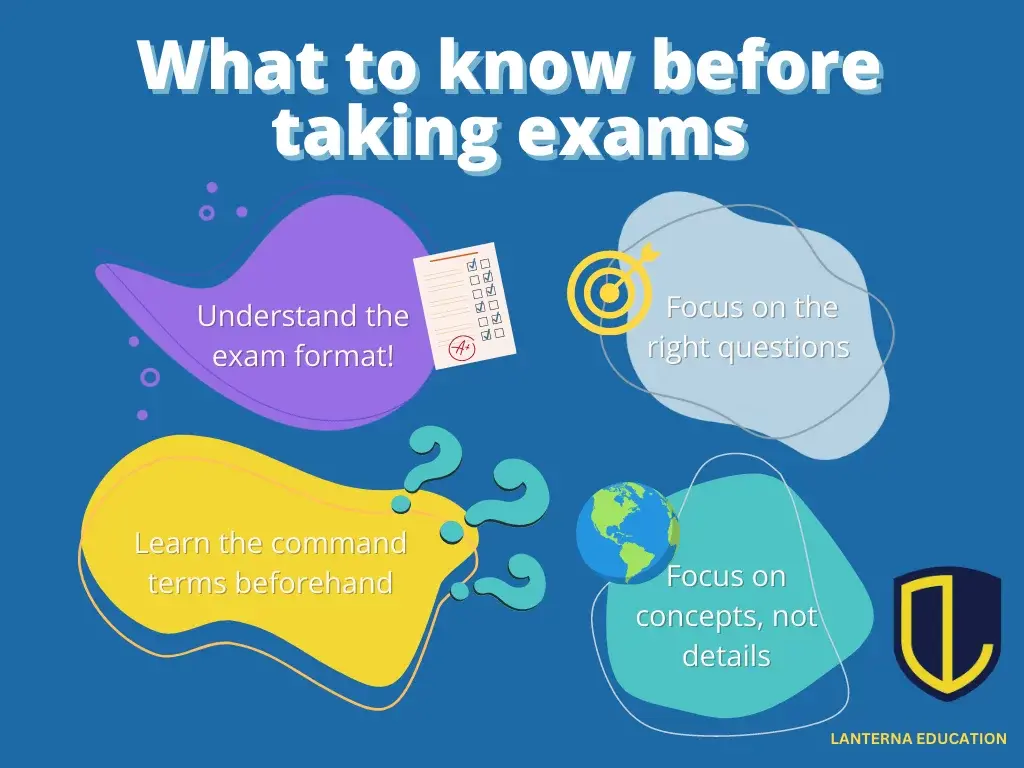
One of the keys to walking into your exams with confidence is knowing what to expect. So let’s take an in-depth look at what types of examination questions you can expect and the IGCSE Science exam paper formats.
The IGCSE Science Exam Formats Explained
As you probably already know, the most common IGCSE Science subjects are Biology, Chemistry and Physics. All the science subjects will have multiple different types of questions. It is crucial that you understand all of them!
Multiple choice questions
An IGCSE multiple-choice or MCQ paper gives statements or questions, and learners must pick the correct option from 4-5 other options.
These types of IGCSE exams test your ability to remember and apply knowledge and your understanding of core concepts by asking you to choose the best fit for the multiple-choice questions.
Short-answer Papers
The IGCSE’s short-answer paper has structured questions and spaces where students can write short answers.
These exams use a mark scheme that checks your understanding of core syllabus topics, and the IGCSE exam board looks at how you apply the information you learn from your textbooks.
Practical Exams
An IGCSE practical exam paper is supervised (usually by teachers or trained examiners). Students must use scientific equipment and resources, for example, beakers and chemical compounds, to complete a task and solve Chemistry, Biology or Physics questions.
During practical examinations, you get marks for your process and method, choosing the correct apparatus for the task, and any calculations you do. These assessments test how you put relevant concepts and textbook knowledge into practice.
Understand the Questions
Misunderstanding questions is a common error students make, which impacts their results. This means understanding how to answer a question is just as important as knowing the correct answer. To help you avoid making the same mistake, remember to read the whole IGCSE science question carefully before answering.
How do you make sure you don’t give the wrong answers? Easy! Learn how to identify “command terms.” Command terms, like explain, describe and compare, tell you what an exam board and examiners expect from you and how you should answer an IGCSE Science question.
Check the Marks
Another huge mistake our tutors see IGCSE learners make often? Forgetting to check the maximum number of marks you can get! Checking what each question is worth helps you manage your time wisely. Plus, it helps you focus on exam questions that can get you higher grades.
For example, if students don’t check how many marks correct answers can earn, they risk writing long answers to short-answer questions worth 1 mark. And waste time! So they’ll have even less time to finish more questions in the IGCSE Science examinations. Or less time to solve and answer sections worth more marks.
Key Concepts Are the Most Important Thing
Students usually think taking an IGCSE Science course means they have to remember heaps facts and data to reach academic success. But it’s a lot, and memorising knowledge for each science subject is intimidating.
But there’s a secret to mastering all your sciences without reading your Biology, Chemistry and Physics textbooks again (and making you crazy in the process!). The most important thing in the IGCSE Science course is really understanding the main concepts and processes.
So instead of trying to cram all the small details and exact numbers in your brain, focus on gaining an in-depth understanding of each larger concept. Studying gets easier, and so does putting concepts into practice. Plus, it’s far less scary!
4 Expert Study Tips To Help IGCSE Students ACE Science
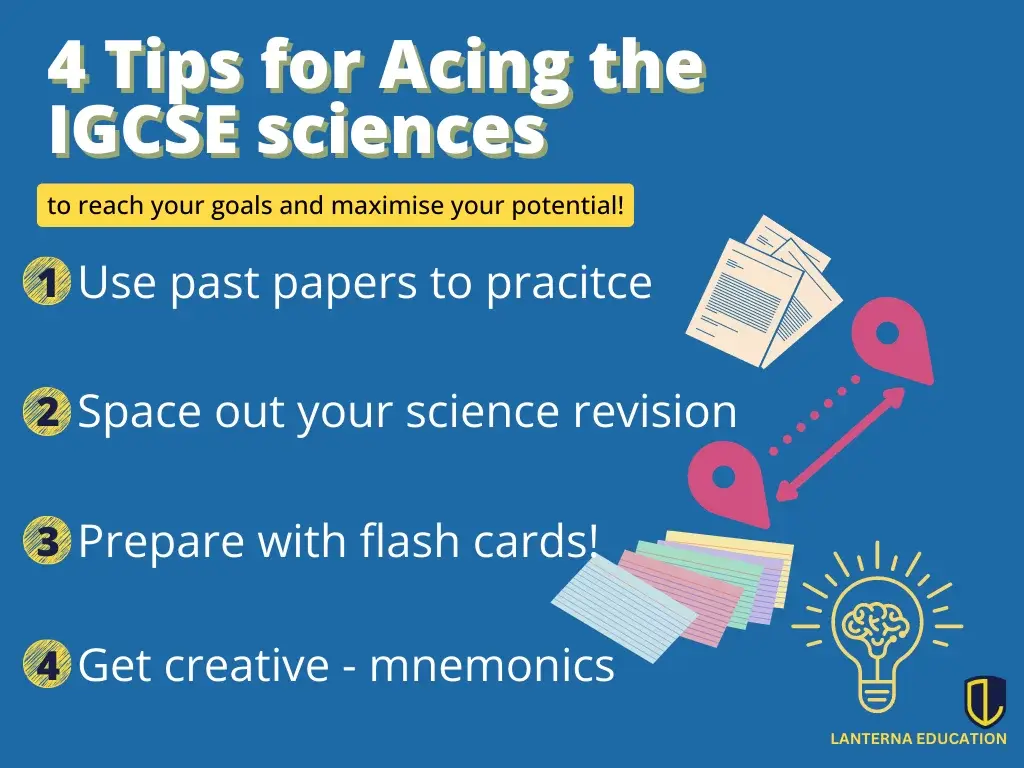
Now that you know where others go wrong and how to stop yourself from making some of the most common IGCSE science exam mistakes, let’s jump right into our Pro hacks for learning IGCSE Science syllabi and acing your course exams.
1) Use Past Papers to Practise
One of the best ways to prepare for your IGCSE Science assessment is to use past papers to test your knowledge and find your weaknesses and knowledge gaps.
Filling out past papers is a study hack that helps improve your ability to access memories (it’s known as active recall) and lets you practise time management. And reviewing the answers you got wrong helps you clearly see which concepts you should focus on learning and understanding.
2) Space Out Your Science Revision
Repeating knowledge and spacing out study sessions is also a learning technique that uses active recall. Spaced repetition means creating gaps between study sessions that repeat information and subject knowledge over a few days, weeks and even months.
There is a big difference between spaced repetition and simply re-reading your course textbooks because it improves revision by challenging you to actively tap into your memories and request important information stored in your long-term memory after a break from studying a subject.
3) Prepare With Flash Cards
Flashcards or index cards are great tools for science revision because they let you learn from your mistakes and help you remember the correct answer to a question. Plus, they’re great for challenging yourself to remember facts, concepts and even formulas for solving Physics calculations.
We know it’s tempting to put everything on a flashcard. Instead of creating lines of information, you can actually improve memorisation by adding a single question on one side. Then add a clue to the correct answer on the other side. This way, you practise your active recall by solving a puzzle.
4) Get Creative
And finally, our last IGCSE Science revision hack is one you can really have fun with. Do you remember this rhyme about rules for English spelling, “I before E except after C”? Well, that’s a great example of a Mnemonic technique.
Mnemonic techniques are one of the most creative ways to prepare for a Chemistry, Biology and Physics paper. And they help turn something ordinary, like a core concept or data, into something easy to remember using a rhyme, song, acronym, or doodle.

Make Lanterna Education Your IGCSE Science Study Buddy
Need a science study buddy? Lanterna Education tutors have loads of experience helping learners achieve academic success throughout their Cambridge IGCSE studies.
Our experienced tutors offer one-on-one study sessions and tutoring to IGCSE and IB learners around the world. We also provide Free guides and easy-to-follow hacks to help learners reach their full potential.

We’re the Lanterna Team — a group of 600+ IB expert tutors, ranging from 45/45 IB graduates to IB teachers with 30+ years of teaching and examiner experience.
For over 20 years, we’ve supported tens of thousands IB students worldwide with one clear focus: making high achievement feel more doable. Our team of experienced tutors have come together to combine their deep curriculum knowledge with practical strategies that are proven to work.
Whether you’re building strong foundations in DP1, pushing for a final stretch in DP2, or looking for clarity on what to prioritise, we’re here to help you study smarter, stay confident, and get results.

Which IGCSE subjects should you choose? Here’s a guide!
Learn how to choose IGCSE subjects for the IB DP and university applications. Our guide offers expert advice on subject groups and keeping your options open.
How to Do Well on Your IGCSE Physics
Learn how to do well on your IGCSE Physics exam with expert revision tips. Discover practical ways to make real-world connections and improve your understanding.

How to Take Effective IB Notes: A Step-by-Step Guide
Learn how to take effective IB notes with expert tips on condensing information, sticking to essentials, and using your own words. Ace your IB revision and exams.

How to Prepare for IGCSE Success
Learn how to prepare for IGCSE success with expert advice on setting SMART goals, effective revision tips, and understanding the qualifications. Trusted by IB graduates.

Complete Guide to the IGCSE Test
Understand the IGCSE test: your complete guide to this qualification. Learn about key subjects, differences from GCSE, and how it paves the way for A-Levels and IB.

How to Get a 7 in Your IB Science IA
Learn how to master your IB Science IA and achieve a 7 with expert tips on the Research Question, Personal Engagement, and clear Communication for top grading.

How to Improve Memory for IGCSE & IB Exams
Learn how to improve memory for IGCSE & IB exams with expert revision tips. Discover proven techniques like mnemonics and reorganization for top grades.

Key Tips to Boost Your IGCSE Maths Success
Boost your IGCSE Maths success with proven revision tips from an expert. Learn how to tackle difficult problems, study effectively, and take great notes for true mathematical growth.