-1.png?width=150&height=56&name=logotype_lanterna_education_blue%20(4)-1.png)

Mastering IB Exam Command Terms
Understanding command terms and knowing exactly what exam questions want from you is crucial. It’s key to getting as many marks in the bag from your examiner! So, in this week’s blog, I’m going to break down some common command words in exam questions.
I hope this will help those of you who are about to tackle the revision period!

Compare and Contrast
Starting off with the basics, what do these terms actually mean?
– Compare: Look for similarities
– Contrast: Look for differences
Whether you’re taking Language and Literature, or simply Literature for your Group 1 subject, you’ll probably have to tackle a compare and contrast style question. Let’s take two past paper questions for analysis. Here’s one from the May 2018 English A Language and Literature HL Paper 1:
“Analyse, compare and contrast the following two texts. Include comments on the similarities and differences between the texts and the significance of context, audience, purpose and formal and stylistic features.”
Here it is clear that comparing and contrasting the two texts through detailed analysis of context, audience, purpose etc. is what you’re expected to do. Helpfully, the question tells you exactly how to compare and contrast. You want to identify similarities and differences in the two texts. So try to identify the main features in both texts, and examine in what ways they are similar, and how they differ. Remember to consider why these similarities and differences might occur. You could link this back to the ideas of context, audience, purpose etc.

Now let’s take a different past exam question. This one is from the November 2017 English A Literature HL Paper 2:
“Some poems use repetition of language and/or content in order to reinforce and shape possible meanings. In what ways has this technique been employed in the work of at least two poets you have studied?”
Can you spot the difference between this question and the former? Well, this one does not explicitly tell you to compare and contrast. But this is exactly what you need to do! You want to compare and contrast poems by at least two different authors which demonstrate repetition of language and/or content in order to reinforce and shape possible meanings. Again, you want to evaluate how these similarities and differences impact the interpretation of these ‘possible meanings’.
Describe
Let’s firstly look at a definition to understand this command term:
– Describe: Give a detailed, factual account in words
So think of describing as giving details of a process. It’s almost like writing instructions as to why something might occur.
Let’s take a look at a past Chemistry HL Paper 3 question:
“Pepsin is a protein which functions as an enzyme in human stomachs. Describe the mechanism of the catalytic activity of an enzyme.”
With this question, you simply want to focus on the second sentence. Give details regarding the mechanism/process of the catalytic activity of an enzyme. Remember, you might not be expected to reach an ‘overall conclusion’ with this type of question. You just want to outline a process, to demonstrate how it works.

Explain
Here’s a quick definition of this command term:
– Explain: Provide details and give reasons to support what you’re describing
Let’s take a look at an old Biology HL Paper 2 question to see this command term in action:
“Explain how skeletal muscle contracts.”
So as I said, here you want to describe how skeletal muscle contracts, providing details and reasons as to why certain elements within this process occur. Remember to think about the marks on offer. Often this can be a clue as to how much detail is expected in your explanation. Sometimes, depending on the marks, a bit of analysis within your answer might enhance your response.
Evaluate
Of all the command terms, I feel that ‘evaluate’ is the trickiest to decipher. But it does crop up quite a bit in exam questions. Therefore it’s good to know exactly how to tackle this kind of question.
Here’s a definition of this command term:
– Evaluate: Give an overall assessment of value with a justification of conclusions or viewpoints

Now let’s take an old question from an Environmental Systems & Societies Paper 2:
“Pollution management strategies may be aimed at either preventing the production of pollutants or limiting their release into ecosystems.
With reference to either acid deposition or eutrophication, evaluate the relative
efficiency of these two approaches to management.”
Firstly, the question only wants you to evaluate one of either acid disposition or eutrophication. So, you want to explain the ways in which one of these strategies prevents the production of pollutants, and/or limits their release into ecosystems. You then need to look at the strengths and weaknesses of each approach. Once you’ve stated the pros and cons, from there you can review your points to form a conclusion on the method’s efficiency and success. Do the strengths outweigh the weaknesses? This is a good question to initially consider for your conclusion!
Let’s take another question. Here’s one from an old Economics Paper 1 (HL):
“Evaluate the view that monopolies, despite their inefficiencies, may often be considered desirable.”
As I said with the previous ESS question, evaluation is a case of looking at strengths and weaknesses and then forming an overall judgement. You want to identify the advantages and disadvantages (inefficiencies) of monopolies. Then comes the evaluation part. You want to explain why some take the view that the strengths of monopolies outweigh the inefficiencies. What is it about these weaknesses that means monopolies are still desirable? Don’t forget to consider who might take this viewpoint.
And there we have it! I hope this blog will help you with understanding command terms and what they really want from you. Don’t forget, if you need more support with your revision, let Lanterna help you! Our Spring Exam Preparation Courses are coming up in April. They’re the perfect way to consolidate your revision and boost your confidence!

We’re the Lanterna Team — a group of 600+ IB expert tutors, ranging from 45/45 IB graduates to IB teachers with 30+ years of teaching and examiner experience.
For over 20 years, we’ve supported tens of thousands IB students worldwide with one clear focus: making high achievement feel more doable. Our team of experienced tutors have come together to combine their deep curriculum knowledge with practical strategies that are proven to work.
Whether you’re building strong foundations in DP1, pushing for a final stretch in DP2, or looking for clarity on what to prioritise, we’re here to help you study smarter, stay confident, and get results.

Mastering IB Command Terms: Your Ultimate Guide
Master your IB exams by understanding key command terms. Our expert guide provides a complete list of definitions for terms like 'analyze', 'discuss', and 'evaluate'.
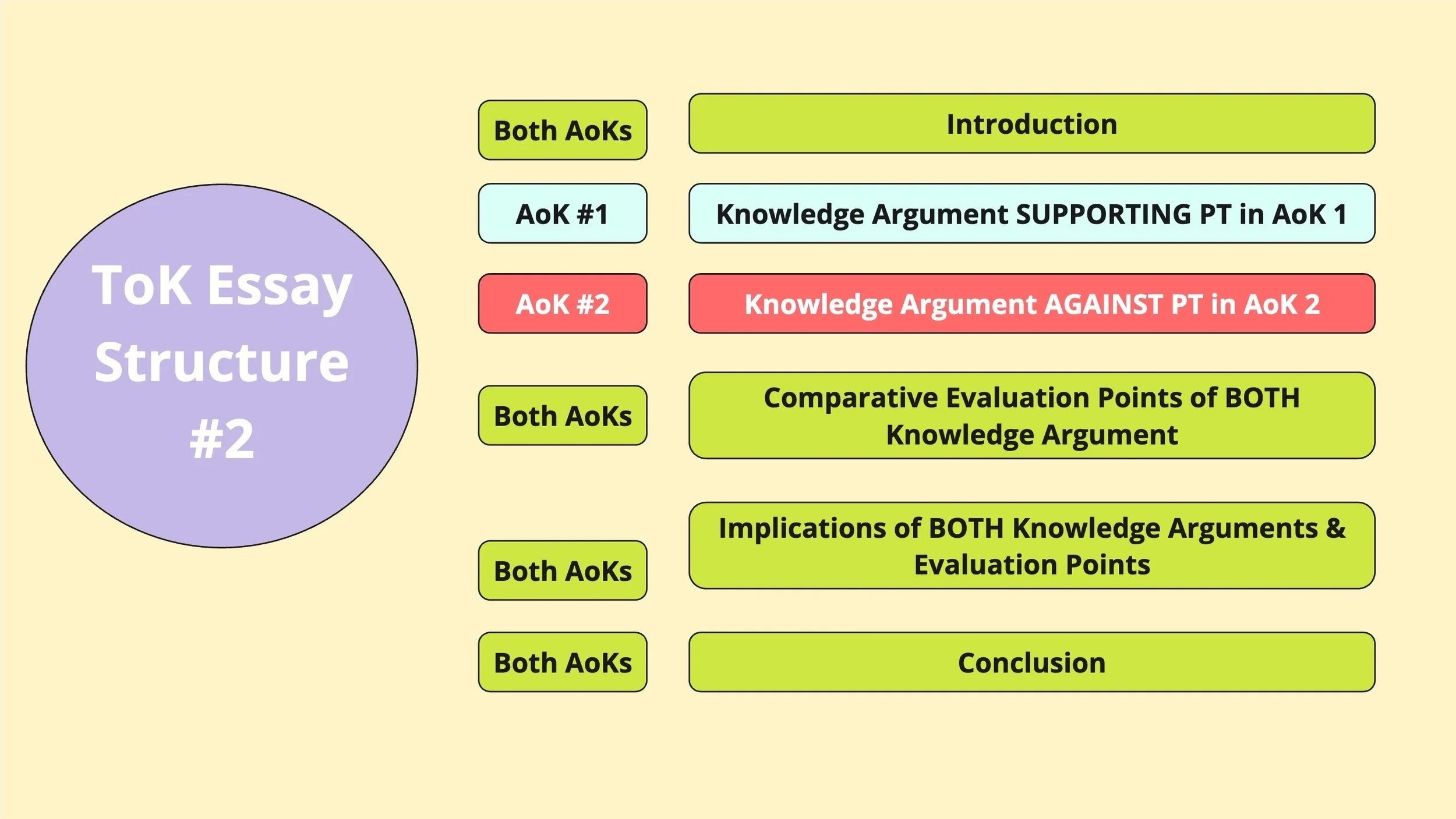
IB TOK Essay Structure Guide
Master the IB TOK Essay structure with our complete guide. Get step-by-step outlines for your introduction, AOK paragraphs (claims/counterclaims), and conclusion to hit top markbands.

IB Extended Essay (EE) Guide
What is the Extended Essay (EE)? Get a complete overview of this mandatory 4,000-word research paper in the IB Diploma Programme core.
.png)
The Ultimate Guide to Nailing Your IB Internal Assessment (IA)
A complete guide to the IB Internal Assessment. Learn how to choose a topic, manage your timeline, and structure your IA for a top grade. Includes tips for parents.

How to Structure Your IB TOK Essay Step-by-Step
Learn how to structure your IB TOK Essay step-by-step with this expert guide. Understand how examiners think and increase your TOK essay grading score with clear format tips.

Ultimate IB History IA Guide
Master your IB History IA with this ultimate guide. Get high-scoring topic ideas, structure advice, assessment criteria breakdown, and expert tips to avoid common pitfalls and achieve a 7.

How to Write Strong IB Argumentative Essays
Mastering IB argumentative essays is key to top grades. Learn expert strategies for strong evidence, logical premises, and critical self-evaluation in your IB IAs and TOK Essay.

TOK Essay: How to write the IB TOK Essay
Learn how to write the IB TOK Essay using expert tips on terminology (WOKs/AOKs) and structure. Master this challenging assignment with confidence.