Skip to content
How to Get a Top Grade in IB ToK

How to Get a Top Grade in IB ToK

6 min read | Lanterna Team | January 27, 2026

Learn how to get a top grade in IB ToK with expert tips covering Shared/Personal Knowledge, Ways of Knowing, and Areas of Knowledge. Achieve those crucial core points!

Hey Hey! It’s that time of year again…no, I don’t mean Christmas, I mean Theory of Knowledge time! Yay!

Getting a top grade in ToK is a) Totally Achievable and b) Super important.

It’s important because those 3 core points can be achieved before the exams – when everything gets real crazy in school. This means if you get the ToK points, you can get the advantage over other students competing for a uni place…all before exams even start.

In this post I’m going to go through everything you need to know to get a top grade in ToK in light detail. Lucky you! If you want the heavy detail, then check out the posts I link you to. Double lucky! Ok, let’s get started.

Shared vs. Personal Knowledge

In ToK class you need to break down what kinds of knowledge you’re looking at. This is one division.

Shared knowledge is knowledge that can be checked and corrected by other people. So ‘The earth is spherical’ is a matter of shared knowledge. If somebody wants to check they can send a tweet to the ISS and those folks our friends in space will hit you back with a selfie of what is obviously a spherical earth. That is an example of community checked knowledge.

Personal knowledge cannot be checked by a community. It involves things like feelings and skills. ‘I love this ToK article’ is an example of personal knowledge. No one else can tell you if that is true or if it is ‘correct’. Although, of course, I can tell you that you should love this post, after all, look at these llamas.

STOP GETTING DISTRACTED.

Anyway if you want to know more about shared vs. personal knowledge you can find lots more exciting details here.

Knowledge Questions and Knowledge Claims

The ToK syllabus says ‘an essay or presentation that does not identify and treat a knowledge question has missed the point’. Obviously this is kind of a big deal guys.

Basically knowledge questions ask about how we know things.

Knowledge questions are:

  1. About knowledge: ‘When was Henry VIII born?’ is not about knowledge; it is asking for a piece of knowledge. That’s not what we want. We want something like ‘Is history always biased?’ – now that’s a good knowledge question because it’s about knowledge in general. Good job me!
  2. Knowledge questions are also open – so they shouldn’t have ‘an answer’ like those boring questions you get in other subjects. Instead they should only lead to an endless philosophical discussion that leads you to wonder if ToK is pointless.
  3. Finally, knowledge claims should be general. See my example in point number 1 about history. This applies to all of history, not just the cold war, for example.

So what about knowledge claims??????

Well these are really important too, but I don’t have all day to spoon-feed you information. Honestly, students these days expect everything to be given to them on a plate. When I did the IB we had to look for information in libraries. No only that but the libraries were lit with oil lamps and all the books were actually stone tablets. Nowadays if you want to find out about knowledge claims all you have to do is look here 🙂 Glad you read that, huh?

The Ways of Knowing

Ok, this is a biggie – and really important to get those presentations, essays etc. hitting all of the syllabus requirements.

Here’s what you have to do:

  • Have a basic understanding of all the Ways of Knowing
  • Include 2 or 3 WoK in everything you write, speak or do in ToK class.

I can actually recommend two excellent articles, written by an expert in this field, which explain all the WoKs in a clear and enjoyable style. Plus, you know, I get an ego boost when people read my articles.

Ways of Knowing: Language, Senses, Emotion and Reason

Imagination, Faith, Intuition and Memory

Please stop getting distracted, we have more work to do.

Areas of Knowledge

ToK is all about categorising knowledge. Looking at the structures of ‘how we know what we know’ and understanding how we think about things. You should always keep in mind that the IB wants you to break down knowledge, whether into the AoKs, the WoK used to discover, the types of knowledge, personal / shared etc.

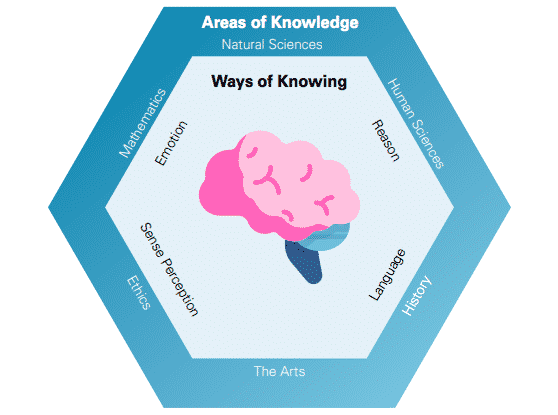
Now, you may remember from about 10 seconds ago that there are 8 Ways of Knowing (also known as WoKs in Chinese cooking).

As well as 8 WoKs, there are 8 Areas of Knowledge. This is not because the universe has an inherent beauty and rationality – a structure and guiding purpose that leads us to finally perceive that there truly is balance in all things. Instead it is because the IBO like neat stuff and mirrors.

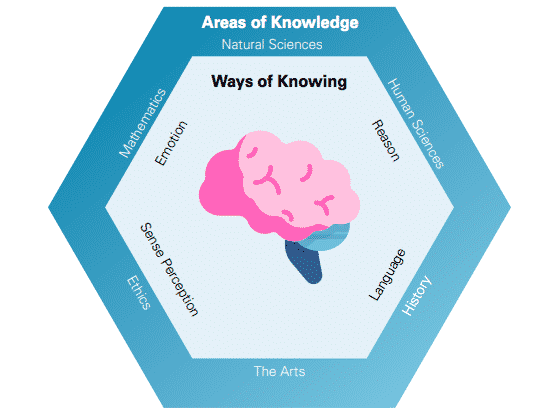
Nonetheless, here are the 8 Areas of Knowledge. There are 8 Areas of Knowledge, these are: Mathematics, the Natural Sciences, History, The Arts, Ethics, Religious Knowledge and Indigenous Knowledge.

Each Area of Knowledge is a system. Within each AoK system there are agreed ways to investigate things. This just means that, within each AoK there is consistency. That is all the ‘players’ of that ‘game’ (science for example) agree to use the same rules, like experimentation and statistical measurement. If you’re a scientist you will find that your rules do not apply in other games / AoKs. Artists tend not to value objective measurement in the same way.

The Lanterna Tip: If you’re a smart cookie you might notice that these somewhat mirror the IB subject areas. This is because the IB is grounded on the most philosophically sound principles of Education and Pedagogy.

Now, I’m going to be honest with you here, there is a lot to learn about the knowledge areas. It’s not hard to understand, but you need to read, like, an entire page about it. Sadly that won’t fit here* so I’m going to go ahead and link you to two awesome articles about the Areas of Knowledge.

*Clearly it would, this is the internet and we don’t have limited space here…but, you know, it’s easier to go check out the original articles.

Mathematics, the Natural Sciences, The Human Sciences and History

The Arts, Ethics, Religious Knowledge, Indigenous Knowledge

Knowledge Frameworks are also worth reading about and if you want all those precious ToK points, you should read up on them here.

You’ve made it to the end! Well done!

You now have access to loads of ToK resources, Tok Tips, and hopefully a better idea of what the ToK course wants you to learn. Now go through those resources, read up on everything we discussed and I promise you, when your teacher / examiner / mom looks at your ToK work you’ll get the gold star, the lollipop and the core points you deserve!

Lanterna Team
Lanterna Team
We’re the Lanterna Team — a group of 600+ IB expert tutors, ranging from 45/45 IB graduates to IB teachers with 30+ years of teaching and examiner experience.

For over 20 years, we’ve supported tens of thousands IB students worldwide with one clear focus: making high achievement feel more doable. Our team of experienced tutors have come together to combine their deep curriculum knowledge with practical strategies that are proven to work.

Whether you’re building strong foundations in DP1, pushing for a final stretch in DP2, or looking for clarity on what to prioritise, we’re here to help you study smarter, stay confident, and get results.

Why Lanterna?

Lanterna Education is the largest IB-focused education provider worldwide, supporting students in over 250 partner schools across 80+ countries. Based in Stockholm, we have over 20 years of experience helping IB students achieve the best possible score in the IB.
15,000+
IB students tutored
1.5+
Avg. IB Subject grade Increase
36/45
Median final IB score for students
4.7
Trustpilot score

ToK is crucial because it offers up to 3 core points towards your final IB Diploma score, which can significantly boost your university applications even before your final exams. It also develops critical thinking skills essential across all subjects and encourages you to reflect on the nature of knowledge itself.

Shared knowledge is publicly available and can be verified or corrected by a community (e.g., scientific theories, historical facts). Personal knowledge is subjective, based on individual experiences, feelings, and skills, and cannot be externally verified (e.g., personal beliefs or emotions). Understanding this distinction is fundamental to ToK analysis.

A good Knowledge Question (KQ) asks *how we know* something, rather than just asking for a piece of knowledge. KQs should be open-ended, leading to philosophical discussion, and general enough to apply across various contexts, not just specific examples. They are about the nature of knowledge itself.

Ways of Knowing are the methods through which we acquire and construct knowledge, such as emotion, reason, language, sense perception, imagination, faith, intuition, and memory. Understanding WoKs is vital for analyzing how knowledge is produced and evaluated in different contexts, and you should aim to include 2-3 in your ToK work to meet syllabus requirements.

Areas of Knowledge are specific branches of knowledge, each with its own methods, concepts, and values. They include Mathematics, Natural Sciences, Human Sciences, History, The Arts, Ethics, Religious Knowledge, and Indigenous Knowledge. ToK encourages you to explore how knowledge is structured and validated within these distinct domains, often mirroring IB subject areas.

Lanterna's expert ToK tutors, many of whom scored 40+ in the IB or have examiner experience, can provide personalised guidance on understanding complex ToK concepts, formulating strong Knowledge Questions, and structuring compelling essays and presentations. They help you develop the critical thinking skills needed to excel and secure those crucial core points.

Absolutely. Our tutors are highly experienced in guiding students through the ToK essay and presentation requirements. They can help you refine your topic, develop your arguments, ensure you effectively use WoKs and AoKs, and provide feedback to maximise your score, all while upholding academic integrity and the IB's guidelines.

The Lanterna IB consultation is a free, no-pressure 20-30 minute session with an IB Student Success Expert. It's designed to help you (and your parents) gain clarity on your current IB situation, discuss your challenges, and receive a personalised plan for your next steps, whether it's for ToK or any other aspect of the IB.

Yes, the consultation is completely free, and there is absolutely no obligation to book tutoring afterwards. Our primary goal is to provide valuable guidance and a clear plan to help you succeed in the IB, regardless of whether you choose to continue with Lanterna's services.

Our Student Success Experts are experienced professionals with deep knowledge of the IB programme. They've supported thousands of IB students and families, offering insights, strategies, and personalised advice to help navigate the IB journey successfully, from subject choices to exam preparation and core components like ToK.

During your free consultation, you can discuss your specific ToK challenges, whether it's understanding complex concepts, structuring your essay, or preparing for your presentation. Our Student Success Experts can help you identify key areas for improvement and outline a strategy to boost your ToK core points, potentially including how a Lanterna tutor could provide targeted support.


More free resources

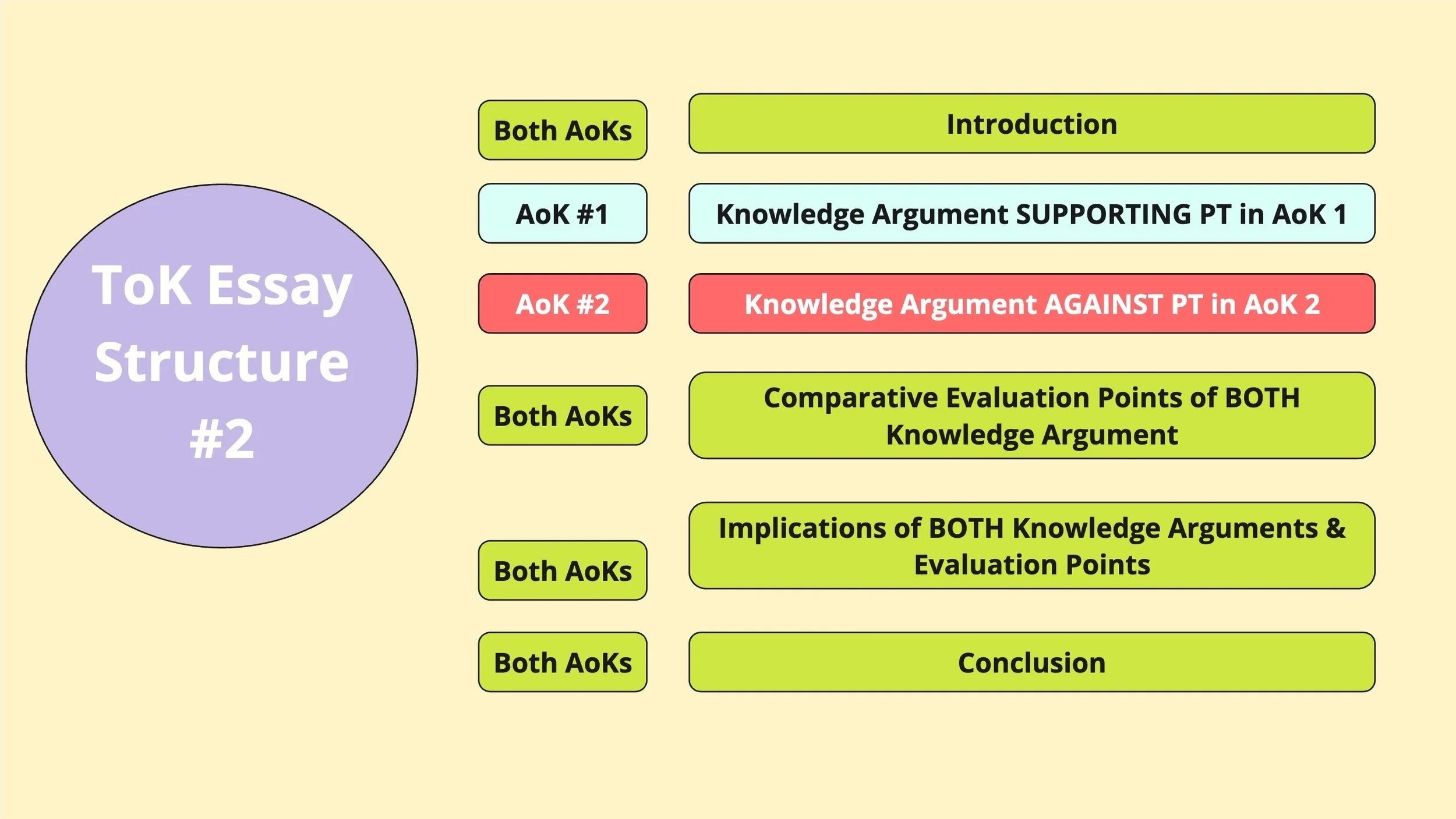
IB TOK Essay Structure Guide
TOKDP1DP2SciencesArtsDP1DP2...

IB TOK Essay Structure Guide

Master the IB TOK Essay structure with our complete guide. Get step-by-step outlines for your introduction, AOK paragraphs (claims/counterclaims), and conclusion to hit top markbands.

Master IB TOK Guide
TOKIAsUltimate GuideHumanitiesSciencesMathsArts...

Master IB TOK Guide

Master IB Theory of Knowledge (TOK) with our complete guide. Learn about the curriculum, areas of knowledge, and ace your TOK exhibition and essay with structure tips and examples.

35 TOK Exhibition Object Ideas
TheoryofKnowledge(TOK)DP2DP1Students...

35 TOK Exhibition Object Ideas

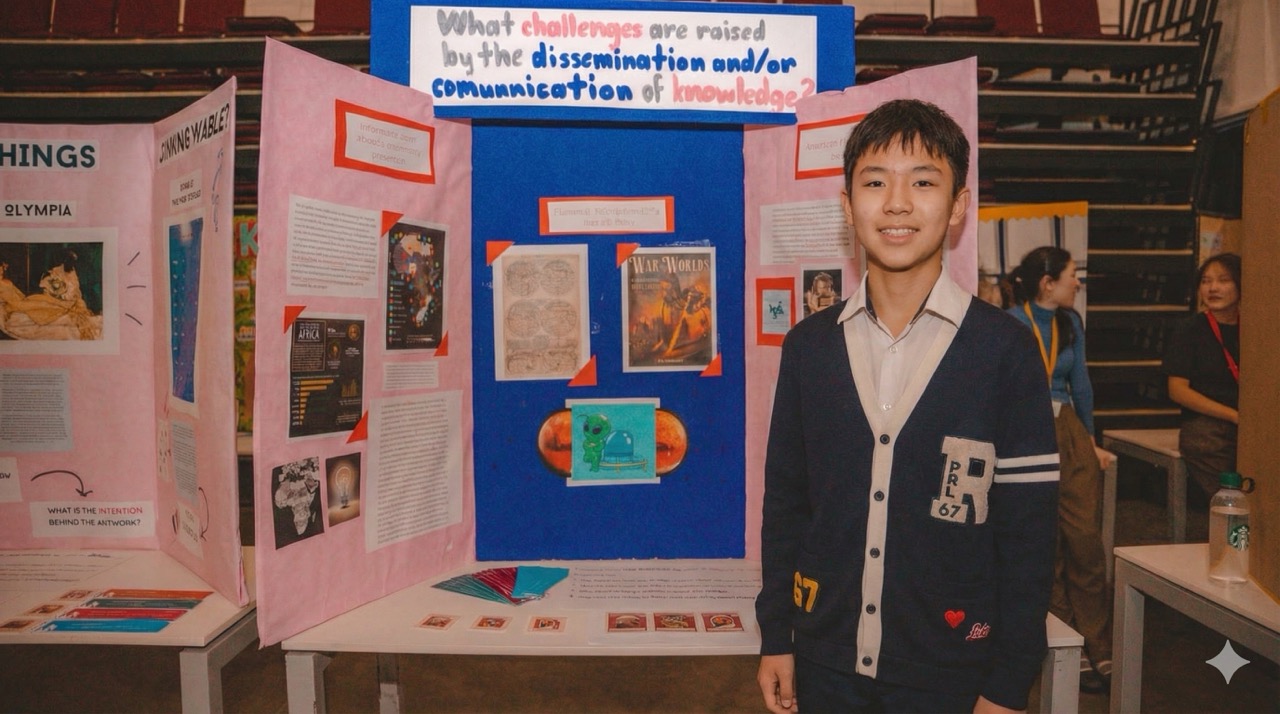
Master your TOK Exhibition! Get 35 diverse object ideas (tweet, toy, map projection) and guided questions to effectively link them to your IA prompts and core themes.

TOK Exhibition Guide (DP1)
DP1TOKIAsUltimate GuideDP1DP2Students...

TOK Exhibition Guide (DP1)

Master the IB TOK Exhibition (DP1) with this guide. Learn structure, view examples, and get tips on connecting real-world objects to knowledge questions for top marks.

How to Structure Your IB TOK Essay Step-by-Step
TOKUltimate GuideStudy SkillsStudentsDP1DP2Students

How to Structure Your IB TOK Essay Step-by-Step

Learn how to structure your IB TOK Essay step-by-step with this expert guide. Understand how examiners think and increase your TOK essay grading score with clear format tips.

Complete Guide to IB Theory of Knowledge Frameworks
TOKUltimate GuideAbout IBMathsSciencesHumanitiesArts...

Complete Guide to IB Theory of Knowledge Frameworks

Master IB Theory of Knowledge Frameworks. Learn how to apply the structure of the Areas of Knowledge (AoKs) in your essays and presentations for top results.

20 IB TOK Presentation Ideas with Examples
TOKIAsStudentsDP1DP2HumanitiesSciences...

20 IB TOK Presentation Ideas with Examples

Struggling with your IB TOK Presentation? Discover 20 successful TOK Presentation Ideas with examples and expert tips to ace your internal assessment.

IB TOK Exhibition: How it Differs from Presentations
TOKDP1DP2Students

IB TOK Exhibition: How it Differs from Presentations

Understand the new IB TOK Exhibition. Learn how it differs from the old presentations, including objects, individual work, and the standardized assessment/grading method.


Professional Support for the Final Push

For over 21 years, we at Lanterna have guided over 15,000 students to success in the IB. We have 500+ expert tutors that can support you in any subject.
 

GRADUATES

Scored 40+ in the IB and 7s in the subjects they teach
Best for: skill-building & relatable mentorship
 

TEACHERS

Certified educators with 10+ years’ IB experience
Best for: curriculum clarity & confidence building
 

EXAMINERS

Current or former IB examiners & senior markers
Best for: exam preparation & top-band results


BOOK A FREE CONSULTATION TODAY

Our student success experts give you personalised advice on how to best succeed in your journey.
100% Free · No obligation

Stockholm based, supporting students worldwide. We are IB experts committed to achieving your academic goals.

ABOUT US

Get In Touch

Sibyllegatan 47, Stockholm Sweden, 114 42

Contact us

ALL RIGHTS RESERVED. COPYRIGHT 2025. LANTERNA EDUCATION LTD, NOT AFFILIATED WITH THE IBO