-1.png?width=150&height=56&name=logotype_lanterna_education_blue%20(4)-1.png)

Ways of Knowing: Language, Sense, Emotion, Reason IB ToK
Master the IB Ways of Knowing: Language, Sense Perception, Emotion, and Reason for ToK success. Learn how to ace your presentation and essays with expert tips.
Pt. 4 – The Ways of Knowing: Language, Senses, Emotion and Reason
What are the Ways of Knowing?
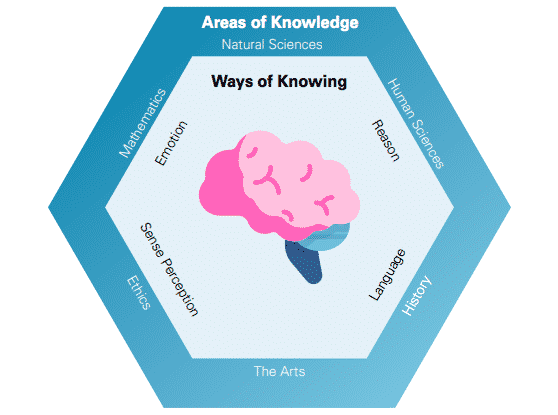
All knowledge comes from somewhere. Even if we say it is innate (comes from within us) we still have to say how that knowledge appears. The Ways of Knowing are what they sound like, the methods through which knowledge becomes apparent to us. While we focus on areas of knowledge, we can also look at ways of knowing that form a major part of the IB syllabus.
In the IB there are eight different ways of knowing:
- Language
- Sense perception
- Emotion
- Reason
- Imagination
- Faith
- Intuition
- Memory
Although this might seem like a lot, the good news is that for the IB you’re only really advised to study four of them in depth (although it’s worth knowing how each of them works).
Communicate knowledge: Language
Language is one of the first ways of knowing, and is defined as a system of signs with meanings. These signs include, but are not limited to: letters, pictures, symbols, sounds and gestures.
Language is everywhere, some aspects of it may even be universal. As well as being everywhere, language is crucial to our survival and success.
However, despite its omnipresence and importance, language is full of potential problems. Problem areas crop up like sarcasm, ambiguity (when something isn’t clear), irony and translation issues.
We all know how a joke in one language might not work in another! Language is really important for communicating knowledge, despite its flaws. It’s why creative writing and writing a Tok essay are used to test how a student can communicate knowledge.
As ToK students, we should think about how language communicates knowledge and some of the problems that might creep up when we try to pass on knowledge through signs as symbols. One fascinating topic that you might not have heard of is the debate over ‘linguistic determinism‘.
This is the idea that language determines the way we think. The idea is that because a specific community speak in a certain way, the way they think is structured accordingly.
You could argue that using only a specific language, limits our ability to think! Others argue that the way we see things and the way we think about them are not limited to our culture, but are universal.
This is an ongoing debate and a really interesting one to consider using in your presentation or essays. Real world experiences may show you how language functions in many different ways, too.
Sense Perception
This Way of Knowing relates to the way a person uses and understands their senses. Traditionally these people have thought that we only have five senses: touch, taste, smell, hearing and sight.
However, as time has passed more and more senses have been suggested.
Others that it has been claimed that people have included the sense of heat, sense of pain, of movement, of balance and of hunger and thirst, even a sense of where our body parts are in space has been suggested. This is a facet of our existence, and we rely on our actions to improve our needs in order to function better in the natural world.
Some of these might seem a little unusual, but try this: in a moment, close your eyes and try to touch your forefingers together.
Were you successful? I bet you weren’t far off! But only the sense of proprioception (where your body is in space) could have allowed you to do this.
You can also probably think of your favourite chocolate bar, and you might even be able to taste it while imagining that you have it in your hands.
One of the big debates here surrounds the concept of empiricism.
This term, which you might have heard of, refers to the theory that all knowledge comes from the senses. This is a historical view. Now, it is commonly believed that our expectations help shape our sense of experiences.
Deciding how perceptions and beliefs influence each other is a fascinating topic for essays and presentations. Optical Illusions are a good illustration of how the brain’s expectations influence our sense of experiences and interact with our outside world. That’s because an optical illusion presents new knowledge in other ways that make our brains change its sense perception of the world.
This might be in contrast to the natural sciences, where there are few ways of knowing that use different methodology, and concepts don’t rely solely on past experiences with the senses.
Emotion
There are two important views of emotion that tend to come up in ToK. One is called the naturalistic view of emotions. This view tells us that emotions are a result of our physical bodies, with physical causes and effects.
Charles Darwin was one supporter of this view. One interesting implication of the naturalistic view is that emotions are seen as universal and experienced across cultures. The opposite view to this is that of social constructionists.
These guys argue that emotions are socially constructed. This would mean that emotions come from our social environment.
The social constructionists might point at emotions like shame and say that shame is an emotion based on social ideas of what is right and what is wrong.
Without society telling you what actions were ‘wrong’ you might never feel shame. One question you might consider is whether emotions are a help or a hindrance when it comes to gaining knowledge.
You could argue that emotions are a problem when seeking knowledge. For example, you might argue that emotions hinder rational thought and thus distorts reality.
However, someone might disagree with you, or give you a different answer.
Somebody could tell you, for example, that without emotions it is difficult to make sense of cultural and social experiences.
People with autism often struggle to understand social situations and to know what it is other people feel, and may have issues with understanding movement in social settings.
What does this say about the universality of emotions? Are there different ethics to discuss surrounding this topic? This can be one of the most challenging concepts to understand, however, it is an integral part of the arts, history and life itself!
Reason as a way of communicating knowledge
Most people would tell you that they are reasonable, but definitions of reason vary greatly amongst the general population. Do you know what reason means? It is often used as evidence to support why you think something is true, and can be used in different areas of your educational experience.
There are three things you should know about to get started in understanding the reason: First is the ability to use logical deduction.
This allows us to go from starting ideas (premises) to reach valid conclusions. Here’s a simple example: Premises 1: Rex is a dog. Premises 2: All dogs have fur (remember this doesn’t have to be true) Question: Does Rex have fur? Valid Conclusion: Yes Rex has fur. Going from premises to conclusions like this is called logical ‘deduction‘.
Earlier it was noted that deduction leads to valid conclusions. This does not mean that the conclusions are true.
What it means is that if the premises are true then the conclusions will be true.
Here’s another example. Premises 1: Peter is a man Premises 2: All men have eight legs Question: Does Peter have eight legs? Valid conclusion: Yes, Peter has eight legs. Remember that this might not be true, people don’t usually have more than two legs! However, the conclusion is still logically valid because it follows from the two starting premises.
Second is the ability to use logical Induction. When we used deductive logic above we made general statements (about men and about dogs).
We used these to show something specific about a man (Peter, showing he had eight legs) and a dog (Rex, showing he had fur).
With inductive logic, we take a specific example to tell us something about the general. For example, you might have noticed that most windows are made of glass. We could say the following Step one: All the windows I have seen are made of glass Step two: Therefore all windows are made of glass Notice that inductive reasoning can involve probability.
You might think that because you’ve seen so many windows and they were all made of glass, that all windows are made of glass. However, there is nothing stopping a window from being made of plastic or of jelly. You should know something about logical induction: it is what we call ‘inferential‘. This is that it makes a statement which is not strictly provable.
There’s no way I can prove that all the windows in the world are made of glass. The idea that they are is just inferred from my experience. This notion of inference helps separate deductive and inductive reasoning.
GOOD JOB!
You’re halfway through the Ways of Knowing.
Hopefully, you found some of that interesting, although it can be a lot to pick up all at once. If you think you understood most of what was in this post then you’re well on your way to being able to talk confidently about the Ways of Knowing and ace your presentations and essay!
In our next blog post (part 5) we’re covering the remaining Ways of Knowing: imagination, faith, intuition and memory. These might involve spiritual conviction where other ways of knowing do not, especially when discussing faith.
These are going to be really interesting, and once you have a grip on them you can happily say you know about all the Ways of Knowing. Good job keeping up with your Theory of Knowledge work, soon you will be a ToK master! You’ll begin to tackle the areas of knowledge in no time!

We’re the Lanterna Team — a group of 600+ IB expert tutors, ranging from 45/45 IB graduates to IB teachers with 30+ years of teaching and examiner experience.
For over 20 years, we’ve supported tens of thousands IB students worldwide with one clear focus: making high achievement feel more doable. Our team of experienced tutors have come together to combine their deep curriculum knowledge with practical strategies that are proven to work.
Whether you’re building strong foundations in DP1, pushing for a final stretch in DP2, or looking for clarity on what to prioritise, we’re here to help you study smarter, stay confident, and get results.
Why Lanterna?
The Ways of Knowing are the fundamental methods through which we acquire and process knowledge. The IB TOK syllabus identifies eight distinct Ways of Knowing: Language, Sense Perception, Emotion, Reason, Imagination, Faith, Intuition, and Memory. For your TOK assessments, you're typically advised to explore at least four of these in depth.
Language, defined as a system of signs with meanings (including letters, symbols, sounds, and gestures), is crucial for communicating and shaping knowledge. While essential for human interaction, it presents challenges such as ambiguity, sarcasm, and translation issues. Exploring concepts like "linguistic determinism" helps students understand its profound impact on how we think and perceive the world.
Sense Perception involves using and understanding our senses (the traditional five, plus others like proprioception) to gather information about our environment. TOK encourages students to critically examine how our perceptions and pre-existing beliefs influence each other, often debating the concept of empiricism – the theory that all knowledge ultimately derives from sensory experience.
TOK explores two main perspectives on emotion: the naturalistic view (emotions as universal, physical responses) and the social constructionist view (emotions shaped by our social environment). A key debate is whether emotions are a help or a hindrance in gaining knowledge, as they can both distort rational thought and provide crucial insights into human experience and ethical considerations.
Reason is a fundamental Way of Knowing. Deductive reasoning moves from general premises to specific, logically valid conclusions (e.g., "All dogs have fur; Rex is a dog; therefore, Rex has fur"). Inductive reasoning moves from specific observations to general inferences, which are not strictly provable but are inferred from experience (e.g., "All windows I've seen are glass; therefore, all windows are made of glass"). Understanding this distinction is crucial for TOK analysis.
Absolutely. Our expert TOK tutors, many of whom scored 40+ in the IB and have examiner experience, can guide you through complex concepts like the Ways of Knowing. They'll help you develop strong arguments, structure your essay and presentation effectively, and ensure you meet the IB's specific criteria for top marks, all while adhering to academic integrity.
Lanterna's TOK tutors provide personalised support, helping you clarify your understanding of TOK concepts, brainstorm compelling real-world examples, refine your knowledge questions, and develop the critical thinking skills essential for both the essay and presentation. They'll also share strategies for tackling common challenges and maximising your grades.
The Lanterna IB consultation is a free, no-pressure 20-30 minute session with an IB Student Success Expert. It's designed to help IB students and parents gain clarity on their academic situation, understand the IB requirements, and identify key areas for improvement across any subject, including challenging aspects of TOK.
Yes, the Lanterna IB consultation is genuinely free, with absolutely no obligation to purchase tutoring. Our primary goal is to provide valuable insights and a personalised plan to help you succeed in the IB. You'll walk away with clear priorities and next steps, backed by our team's extensive experience supporting thousands of IB students.
Our Student Success Experts are highly experienced IB graduates and educators who deeply understand the intricacies of the IB Diploma, including the nuances of TOK. They can help you identify specific challenges in TOK, discuss effective study strategies, and explain how Lanterna's expert tutors can provide tailored support to boost your understanding and grades.
After your free 20-30 minute consultation, you'll receive a clear, personalised plan outlining what to focus on for your IB journey, including specific advice for TOK. There's no pressure to continue with tutoring, but if you choose to, our Student Success Experts can help match you with the perfect tutor from our global network to support your individual needs.
More free resources
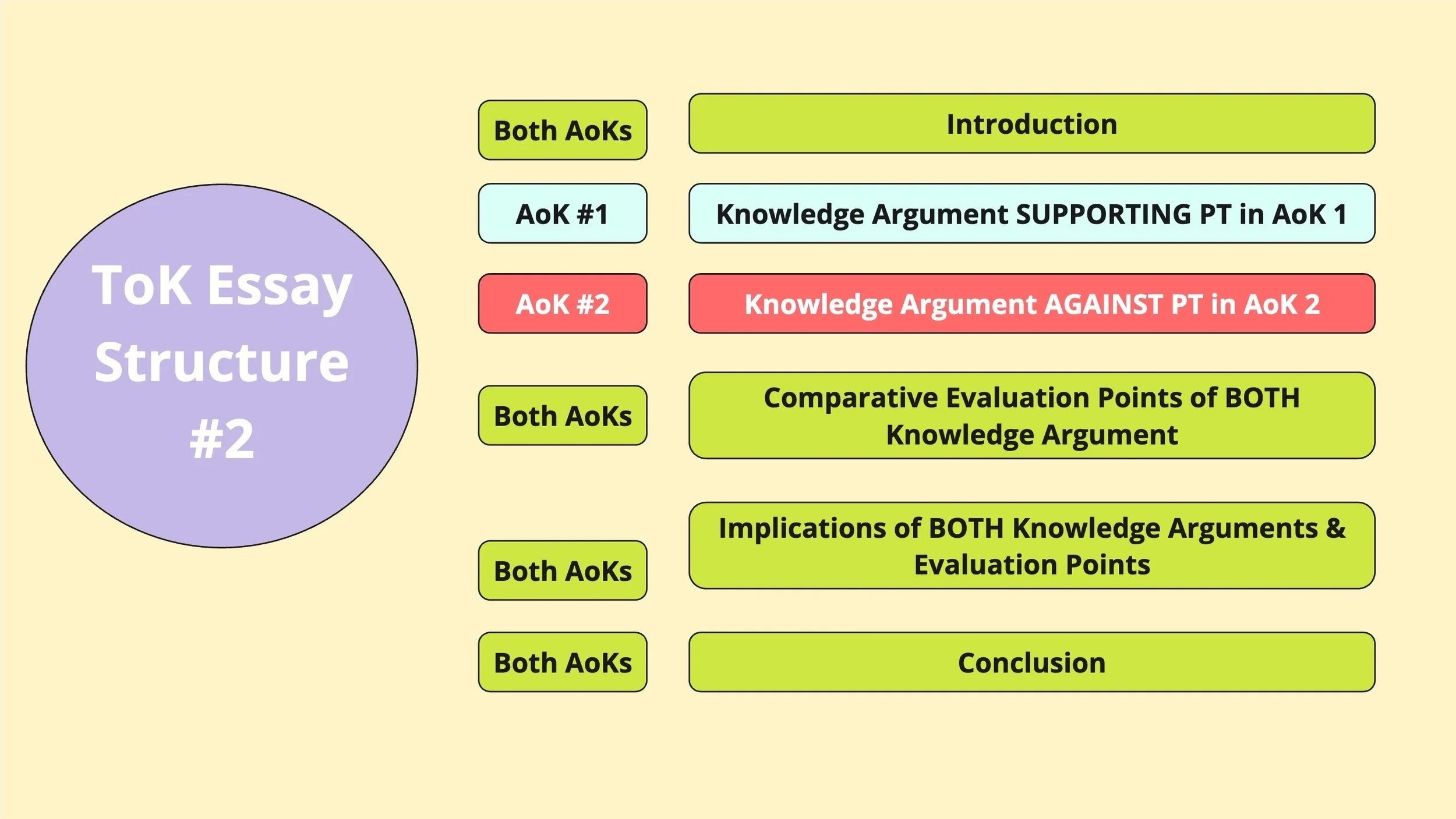
IB TOK Essay Structure Guide
Master the IB TOK Essay structure with our complete guide. Get step-by-step outlines for your introduction, AOK paragraphs (claims/counterclaims), and conclusion to hit top markbands.
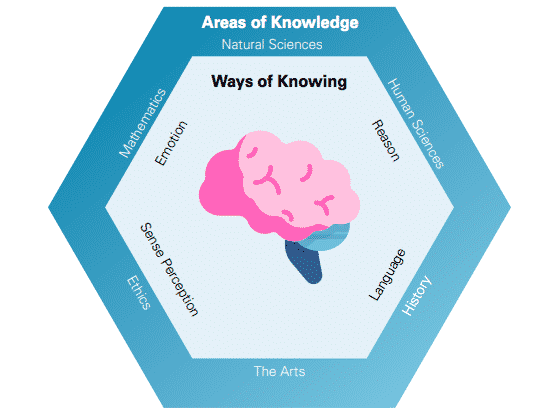
Master IB TOK Guide
Master IB Theory of Knowledge (TOK) with our complete guide. Learn about the curriculum, areas of knowledge, and ace your TOK exhibition and essay with structure tips and examples.
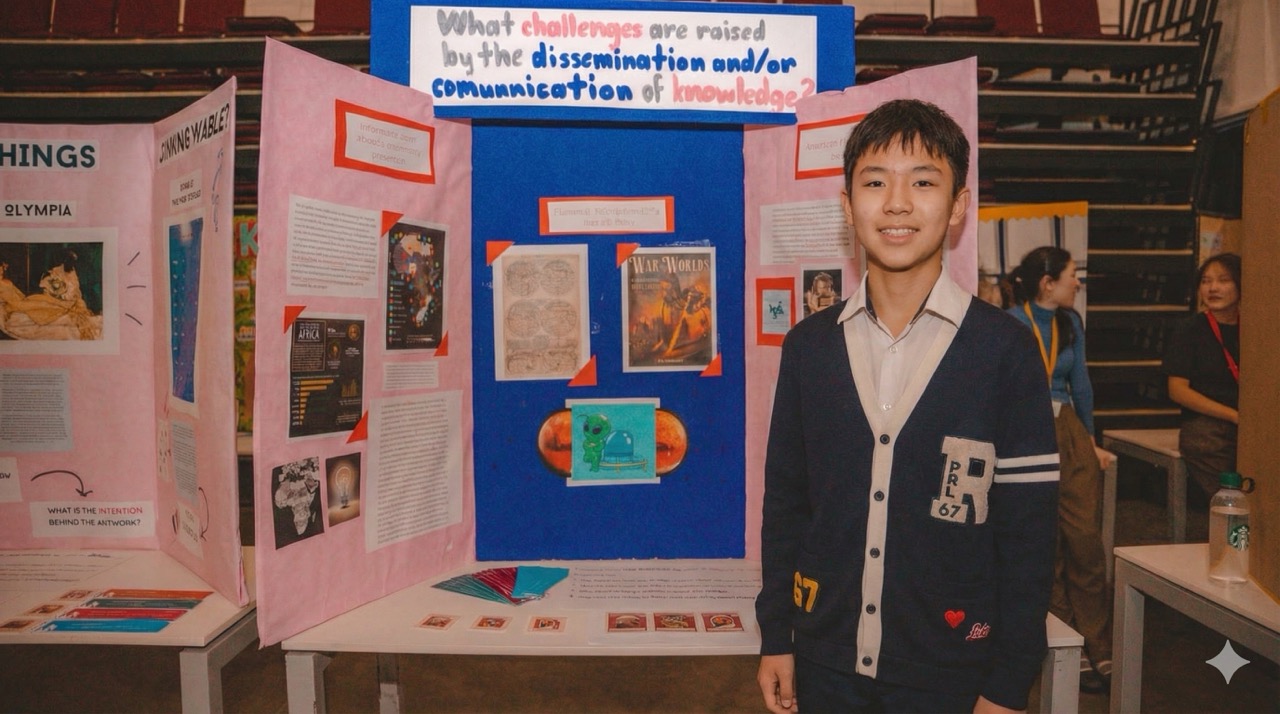
35 TOK Exhibition Object Ideas
Master your TOK Exhibition! Get 35 diverse object ideas (tweet, toy, map projection) and guided questions to effectively link them to your IA prompts and core themes.
TOK Exhibition Guide (DP1)
Master the IB TOK Exhibition (DP1) with this guide. Learn structure, view examples, and get tips on connecting real-world objects to knowledge questions for top marks.

How to Structure Your IB TOK Essay Step-by-Step
Learn how to structure your IB TOK Essay step-by-step with this expert guide. Understand how examiners think and increase your TOK essay grading score with clear format tips.
Complete Guide to IB Theory of Knowledge Frameworks
Master IB Theory of Knowledge Frameworks. Learn how to apply the structure of the Areas of Knowledge (AoKs) in your essays and presentations for top results.
20 IB TOK Presentation Ideas with Examples
Struggling with your IB TOK Presentation? Discover 20 successful TOK Presentation Ideas with examples and expert tips to ace your internal assessment.

Complete Guide to IB TOK Areas of Knowledge
Learn how to master the IB TOK Areas of Knowledge. Expert guide to understanding the AoK framework, features, and key debates for your TOK essay.
Professional Support for the Final Push
GRADUATES
TEACHERS
EXAMINERS
BOOK A FREE CONSULTATION TODAY
Stockholm based, supporting students worldwide. We are IB experts committed to achieving your academic goals.
ABOUT US