.png?width=500&height=256&name=Generated%20Item%20(7).png)

The Ultimate IB Note-Taking Guide: Methods & Apps
Discover the best note-taking methods for the IB, from the Cornell system to mind maps. This guide reviews top apps like Notion & OneNote to help you study effectively.
The Ultimate IB Note-Taking Guide: Methods & Apps
In the IB, your notes aren't just for remembering what the teacher said. They are your personal textbook, your revision guide, and your secret weapon for exam success. Simply transcribing lectures won't cut it. You need a system that forces you to think, connect ideas, and actively engage with the material. Let's break down the best methods and digital tools to make your notes work for you.
Part 1: Master the Core Methods
Before you even open a laptop or an app, you need a strategy. Think of these as the operating systems for your brain. Different subjects and learning styles call for different approaches, so don't be afraid to mix and match.
The Cornell Method
Best for: Content-heavy subjects like History, Biology, and Economics, where you need to review and recall specific information.
This is the gold standard for a reason. Divide your page into three sections: a main area for notes (right), a smaller "cue" column (left), and a summary section at the bottom. During class, you take notes in the main section. Afterwards, you pull out key questions, vocabulary, or syllabus points into the cue column. Finally, you write a 2-3 sentence summary at the bottom. The magic is in the post-class processing; it forces you to revisit and synthesise the information.
The IB Advantage: The cue column is perfect for jotting down TOK links, potential IA ideas, or questions for your teacher.
Mind Mapping
Best for: Visual learners and subjects that require you to see connections, like TOK, Literature, or Economics.
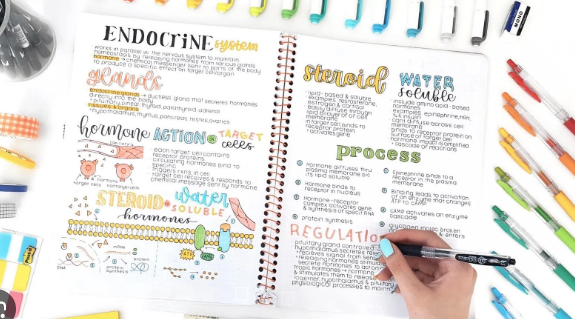
Start with a central concept (e.g., a character in a novel or a macroeconomic policy) and branch out with related ideas, themes, quotes, and diagrams. Use colours, symbols, and images to make connections memorable. Mind mapping is less about capturing every detail and more about understanding the structure of a topic.
The IB Advantage: It's an incredible tool for planning essays, IAs, or your Extended Essay. You can visualise your entire argument before you write a single paragraph.
The Outline Method
Best for: Taking structured notes from a textbook or a well-organised lecture.
This is probably the most traditional method you've used. It uses a hierarchy of bullet points and indentation to show the relationship between main topics, sub-topics, and supporting details. It's clean, logical, and easy to follow. To make it IB-effective, be sure to actively decide what's important rather than just copying the textbook's structure.
The IB Advantage: Great for creating concise revision guides that align directly with the IB syllabus points.
The Charting Method
Best for: Subjects with lots of information that needs to be compared and contrasted, like History (comparing wars), Chemistry (properties of elements), or Language B (verb tenses).
Create a table or a chart with columns for different categories. As you learn, you fill in the relevant information in the corresponding cells. This makes it incredibly easy to see patterns, similarities, and differences at a glance, which is a high-level skill the IB rewards.
The IB Advantage: Perfect for Paper 2 style questions that require you to compare and contrast case studies or literary works.
Part 2: The IB Student's Digital Toolkit
Your note-taking method is the 'how,' these apps are the 'where.' The right app can supercharge your organization, allow for collaboration, and make your notes accessible anywhere. Here’s a breakdown of the top contenders for IB students.
| App | Best For... | Key IB Feature | Platform |
|---|---|---|---|
| Notion | The 'All-in-One' Workspace. Creating a personal dashboard for all your subjects, IAs, EE, and CAS. | Databases and templates. You can track IA progress, create revision timetables, and link your notes between subjects. | Web, Mac, Windows, iOS, Android |
| OneNote | The Digital Binder. Mimics a physical folder with sections and pages for each subject. | Excellent drawing tools and the ability to insert PDF 'printouts' to annotate directly on lecture slides or past papers. | Web, Mac, Windows, iOS, Android |
| Notability / GoodNotes | The Handwriting Pro. Best for students with a tablet and stylus who want to replicate the pen-and-paper experience. | Audio-syncing (Notability) lets you record lectures while you write, linking your notes to the exact moment in the audio. Both are amazing for PDF annotation. | iOS, iPadOS, macOS |
| Evernote | The Search Master. Great for capturing everything from web clippings and PDFs to handwritten notes. | Its powerful search can find text inside PDFs and even in your handwritten notes, making it easy to find information quickly. | Web, Mac, Windows, iOS, Android |
| Google Keep | Quick Capture. For jotting down quick thoughts, making to-do lists, and setting reminders. | Its simplicity. Perfect for managing daily homework, short-term checklists, and quick brainstorming without getting bogged down. | Web, iOS, Android |
Part 3: From Good Notes to Great Grades
Having the right method and app is only half the battle. The real difference-maker is your habits. Here are the strategies our top tutors swear by:
- Engage, Don't Just Transcribe: Your goal is to understand, not to have a perfect script of the lesson. Listen for main ideas, ask questions (even in your own head), and write things in your own words. If you're just typing what you hear, you're a stenographer, not a student.
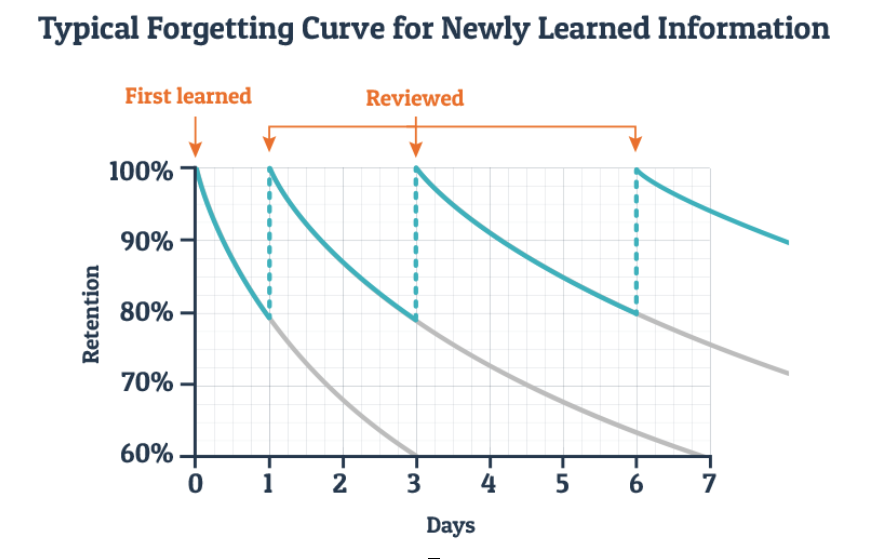
- The 24-Hour Rule: This is a non-negotiable. Review your notes within 24 hours of making them. This is when you fill in gaps, create your Cornell cues, or add colour to your mind map. It shifts information from your short-term to your long-term memory.
- Practice Your Handwriting: All your final IB exams are handwritten. Regularly taking notes by hand (even on a tablet) builds writing stamina and ensures your hand doesn't cramp up 30 minutes into Paper 1.
- Condense to Revise: Before a test, your goal should be to transform your 20 pages of notes on a topic into a single, one-page summary or mind map. This process of condensing is one of the most powerful forms of revision there is.
- Adapt to the Subject: Your Math notes should look different from your Language & Literature notes. For Math, focus on worked examples and processes. For Lit, use mind maps for characters and themes. Don't use a one-size-fits-all approach.

Hi, I’m Manmohini, an IB graduate with 40 points, now studying International Relations and Global Affairs in Italy. I earned 7s in HL History and HL English A, along with an A in TOK, and I’ve been tutoring these subjects for around four years. My experience working with organisations like NATO and the United Nations has deepened my understanding of global issues — something I love bringing into my lessons to make learning more relevant and thought-provoking. I focus on helping students see connections between ideas, develop strong essay and critical thinking skills, and approach the IB with confidence and curiosity rather than stress. My lessons are interactive and tailored to each student’s goals, whether that’s improving analysis, refining writing, or mastering exam techniques. I see tutoring as more than academics — it’s about building perspective and empowering students to express themselves clearly while staying balanced.. When I’m not tutoring, you’ll usually find me hiking, playing new music, or planning my next travel adventure.
Why Lanterna?
There's no single 'best' method, as it depends on the subject and your learning style. Our guide recommends combining approaches: the Cornell Method is excellent for structured revision in subjects like History or Economics, while Mind Maps are great for visualising connections in Biology or planning TOK essays. The key is to be active, not passive, in how you engage with the material.
It's a common problem! Start by consolidating your notes for each topic into one-page summaries, focusing only on key syllabus points. If you're unsure what to prioritise, a Lanterna tutor who aced that specific subject can help you cut through the noise and build an effective revision system. A great first step is our free IB consultation to map out a plan.
Both have advantages. Handwriting notes can improve memory and prepare you for handwritten exams. Digital tools offer superior organisation, searchability, and collaboration. Many top IB students use a hybrid approach: handwriting in class using a tablet, then organising digitally. An IB expert can help you decide on the best strategy for you during a free consultation.
Lanterna’s IB consultation is a free, 20–30 minute call with a Student Success Expert. It's designed to help you and your parents discuss your IB journey, challenges, and goals. You'll receive personalised guidance and a clear plan to improve your grades and reduce stress, with no obligation to purchase tutoring.
Our tutors do more than just teach content; they teach you how to learn effectively. A Lanterna tutor can show you how to apply specific note-taking methods to your IB subjects, identify what information is crucial for exams versus what's not, and transform your notes into powerful revision tools for acing your exams and IAs.
Yes, the consultation is completely free and carries no obligation. Our primary goal is to provide clarity and a concrete action plan for IB families. You'll leave the call with valuable advice you can implement immediately, regardless of whether you choose to work with us further.
Feeling overwhelmed is a very normal part of the IB. It often means that while your technique might be good, your overall strategy, prioritisation, or understanding of the core concepts needs support. Personalised guidance can make all the difference. We recommend booking a free consultation to speak with an expert about your specific situation.
Our Student Success Experts are high-achieving IB graduates who are deeply familiar with the programme's demands. They are trained to listen to your unique challenges, help you set achievable goals, and create a strategic plan for your academic success. They act as your first point of contact for expert, empathetic IB guidance.
After the 20-30 minute call, you'll receive a summary of your personalised plan with clear priorities and next steps. If you feel one-on-one tutoring could help, your Student Success Expert can match you with an ideal tutor for your specific SL or HL subjects. There is absolutely no pressure to proceed with tutoring.
Absolutely. For DP1 students, establishing a strong note-taking system early on is crucial for managing the workload. For DP2 students, these methods are essential for consolidating two years of learning into effective revision materials for the final exams. A Lanterna tutor can help tailor these strategies to wherever you are in your IB journey.
More free resources

Mastering IB Command Terms: Your Ultimate Guide
Master your IB exams by understanding key command terms. Our expert guide provides a complete list of definitions for terms like 'analyze', 'discuss', and 'evaluate'.
.png)
Your IB Stress Survival Guide: Beat Burnout & Ace Your Exams
Learn to manage IB stress with expert techniques for time management, revision, and mindfulness. Discover practical ways to stay calm and focused through your exams.
.png)
IB Predicted Grades Demystified: Your Ultimate Guide
Learn how IB predicted grades work and why they're vital for university offers. Understand the role of mock exams and IAs, and discover what steps you can take.

The Ultimate Guide to the IB Program
Is the IB Program right for you? This complete guide explains the PYP, MYP, and DP, covering the benefits, workload, and global university recognition for students.

The Ultimate Guide to Acing Your IB Mock Exams
Master your IB mock exams with our expert guide. Learn how to prepare effectively, avoid common mistakes, and understand how results impact your predicted grades.

IB Theory of Knowledge (TOK): A Complete Guide to Demystifying TOK
Understand the core components of IB Theory of Knowledge (TOK). This guide breaks down the curriculum, the areas of knowledge, and the two key assessments: the TOK exhibition and essay.
.png)
The Ultimate IB Organisation System: Your Guide to Juggling it All
Overwhelmed by the IB? Master organization with our expert guide. Learn to manage EE & IA deadlines, prioritize tasks, and build a balanced schedule without burnout.

The IB Diploma Timeline: Your Two-Year Roadmap
Navigate the two-year IB Diploma Program with our complete timeline. Understand the key deadlines for the Extended Essay, TOK, IAs, and CAS from DP1 to final exams.
Professional Support for the Final Push
GRADUATES
TEACHERS
EXAMINERS
BOOK A FREE CONSULTATION TODAY
Stockholm based, supporting students worldwide. We are IB experts committed to achieving your academic goals.
ABOUT US