-1.png?width=150&height=56&name=logotype_lanterna_education_blue%20(4)-1.png)

How to Plan Exam Essays Effectively
With those May exams creeping ever closer and closer, today I thought I’d share another tip based around exam technique. I want us to take a look at how to plan exam essays. When time is so pressured in the IB exams, it can often be hard to know how to use your planning time effectively. Or to know how long you should spend planning. If these are things you need support with, our awesome tutors will be sharing more amazing tips on exam technique, helping you do your very best in May!
But back to my method for creating a quick, clear and detailed essay plan!
Essay Plan Grid
My exam essay plans always involved drawing a simple and clear grid. Like so…
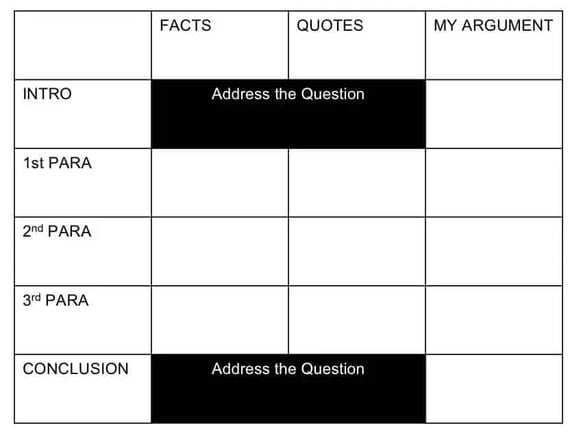
At first, it might appear confusing, but I promise to prove how it helped me set out my thoughts really clearly!
Step 1)
Instead of beginning at the top of the grid, with the introduction, you want to start with the inner sections. So here, with your three (or however many) paragraphs. Based on the question you’re faced with, start by noting any facts for your first paragraph. These are facts that will justify the argument you’ll be making in your first paragraph. Try not to write them out in full as you won’t have time for that. Just note key dates, figures or anything that will spark your memory on that specific fact!
Step 2)
The next stage is to note any quotes you want to include in your first paragraph. These are statements from primary or secondary sources that will enhance your argument. Again, you don’t want to write them out in full. I suggest just writing where the quote is from (either the author or the source) and then a couple of key words within the quote.
Step 3)
Now, in the final column, you want to briefly write down your argument for this paragraph. How do the facts and quotes back up your opinion? Do they agree with the question, or challenge it? As I’ve said before, don’t write out your thoughts in detail here – there won’t be enough time! Just a few words to jog your memory when you’ll be writing your actual essay.
Complete these three steps for however many paragraphs you want to write. Then…
Step 4)
Go back to your introduction columns! I know it might seem strange not plan your intro first, but for me, I liked to work out my arguments, and then go back to my introduction. By having a clear idea of the arguments I would present in my essay, this always allowed me to create a snappy and concise introduction. As you can see in my grid, I’ve blocked out the ‘Facts’ and ‘Quotes’ columns for the introduction. This is because you want to save your facts and quotes for the bulk of your essay. You want to simply have your introduction address the question and clearly outline the argument/s you’re about to present!
Step 5)
The final step is to quickly plan out your conclusion.

BUT, here’s a catch – during the planning stages of an exam essay, I didn’t always have in mind what I wanted to say in my conclusion. So, don’t panic if you actually leave this part of the grid blank! Often, I found that it was only after writing out my paragraphs that I could consider exactly what punchy statement I wanted to make in my conclusion!
And there we have it! A simple way to plan exam essays. I hope some of you might try out my essay plan grid, and see if it helps gather your ideas quickly and clearly.
Another thought…
Sometimes you might have the option of writing your exam essays in booklets, rather than in the question paper. Whenever this happens, I encourage you to write your plans in one booklet, and your essays in another. I always found this made my life much easier. I could keep my plan open at all times, rather than trying to flick pages between my plan and my essay had I written everything in the same booklet!
One final tip!
As a side note, I thought I’d briefly mention what to do if initially you don’t understand a question.

We all know how much the IBO love a good curve ball question, so it’s a good idea to expect the unexpected! If upon reading a question you realise that it’s not very clear what the examiners want from you, don’t panic! Take a deep breath, and think about it logically. Firstly, highlight the command word in the question. If needs be, get rid of any ‘waffle’ – perhaps a long quote or a sentence that is blurring your understanding of the question. This should hopefully leave you with the bare minimum of what is required from you! Then you can underline exactly what the question is asking.
From here, plan your answer. Due to your initial reaction to the question, definitely don’t be scared to spend an extra 5 minutes planning. You want to make absolutely sure that your answer deals with the question at hand! Crucially, what you don’t want to do is write an answer to the question that you’d hoped would be there. Unfortunately the examiners will not credit you for this.

We’re the Lanterna Team — a group of 600+ IB expert tutors, ranging from 45/45 IB graduates to IB teachers with 30+ years of teaching and examiner experience.
For over 20 years, we’ve supported tens of thousands IB students worldwide with one clear focus: making high achievement feel more doable. Our team of experienced tutors have come together to combine their deep curriculum knowledge with practical strategies that are proven to work.
Whether you’re building strong foundations in DP1, pushing for a final stretch in DP2, or looking for clarity on what to prioritise, we’re here to help you study smarter, stay confident, and get results.
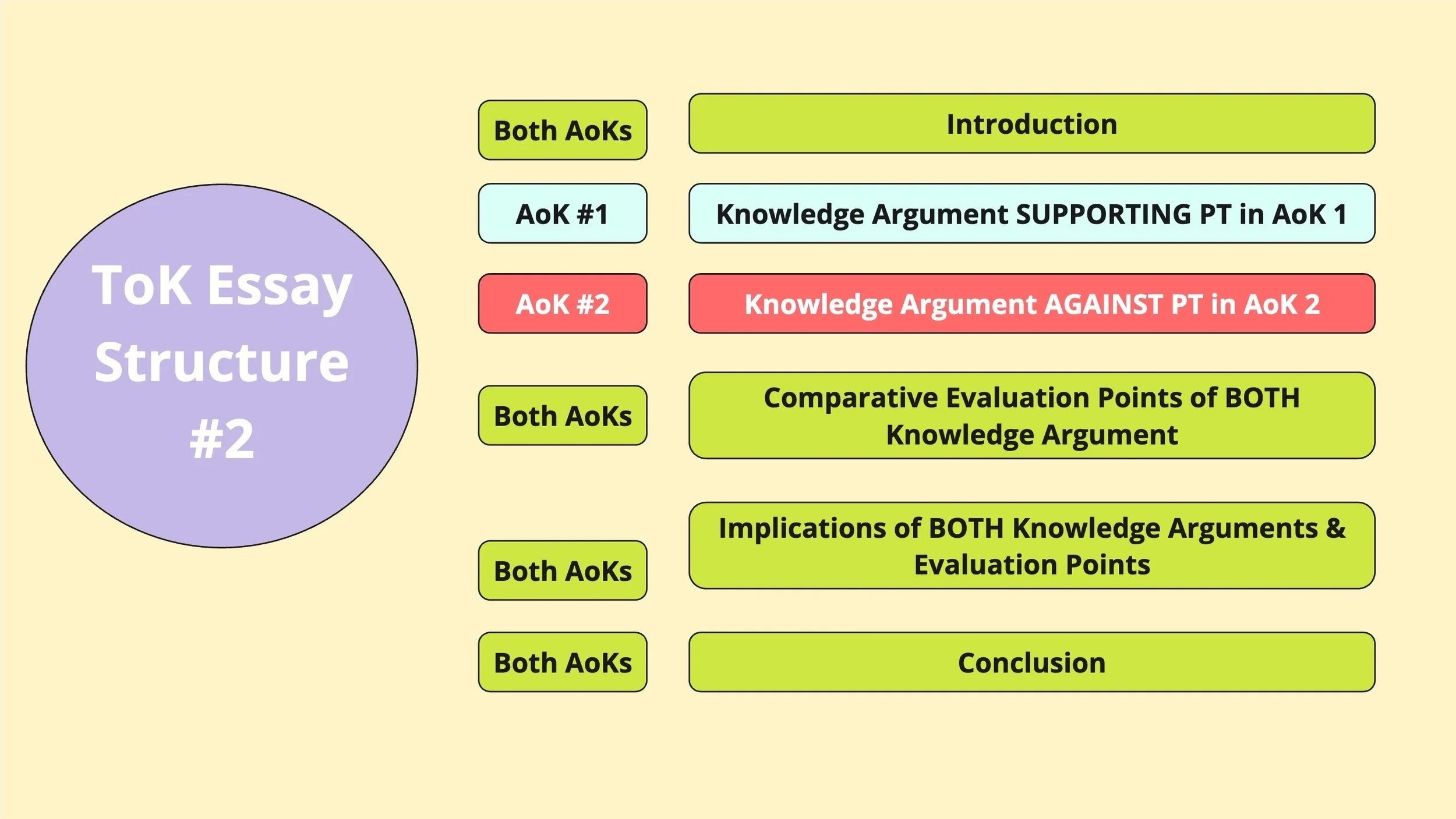
IB TOK Essay Structure Guide
Master the IB TOK Essay structure with our complete guide. Get step-by-step outlines for your introduction, AOK paragraphs (claims/counterclaims), and conclusion to hit top markbands.

IB Extended Essay (EE) Guide
What is the Extended Essay (EE)? Get a complete overview of this mandatory 4,000-word research paper in the IB Diploma Programme core.
How to Structure Your IB Extended Essay Outline
Learn how to structure your IB Extended Essay Outline with expert planning techniques. Master your EE with bullet-point, post-it, and spreadsheet methods for success.

How to Structure Your IB TOK Essay Step-by-Step
Learn how to structure your IB TOK Essay step-by-step with this expert guide. Understand how examiners think and increase your TOK essay grading score with clear format tips.

TOK Essay: A Complete Guide to Acing the IB TOK Paper
Master the IB TOK Essay with this complete expert guide. Learn how to structure your paper, understand grading criteria, and use critical thinking skills to achieve your diploma.

How to Write Strong IB Argumentative Essays
Mastering IB argumentative essays is key to top grades. Learn expert strategies for strong evidence, logical premises, and critical self-evaluation in your IB IAs and TOK Essay.

How to Write Your IB TOK Essay: Tips
Write your IB TOK Essay with confidence. Learn essential tips on choosing a title, understanding IB criteria, and structuring your argument for top marks.

How to Structure Your IB Economics IA
Learn how to structure your IB Economics IA commentary perfectly to maximise your grades. Expert tips on analysis, evaluation (CLASPP), and achieving a 6 or 7.