Note-Taking Mastery Guide: Unlock Your IB Potential
The IB Diploma is a marathon, not a sprint. The sheer volume of content across all your subjects, plus the demands of IAs, the EE, and TOK, can feel overwhelming. At Lanterna, we've been through it ourselves, and we know that the difference between just surviving the IB and actually thriving often comes down to one crucial skill: effective note-taking.
This guide cuts through the noise. We're giving you the premium, modern strategies that top-scoring IB students use to turn note-taking from a passive chore into an active learning powerhouse. Master these, and you won't just remember more content; you'll understand it on a deeper level and make revision infinitely more efficient.
Why This Guide is Your Secret Weapon
This isn't just about writing things down. It's about building a system for success. By the end of this guide, you'll be able to:
- Deconstruct Complex IB Topics: Use structured methods to break down dense syllabus points into manageable, easy-to-remember chunks.
- Boost Your Memory: Apply proven techniques to move knowledge from short-term cramming into long-term understanding.
- Slash Your Revision Time: Create notes that double as powerful revision tools, making prep for mocks and finals faster and less stressful.
- Leverage the Best Digital Tools: Discover the apps and platforms that will help you organize, connect, and access your notes anywhere.
- Build a Personalised System: Mix and match these strategies to create a note-taking style that fits you and your unique combination of IB subjects perfectly.
The Foundation: Why Great Notes are an IB Superpower
In the IB, you're not just memorizing facts for a test. You're building connections, evaluating arguments, and thinking critically. Simply highlighting a textbook or passively re-reading slides won't get you the top marks. Effective note-taking forces you to engage actively with the material. It helps you:
- Understand, Not Just Memorize: The act of rephrasing information in your own words is where true comprehension happens.
- Filter What's Important: It trains your brain to spot the key concepts, theories, and data that are likely to appear on exams.
- Create Your Own Textbook: Your notes become a resource tailored specifically to you, highlighting what you found difficult and what you've already mastered.
- Reduce Exam Stress: Well-organized notes make the mountain of revision feel like a series of manageable hills.
Proven Methods for IB Mastery
Let's get into the practical strategies. Don't feel you have to pick just one—the best students often blend these methods depending on the subject.
1. The Cornell Method: Structure for Deep Understanding
This is a classic for a reason. It's perfect for content-heavy subjects like History, Biology, Economics, and Business Management where you need to digest lectures and textbook chapters efficiently.
How it Works: Divide your page into three sections.
| Cue Column | Main Notes Area |
| After the lesson, pull out key terms, dates, or questions from your main notes. This is for active recall. | Take your main notes here during the class or while reading. Use bullet points, abbreviations, and shorthand. Don't worry about being neat. |
| Summary Section: At the bottom, write a 2-3 sentence summary of the entire page. This forces you to synthesize the key takeaways. |
The Lanterna Tip: The Cue Column is your secret revision weapon. Cover the main notes section and use the cues to quiz yourself. It’s one of the most effective ways to prepare for exams.
2. Mind Mapping: Visualizing Connections
Mind mapping is a game-changer for visual learners and for subjects that are all about interconnected ideas. Think TOK, Literature, Chemistry (organic pathways), or planning your EE and IAs.
How it Works:
- Start with the central topic in the middle of the page.
- Draw main branches for the core themes or sub-topics.
- Add smaller sub-branches for details, examples, and evidence.
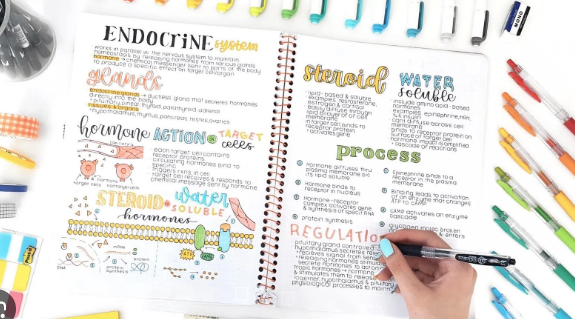
- Use single keywords, colours, and simple images to make it memorable.
- Draw lines between ideas on different branches to show connections.
The Lanterna Tip: Use mind maps to plan essays. Put your thesis in the center, your main arguments as the main branches, and your evidence/examples as the sub-branches. It’s a powerful way to structure a top-scoring essay.
3. The Linear/Outline Method: Clarity for Sequential Content
Don't dismiss the classic outline. For subjects with a clear, logical structure like Mathematics, Physics, or step-by-step processes in Computer Science, this method provides unbeatable clarity.
How it Works: It’s all about hierarchy. You create a logical flow from the general to the specific.
- I. Main Topic (e.g., Newton's Laws of Motion)
- A. First Law: Inertia
- 1. Definition
- 2. Real-world example (e.g., car braking suddenly)
- B. Second Law: F=ma
- 1. Formula breakdown
- 2. Example calculation
The Lanterna Tip: The structure of an outline is a natural blueprint for exam answers, especially for "Explain" or "Describe" command terms. Your notes become the direct foundation for your response.
Your Modern Note-Taking Arsenal: Top Digital Tools
Leverage technology to make your notes searchable, accessible, and more powerful. Here are some of our favourites:
Notion / Obsidian
Best for creating an interconnected "second brain." You can link notes together, build databases to track IA progress, and create a personal wiki for each subject. Steep learning curve, but incredibly powerful for seeing the big picture.
OneNote / Evernote
The digital workhorses. Think of them as infinite digital binders. You can create notebooks for each subject, type or write notes, embed PDFs and images, and record audio. Their search function is a lifesaver.
GoodNotes / Notability
Essential for tablet users. These apps perfectly mimic the pen-and-paper experience but with added benefits like PDF annotation, shape-drawing tools, and seamless integration of text and images. A must-have for Math and the Sciences.
MindMeister / XMind
If you love mind mapping, these dedicated apps allow you to create beautiful, complex maps quickly. They're great for brainstorming and can often export your map into a linear outline, giving you the best of both worlds.
From Notes to Knowledge: Strategies for Long-Term Retention
Taking great notes is only half the battle. The real magic happens when you use them to study smart.
- Active Recall is Non-Negotiable: Don't just re-read. Actively test yourself. Cover up your notes and try to explain a concept out loud. Use your Cornell cues. Turn mind map branches into questions. This is the single most effective way to remember information.
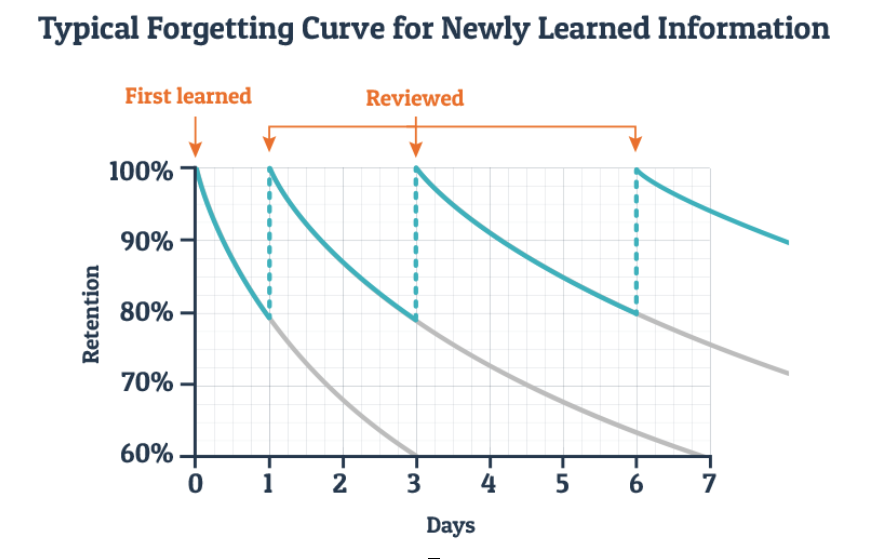
- Use Spaced Repetition: Review your notes at increasing intervals—one day after class, then three days, then a week. This technique hacks your brain's forgetting curve and locks information into your long-term memory.
- Connect to Past Papers: As you review, ask yourself: "How could this be an exam question?" Make a small note next to a concept with the year and paper number of a relevant past paper question.
- Summarise Your Summaries: Before a test, try to condense a whole topic's worth of notes onto a single A4 page. This forces you to identify the absolute most important information.
- Teach It to Understand It: The best way to find the gaps in your own knowledge is to try and explain a concept to someone else. Grab a friend, a parent, or even just talk to your wall. If you can't explain it simply, you don't understand it well enough yet.
-1.png?width=150&height=56&name=logotype_lanterna_education_blue%20(4)-1.png)

.png)


.png)