Skip to content
How to Form an IB TOK Knowledge Question

How to Form an IB TOK Knowledge Question

4 min read | Lanterna Team | January 27, 2026

Learn how to form the perfect IB TOK Knowledge Question. Understand the key characteristics and construction techniques for an open-ended, general question.

How to Form a TOK Knowledge Question

Hello again TOK-ers. In my first post of this series I talked a bit about HOW you find a real-life situation for your knowledge question. Continuing on with that theme, I thought I’d go into a little more depth about how you actually form that ever so tricky knowledge question.

So my IB warriors, it’s time to TOK this, once again.

Why the TOK do I need a Knowledge Question?

When it comes to TOK, a knowledge question is pretty important. In fact, if you check out the IB TOK syllabus (which you should) it says this:

‘An essay or presentation that does not identify and treat a knowledge question has missed the point’.

Pretty harsh huh?

But also, very true. The entire point of TOK, if you haven’t figured it out by now, is to examine HOW we know something (if you want some more help to understand why the IB makes you do TOK, check this out).

Your knowledge question is also super important because it’s the entire basis for your essay or presentation. A good knowledge question is a big step towards a good bit of TOK work.

So, how do you make an epic knowledge question?

Get some TOK in your life

For those of you paying attention in my last blog, you’ll have noticed I spoke about working backward from your real life situation. So find a real life situation you think it TOK-able, and make a knowledge question from that.

I realise, however, that this is easier said than done. So, I thought I’d break it down some more.

TOKing about my knowledge question

Essentially, a knowledge question takes 4 forms:

  • How do we know what we know?
  • What counts as evidence for X?
  • What makes a good explanation in subject Y?
  • Do we know whether it is right to do Z?

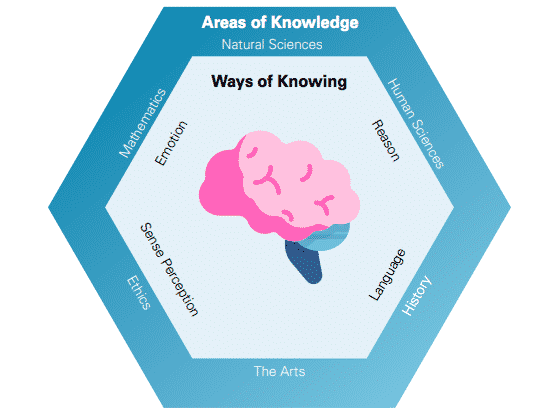
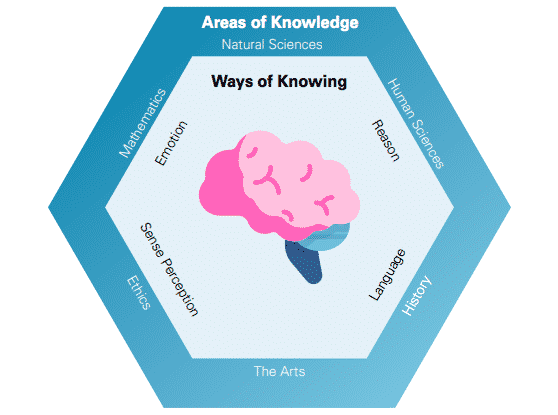
And generally speaking, you can replace X, Y or Z with either an AoK or WoK.

Constructing a knowledge question

When constructing a knowledge question, though, it’s important to remember a few things. Specifically, the characteristics of a knowledge question:

  1. They are about knowledge. Obvious right? But remember, they are not questions of knowledge themselves. So, not a question such as ‘Is art beautiful?’ because this is about art in general, not about how we know things in art. Instead, they should focus on the methods and mechanisms that produce knowledge. These ‘methods and mechanisms’ are our WoKs. So, a better knowledge question would be ‘How do we know art is beautiful?’. This is better because it encourages you to explore your WoKs, so sense perception or emotion would be relevant to this question.

(Remember, you can have a look here if all this talk of WoKs and AoKs is confusing)

  1. They are open-ended. There should be a number of plausible answers to a knowledge question. You don’t have to know them all, but in TOK it really is true that there are no wrong answers. As long as your argument is logical and evidenced, you’re good to go. So taking our previous knowledge question: ‘How do we know art is beautiful?’, there are lots of possible answers: ‘because you emotionally connect with it’, ‘because visually (using your senses) it seems perfect’, ‘because
    your culture tells you so’, and so on – you get the gist.
  1. Knowledge questions should be written in general terms. It should not be rooted in a specific example, such as your real-life situation, but should use more general language. It can be hard to know how general to be. A rough rule I had as a TOK student was that knowledge question should not use vocabulary specific to a particular AoK. If you are using history as an AoK, therefore, you shouldn’t mention ‘historiography’ in the title.

Putting TOK into Practice

So, when looking at your real-life situation, think about how you can apply these things to make a knowledge question. For example, you might be interested in Physic. From studying physics in class, you might be interested in the Higgs-Boson theory. As a result, you might have found an article about potentially proving the Higgs-Boson theory definitively.

So, taking this as a base for a knowledge problem, you might first come up with something like this:

‘How can a physicist know whether the Higgs Boson exists?’

The problem with this question—as you can see—is it’s too specific. It talks directly about a scientific theory. It is, however, a good starting point.

From this, you can think—what is the Higgs Boson? Well, it’s a theory or prediction. From this prediction about physics, we can gain knowledge. And then we can think what AoK it relates to: here, clearly science. Taking these elements, we can then rework it into an actually knowledge question:

‘How do scientists use predications to produce knowledge’.

These knowledge questions tick all the criteria: it’s about knowledge, it’s open-ended, and it’s general. A perfect beginning to a TOK assignment!

T.O.K out.

Lanterna Team
Lanterna Team
We’re the Lanterna Team — a group of 600+ IB expert tutors, ranging from 45/45 IB graduates to IB teachers with 30+ years of teaching and examiner experience.

For over 20 years, we’ve supported tens of thousands IB students worldwide with one clear focus: making high achievement feel more doable. Our team of experienced tutors have come together to combine their deep curriculum knowledge with practical strategies that are proven to work.

Whether you’re building strong foundations in DP1, pushing for a final stretch in DP2, or looking for clarity on what to prioritise, we’re here to help you study smarter, stay confident, and get results.

Why Lanterna?

Lanterna Education is the largest IB-focused education provider worldwide, supporting students in over 250 partner schools across 80+ countries. Based in Stockholm, we have over 20 years of experience helping IB students achieve the best possible score in the IB.
15,000+
IB students tutored
1.5+
Avg. IB Subject grade Increase
36/45
Median final IB score for students
4.7
Trustpilot score

A Knowledge Question is absolutely central to Theory of Knowledge (TOK), as it explores *how* we know what we know. The IB explicitly states that an essay or presentation failing to identify and treat a KQ "has missed the point." It forms the entire basis for your TOK work, guiding your exploration of knowledge issues.

A strong KQ is about knowledge itself (not a question *of* knowledge), open-ended with multiple plausible answers, and written in general terms, avoiding specific vocabulary from a particular Area of Knowledge. It should encourage a deep exploration of Ways of Knowing (WoKs) and Areas of Knowledge (AoKs).

Begin by identifying a "TOK-able" Real-Life Situation. Then, work backward by asking what knowledge issues or questions arise from that specific situation. The key is to generalize the specific details of your RLS into broader questions about how knowledge is produced, acquired, or evaluated.

If your initial question is too specific, like "How can a physicist know whether the Higgs Boson exists?", you need to generalize it. Think about what the Higgs Boson represents (a theory, a prediction in science) and the Area of Knowledge (natural sciences). A refined KQ could be: "How do scientists use predictions to produce knowledge?" This is more general, open-ended, and truly about knowledge.

A question *of* knowledge asks for a factual answer within a specific field (e.g., "Is art beautiful?"). A question *about* knowledge, which is what a KQ should be, explores the *methods and mechanisms* by which we come to know something (e.g., "How do we know art is beautiful?"). The latter focuses on Ways of Knowing (WoKs) and Areas of Knowledge (AoKs).

Our expert TOK tutors, many of whom are IB graduates with 40+ scores or experienced examiners, can guide you through the process of identifying compelling Real-Life Situations, brainstorming relevant knowledge issues, and refining your KQs to meet IB criteria. They'll help ensure your KQ is open-ended, general, and truly about knowledge, setting you up for success in your TOK essay or exhibition.

Absolutely. Our tutors are highly experienced with the IB curriculum, including the most current TOK requirements and assessment criteria. They stay updated on changes and best practices to provide the most relevant and effective support for your TOK essay and exhibition, ensuring your KQs are perfectly aligned with what examiners are looking for.

It's a free, no-pressure 20-30 minute consultation with one of our expert IB Student Success Experts. It's designed to help you get clarity on your IB situation, whether you're a student or a parent, and walk away with a personalized plan for what to focus on next, including specific advice for TOK.

Yes, it's genuinely 100% free with absolutely no obligation to book tutoring. Our goal is to provide immediate value by helping you understand your challenges and giving you actionable steps. We believe in empowering students and parents with clear, expert guidance to navigate the IB Diploma Programme successfully.

Our Student Success Experts are highly knowledgeable individuals with deep experience in the IB Diploma Programme. They understand the unique challenges students face and are skilled at identifying key areas for improvement, offering strategic advice, and helping you prioritize your efforts for maximum impact across all your IB subjects and components, including TOK.

You'll gain clarity on your specific TOK challenges, receive tailored advice on improving your Knowledge Questions or overall TOK approach, and walk away with a simple, personalized plan. Our experts can help you identify what to focus on and what to stop wasting time on, backed by the experience of a team that has supported thousands of IB students.


More free resources

IB TOK Essay Structure Guide
TOKDP1DP2SciencesArtsDP1DP2...

IB TOK Essay Structure Guide

Master the IB TOK Essay structure with our complete guide. Get step-by-step outlines for your introduction, AOK paragraphs (claims/counterclaims), and conclusion to hit top markbands.

Master IB TOK Guide
TOKIAsUltimate GuideHumanitiesSciencesMathsArts...

Master IB TOK Guide

Master IB Theory of Knowledge (TOK) with our complete guide. Learn about the curriculum, areas of knowledge, and ace your TOK exhibition and essay with structure tips and examples.

35 TOK Exhibition Object Ideas
TheoryofKnowledge(TOK)DP2DP1Students...

35 TOK Exhibition Object Ideas

Master your TOK Exhibition! Get 35 diverse object ideas (tweet, toy, map projection) and guided questions to effectively link them to your IA prompts and core themes.

TOK Exhibition Guide (DP1)
DP1TOKIAsUltimate GuideDP1DP2Students...

TOK Exhibition Guide (DP1)

Master the IB TOK Exhibition (DP1) with this guide. Learn structure, view examples, and get tips on connecting real-world objects to knowledge questions for top marks.

How to Structure Your IB TOK Essay Step-by-Step
TOKUltimate GuideStudy SkillsStudentsDP1DP2Students

How to Structure Your IB TOK Essay Step-by-Step

Learn how to structure your IB TOK Essay step-by-step with this expert guide. Understand how examiners think and increase your TOK essay grading score with clear format tips.

Complete Guide to IB Theory of Knowledge Frameworks
TOKUltimate GuideAbout IBMathsSciencesHumanitiesArts...

Complete Guide to IB Theory of Knowledge Frameworks

Master IB Theory of Knowledge Frameworks. Learn how to apply the structure of the Areas of Knowledge (AoKs) in your essays and presentations for top results.

20 IB TOK Presentation Ideas with Examples
TOKIAsStudentsDP1DP2HumanitiesSciences...

20 IB TOK Presentation Ideas with Examples

Struggling with your IB TOK Presentation? Discover 20 successful TOK Presentation Ideas with examples and expert tips to ace your internal assessment.

Complete Guide to IB TOK Areas of Knowledge
TOKMathsSciencesHumanitiesUltimate GuideDP1DP2...

Complete Guide to IB TOK Areas of Knowledge

Learn how to master the IB TOK Areas of Knowledge. Expert guide to understanding the AoK framework, features, and key debates for your TOK essay.


Professional Support for the Final Push

For over 21 years, we at Lanterna have guided over 15,000 students to success in the IB. We have 500+ expert tutors that can support you in any subject.
 

GRADUATES

Scored 40+ in the IB and 7s in the subjects they teach
Best for: skill-building & relatable mentorship
 

TEACHERS

Certified educators with 10+ years’ IB experience
Best for: curriculum clarity & confidence building
 

EXAMINERS

Current or former IB examiners & senior markers
Best for: exam preparation & top-band results


BOOK A FREE CONSULTATION TODAY

Our student success experts give you personalised advice on how to best succeed in your journey.
100% Free · No obligation

Stockholm based, supporting students worldwide. We are IB experts committed to achieving your academic goals.

ABOUT US

Get In Touch

Sibyllegatan 47, Stockholm Sweden, 114 42

Contact us

ALL RIGHTS RESERVED. COPYRIGHT 2025. LANTERNA EDUCATION LTD, NOT AFFILIATED WITH THE IBO