-1.png?width=150&height=56&name=logotype_lanterna_education_blue%20(4)-1.png)

Written by a guest author.
With the International Baccalaureate exams coming up, it’s only natural that you and all the other IB diploma students around the world would head to the internet to look for expert advice on the best ways to prepare for these lengthy examinations or search for tips that will set you up for success before you head into the exam rooms.
Before we start listing all the things you need to remember before taking your IB diploma exams, we want to remind you that your mindset really matters and can impact your overall performance during exams. Read this post with tips on how to get into the right frame of mind before an IB exam.
Now that you know how to change your mindset before studying and taking the IB exams, let’s look at what you need to remember before you step foot in an IB diploma examination.
How to Prepare for the International Baccalaureate (IB) Diploma Program Exams
IB teachers and tutors will agree: There are various methods and techniques standard level (SL) and higher level (HL) students can use to prepare for exams, but everyone learns differently. Some studying methods may work better than others for your learning style or individual classes.

However, there are a few surefire ways to prepare for International Baccalaureate (IB) examinations that work for everyone, no matter their particular learning style or their chosen IB classes!
First, we will discuss getting familiar with the ins and outs of your IB program subject paper formats.
IB Exam Preparation Tip 1: Understand the IB Exam’s Format
One tip applies to all IB examinations, from Maths AA/AI (SL and HL) to any Language and Literature (SL and HL). That tip is to ensure you understand each of your paper’s formats.
Understanding all the requirements, sections, and possible marking schemes of your IB course examinations ensures there won’t be any surprises that throw a curveball on your test day.
You should practice answering past tests and examinations to learn the structure, how the IB phrase questions, and parts of the IB syllabus that may appear in your paper. This post explains how answering past questions can help you earn the IB score and college credit you need for university applications.
Not sure where to find past papers? Ask each of your class teachers or your tutor for past IB exams and tests to help you study and prepare for upcoming examinations; they’ll have loads of past examination question documents for both IB SL courses and HL courses for you to use.
Next, we’ll look at what you can do the night before an International Baccalaureate (IB) examination to improve your performance and score.
IB Exam Preparation Tip 2: How to Set Yourself Up for Success the Night Before International Baccalaureate (IB) Examinations
Are you wondering if IB students can really do things to set themselves up for success the night before writing an examination? This may be a surprise, but the answer is yes!
There are three things IB students can do the night before examinations to set them up for success and increase their chances of getting a higher grade.
1. Cramming the Night Before an IB Exam: The Pros and Cons
Studies show cramming the night before an exam can work. Still, most teachers and tutors will advise against it because it’s not a long-term solution for revision.
The truth is; cramming can work as a study technique, but you can only recall the information for a few days because your brain stores it in your short-term memory instead of in your long-term memory. As a consequence, you will forget crammed information soon after revising it.
Cramming small pieces of information using mnemonic devices (a study hack that uses association, sense memory, and reorganisation) the night before writing an examination or test is helpful. But this strategy is only effective for specific subjects and IB course curriculum details.
Data for Economics (SL and HL), formulae for Science (SL and HL) subjects, or quotes for Language A: Language and Literature (SL and HL), for example, are ideal for cramming.
Larger pieces of information for IB course subjects like IB Language Acquisition subjects such as Classical Language B: Greek/Latin (SL) won’t work; cramming in a last-minute study session won’t help.
Use our tips to learn how to cram the right way for exams before you waste precious revision time the night before you write an exam.
2. The Importance of Sleep Before an IB Examination
High school students often underestimate the importance of sleep before tests, mocks, and finals, which can sabotage their chances of scoring a 45 and earning a full IB Diploma!
Getting enough sleep the night before an examination doesn’t only help you focus during your writing time. A good night’s rest also plays a vital role in your ability to retain information and form memories.
Check this post that explains how your brain continues learning and processing information even when you’re asleep. So, put down those notes and get a good night’s sleep before your examinations; your brain needs it.
3. Eating Breakfast and Hydrating Before IB Examinations
Other common mistakes students make before an examination are skipping breakfast and forgetting to hydrate, which can negatively impact their performance and final exam scores.
We consider skipping breakfast and forgetting to hydrate before you have to write ‘mistakes’ because brains and bodies need fuel for lengthy assessments (and on days with multiple examinations!) to perform.
Trying to think, recall information, and respond to questions when you’re thirsty or ‘hangry’ is incredibly difficult, and a dry mouth or grumbling stomach is distracting.
Our expert advice? Plan your breakfast and pack a water bottle the night before your examinations. Depending on your high school, the moderator appointed, and school rules, you may not be allowed to take a water bottle into your examinations. However, you can hydrate before, after, and in between sessions.
Next are our pro tips to help you smash your six subjects and get an IB college credit score that’ll make university admission applications a breeze!
4 Pro Tips for Your International Baccalaureate (IB) Diploma Program Exams
You’ve finished the IB higher level (HL) and standard level (SL) Diploma requirements for your subject groups’ practical work, including your final oral presentations.
You’ve also done the written work for your IB CAS independent research essay, Theory of Knowledge course (TOK) Extended Essay (EE); now it’s time for the IB examinations. Are you ready?!
Whether it’s a confident ‘Yes’ or an anxious ‘No,’ we have some tips to ensure you succeed during any IB school examination.
Our question about being ready for the IB examinations probably caused many of you to stress about revising and preparing for class examinations. So, we will discuss how students can manage their stress first.
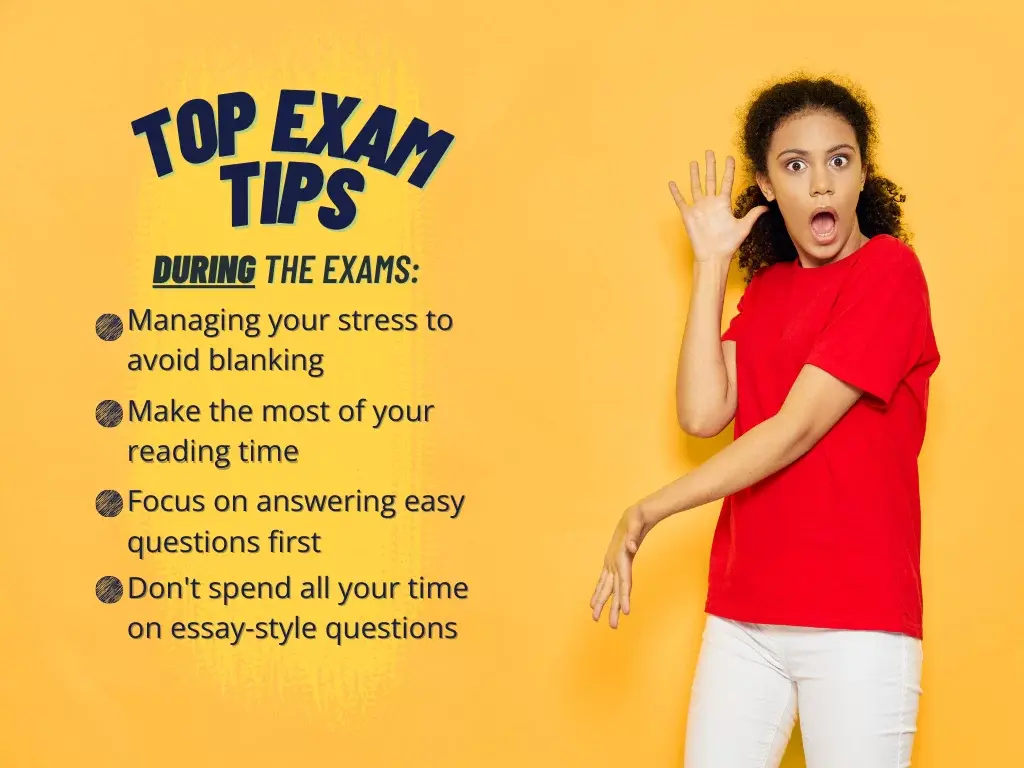
1) IB Exams Tip 1: Manage Your Stress Levels
Does your mind go blank the moment you get a question paper? Or, you’re among the many students who struggle with stress-related blackouts.
You aren’t alone; International Baccalaureate students worldwide face these struggles. But what can you do to make sure it doesn’t happen?
We have a guide full of tips and helpful advice to help you learn how to keep calm and manage your stress during examinations to avoid those dreaded blank or blackout moments.
2) IB Exams Tip 2: Use Your Reading Time Wisely
Every student taking IB courses knows they will get a certain amount of time to read over their question paper before being allowed to answer.
If you use this reading time wisely, you will have enough time to finish your paper and ensure you get the marks you need to impress the college board at the school or university of your dreams!
The Lanterna Education tutors recommend using a numbering system to decide which questions to answer first and which ones you’ll need more time on. Simply assign each question a 1 out of 3-star rating according to its difficulty and how long you think it will take to answer.
3) IB Exams Tip 3: Prioritize Easy IB Exam Questions
This tip follows the question numbering system above. It is extremely handy for IB courses like Science and Math (SL and HL).
Once you’ve assigned a star rating to each question, you should first prioritise and answer all your 1-star questions. Next, tackle your 2-star questions. And finally, spend time on the more challenging 3-star questions.
This strategy ensures you get all the easiest questions done, and you can avoid getting stuck on a difficult question or section in your paper.
4) IB Exams Tip 4: Don’t Let Essay Answers Take Up All Your Time
A student failing to complete their IB examination because they’ve spent far too much time answering an essay question is a mistake tutors and independent examiners see all the time.
Often a student will lose track of time while writing an essay answer. Or, they completely forget about managing their time and have very little time to complete the rest of the examination questions.
To prevent this from happening to you during a Language A: Language and Literature (HL or SL), Language B, Visual Arts and Performing Arts paper, or any exams that require an essay, we suggest you aim for quality rather than quantity. Be concise, answer the question, and quickly move on to the next section.
What to Remember After Writing an International Baccalaureate (IB) Diploma Examination
We’ve looked at how to prepare for IB examinations and what to remember when writing; now, let’s cover what you should remember after a paper.
- You could predict the topic of your next exam.
Courses like Experimental Science (SL and HL), Computer Science, and Mathematics (SL and HL) split the syllabus into multiple examination papers. Based on the topics in Paper 1, you may be able to predict the topics and questions in the following paper.
For example, if Mathematics Paper 1 focuses on statistics, it’s unlikely that exam Paper 2 will be on statistics too.
Read this post on preparing for Math examinations and pro tips for getting the most out of your calculator.
- IB exams aren’t the be-all and end-all.
It may feel like it now, but remember that the IB exams aren’t everything, and they don’t define the rest of your life.
Yes, exams are important, but if you skip a question or can’t think of the answer to something, it’s not the end of the world!
Check out this advice from International Baccalaureate survivors and use their insights to master your IB exams.
- Don’t dwell on the past.
Move on once an exam is over, and don’t dwell on the ‘could haves’ or ‘should haves’ because they can sabotage your success.
Instead, be kind to yourself. Don’t let a bad day kill your motivation or overshadow the fact that you’re one step closer to becoming an IB diploma graduate.
- Trust in your abilities.
Last but certainly not least, trust yourself and your abilities! You probably remember a lot more than you think.
Give yourself some credit! You have 2 years of IB student experience and knowledge waiting to shine through and guide you.

We’re the Lanterna Team — a group of 600+ IB expert tutors, ranging from 45/45 IB graduates to IB teachers with 30+ years of teaching and examiner experience.
For over 20 years, we’ve supported tens of thousands IB students worldwide with one clear focus: making high achievement feel more doable. Our team of experienced tutors have come together to combine their deep curriculum knowledge with practical strategies that are proven to work.
Whether you’re building strong foundations in DP1, pushing for a final stretch in DP2, or looking for clarity on what to prioritise, we’re here to help you study smarter, stay confident, and get results.
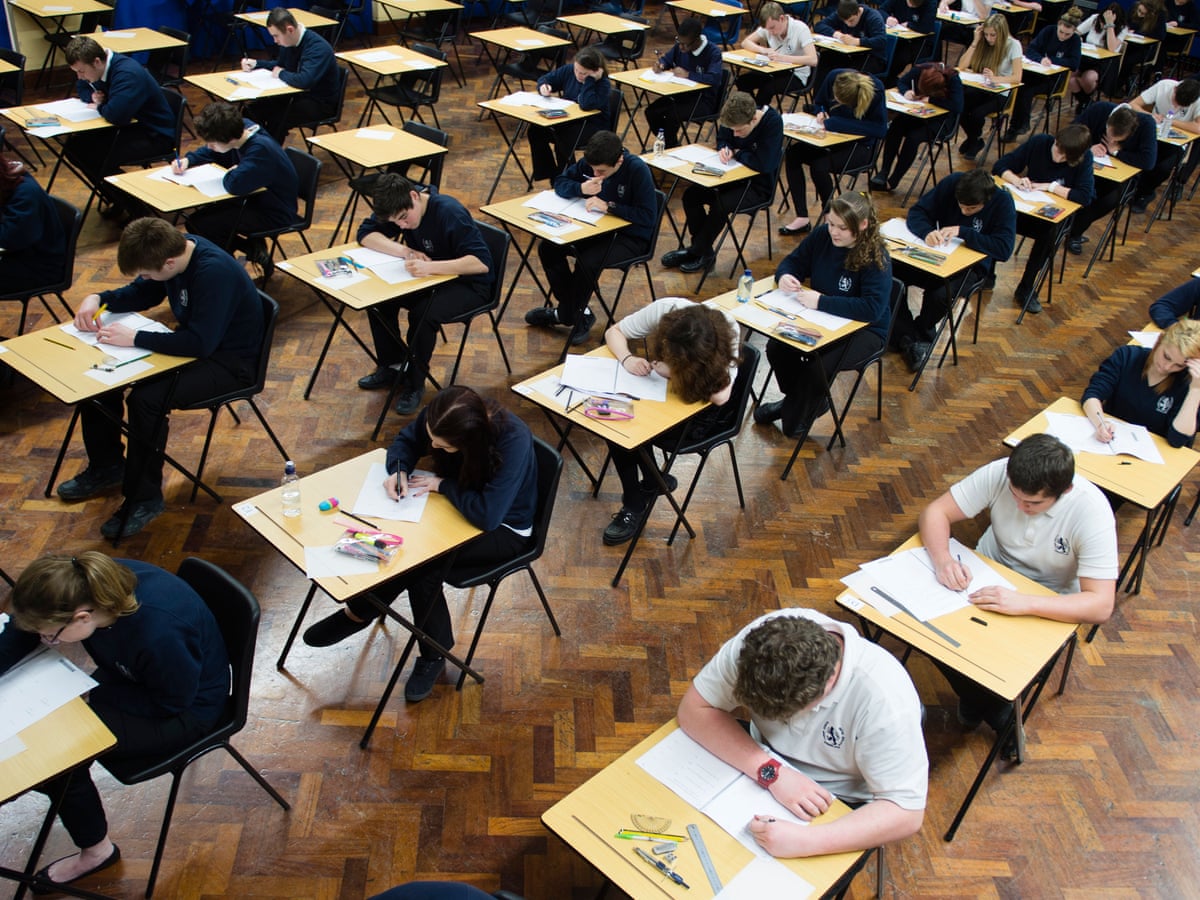
The Ultimate Guide to Acing Your IB Mock Exams
Ace your IB Mock Exams with this free, ultimate guide. Learn expert strategies to prepare effectively, avoid common pitfalls, and maximize your predicted grades.
Essential IB Mock Exam Checklist 2026
Master DP2 with this essential IB checklist! Covers IA status, week-by-week mock exam prep, past paper scheduling, and key TOK/EE milestones for students and parents.

Essential IB Exam Guide for Parents (2026)
IB Exam Logistics: Essential Guide for Parents (Schedules, Rules, Equipment). Help your child's exam days go smoothly with expert tips.
IB Exam Day Checklist
IB Exam Day Checklist: Essential things to do and bring (sleep, breakfast, materials) to ensure a smooth, mishap-free testing experience.

IB Retake FAQs & Guide
Considering an IB retake? This free FAQ guide by 7-scoring grads covers who should retake, deadlines, costs, and how universities view improved scores.
Last-Minute IB Exam Tips
Master the final days before your IB exams! Get essential last-minute exam tips: what to do and what to avoid (sleep, not cramming new content). from IB 40+ grads.
How to prepare for IB Mock Exams
Understand how to prepare for IB Mock Exams with expert revision tips and insights into their utility for establishing routine, not just predicting your final IB grade.
IB Maths Study & Calculator Tips for Exams
Master your IB Maths exams with expert study and calculator tips. Learn essential GDC functions, effective revision strategies, and how to target your weaknesses.