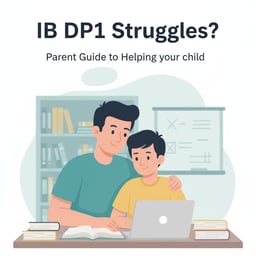
IB DP1 Struggles? Your Essential Parent Guide to Helping Your Child Thrive
The first year of the IB Diploma (DP1) is a huge jump. It’s a transformative two-year journey, but that first year often comes with a unique set of challenges. As parents, watching your child navigate this rigorous new world can be tough. At Lanterna, we get it – we’re not just tutors, we’re IB graduates who have been in those exact shoes.
This guide is designed to give you the insider knowledge and practical strategies to support your child through any DP1 struggles, helping them build resilience and set the stage for a successful DP2.
By engaging with this guide, you will be able to:
- Identify Common DP1 Stressors: Understand the typical academic and personal hurdles your child might be facing.
- Communicate Effectively with Teachers: Learn how to build a constructive partnership with the school to support your child's needs.
- Understand the Strategic Role of Tutoring: Know when and how targeted academic support can make a huge difference.
- Cultivate a Nurturing Home Environment: Discover practical ways to create a supportive atmosphere that promotes well-being and focus.
- Empower Your Child’s Independence: Encourage the self-advocacy and resilience skills that are crucial for success in the IB and beyond.
Understanding the DP1 Landscape: More Than Just Academics
DP1 is a massive leap from previous years. Students are suddenly juggling six in-depth subjects, plus the core components: the Extended Essay (EE), Theory of Knowledge (TOK), and Creativity, Activity, Service (CAS). It's a lot to handle.
Common struggles often boil down to a few key areas:
- Time Management & Workload: Juggling multiple deadlines, Internal Assessments (IAs), and the first stages of the EE and TOK can feel like an impossible task.
- Subject Complexity: IB subjects demand critical analysis and application, not just memorization. This new way of thinking takes time to master.
- Adapting to IB Assessment: The unique marking criteria can be a shock. It’s a big shift from what they’re used to.
- Stress and Anxiety: The intense academic pressure is real and can lead to heightened stress levels.
It's completely normal for students to face these challenges and even see a dip in their grades as they adjust to the IB's standards. The key is how they (and you) respond.
The 4 Pillars of Effective DP1 Support
Think of your support system as having four core pillars. By strengthening each one, you create a robust foundation for your child's success.
Pillar 1: Open Communication with Teachers
Your child's teachers are your most important allies. Don't wait for parent-teacher conferences to connect. Being proactive is key.
- Reach Out Early: Don't wait for grades to plummet. If you notice your child is struggling, send a polite email to their teacher or the IB Coordinator.
- Focus on Solutions: Frame your concerns collaboratively. Instead of "Why is my child failing?", try "I've noticed [Child's Name] is feeling unsure about the IA expectations in [Subject]. What steps can they take to improve?"
- Involve the IB Coordinator: If you're not getting traction or the issue is broader, the IB Coordinator is your go-to resource. They can provide guidance and intervene discreetly.
Pillar 2: The Strategic Role of IB Tutoring
Sometimes, a fresh perspective is all that’s needed. A great IB tutor does more than just teach a subject; they provide strategy, mentorship, and a vital confidence boost.
- Personalized Support: A tutor can tailor their approach to your child's exact learning style, targeting specific weak spots in a way a classroom teacher can't.
- Demystify the IB: An experienced IB tutor can break down complex topics and, crucially, explain the assessment criteria and mark schemes—often the biggest hurdle for new students.
- Build Confidence: Tutoring provides a safe space to ask questions and work through problems without pressure, which is often the key to unlocking a student's potential and reducing anxiety.
The Lanterna Tip: Choosing the Right Tutor. Look for tutors with direct IB experience. At Lanterna, all our tutors are top-scoring IB graduates with 7s in the subjects they teach. They provide that invaluable "I've been there, I get it" perspective that makes all the difference. They don't just teach the content; they teach how to succeed in the IB system.
Pillar 3: Cultivate a Supportive Home Environment
Your home should be a sanctuary from the pressures of the IB, not an extension of them. Your role is to manage the resources (food, sleep, mood).
- Protect Downtime: The IB is a marathon, not a sprint. Burnout is a real risk. Ensure they have time for hobbies, friends, and rest. Non-academic outlets are essential for well-being.
- Help with Structure: Sit with them to map out a weekly schedule. Breaking down huge tasks ("Revise Chemistry") into smaller steps ("Review Topic 1 flashcards") makes the workload feel manageable.
- Listen, Don't Just Fix: Often, your child just needs to vent. Listen without judgment and offer reassurance. Acknowledge their effort, not just their grades.
Pillar 4: Foster Self-Advocacy & Resilience
Ultimately, the goal of the IB is to create independent, lifelong learners. Your role is to coach them toward this independence.
- Guide, Don't Solve: When a problem arises, ask questions like, "What have you tried so far?" or "Who at school could help with this?" This builds their problem-solving skills.
- Normalize the Struggle: Remind them that finding things difficult is part of the learning process. Celebrate their perseverance in tackling a tough concept, not just the final grade.
- Encourage Them to Speak Up: Role-play how they can ask a teacher for help or clarification. This skill of self-advocacy is one of the most valuable things they will learn in the IB.
Moving Forward with Confidence
DP1 is a foundational year that can feel like a steep climb. But by understanding the challenges, fostering open communication, using strategic support like tutoring, and creating a nurturing home environment, you can empower your child to not just survive, but truly flourish.
At Lanterna, we believe every IB student has the potential to succeed. Our team of expert IB graduates is here to provide the insights and personalized support that can make all the difference on this challenging but rewarding journey.
-1.png?width=150&height=56&name=logotype_lanterna_education_blue%20(4)-1.png)
.png?width=289&height=306&name=%E5%A4%B4%E5%83%8F%20copy%20-%20Siwen%20(Rose).png)
.png)