Complete Guide to IB TOK Basics: Ways of Knowing
Understand IB TOK Basics: Learn the core concepts of Theory of Knowledge, including the 8 Ways of Knowing and Areas of Knowledge, with expert tips for success in the IB.
TOK: The Basics
When it comes to TOK, there’s a lot of chat that precedes it: ‘ToK is pointless’… ‘ToK is a waste of time’… ‘ToK is mind-boggling’. Now, I’m not here to dispel these myths. When you’ve 6 subjects to worry about, theory of knowledge can sometimes seem the least of your worries. All being said and done though, I think it’s important to start the IB at least knowing what on earth it is. That way, you can hit the ground running (and maybe even enjoy ToK!). In this blog, we are looking at the basics of ToK so read on to get some pre-IB tips!
The Purpose of ToK
There are many reasons why ToK is central to the IB. In the 6 subjects you take, you spend most of your time gaining knowledge. Knowledge about the natural world, knowledge about humanity’s history, knowledge about our economy to give just a few examples. The purpose of ToK, therefore, is to connect all these different strands of knowledge and make you think critically about how we learn, and the value of what we learn. It might seem a bit fluffy, but ultimately ToK is at the heart of everything you study at school.
Knowledge Questions
The term ‘knowledge questions’ is one that will soon be familiar to you as an IB student. Knowledge questions are at the core of ToK because they are the questions you ask to evaluate knowledge. Essentially, every knowledge question you meet is trying to answer the question ‘how do we know what we know?’. The more you get used to answering this question—the easier ToK will be.
Ways of Knowing
In order to answer these knowledge questions, we need to have ways of analysing knowledge. One way in which the IB encourages you to do this is through ‘ways of knowing’.
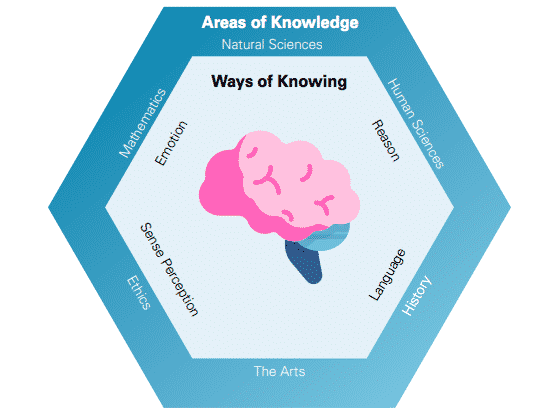
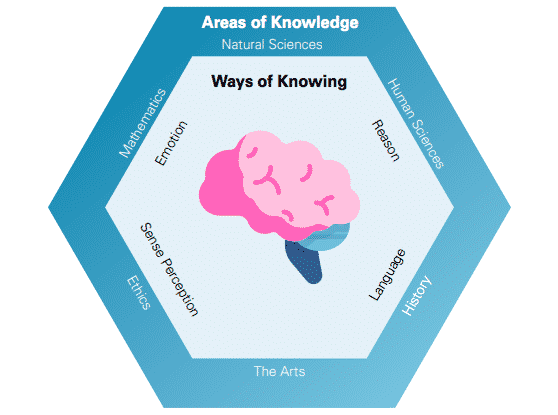
There are 8 ways of knowing in ToK:
- Language
- Sense perception
- Reason
- Emotion
- Faith
- Memory
- Intuition
- Imagination
If you are trying to answer knowledge questions, you can use these ways of knowing to consider how you actually gained knowledge in the first place. When the apple fell on Isaac Newton’s head, for example, did he discover gravity as a result of reason, or did his sense perception (the apple must have hit pretty hard) play a greater role? When you see a beautifully sad painting do you use your emotions to gain knowledge of the artists’ sadness or do you use your own memory of previous sadness? Do you use both? Theory of Knowledge gives you a chance to answer these questions!
Areas of Knowledge
Areas of knowledge, affectionately known as AoKs, are essentially the different groups of subjects which contain certain types of knowledge. There are currently 8 Areas of Knowledge:
- Natural Sciences
- Human Sciences
- History
- The Arts
- Ethics
- Mathematics
- Religious Knowledge Systems
- Indigenous Knowledge Systems
As you can see, these basically reflect the subjects you can study on the IB (with perhaps the exception of the last two). Biology, for example, would be a natural science and English part of the arts. The knowledge you learn as part of these subjects can vary massively. The natural sciences rely heavily on logic and experimentation to gain knowledge. The Arts, on the other hand, sees us gaining knowledge through emotion and imagination much more than reasons. Your ability to differentiate between AoK, and also see some similarities, will therefore be key to your study of Theory of Knowledge.
Real Life Situations
Often abbreviated to RLS, real-life situations are the things that make ToK interesting. They essentially are situations that you have experienced, witnessed or read about which connect abstract issues of knowledge with your life. An article about the changing use of the work ‘Lit’, for example, would bring into question language as a way of knowing and its validity. With an RLS, ToK would simply be an abstract mess.

We’re the Lanterna Team — a group of 600+ IB expert tutors, ranging from 45/45 IB graduates to IB teachers with 30+ years of teaching and examiner experience.
For over 20 years, we’ve supported tens of thousands IB students worldwide with one clear focus: making high achievement feel more doable. Our team of experienced tutors have come together to combine their deep curriculum knowledge with practical strategies that are proven to work.
Whether you’re building strong foundations in DP1, pushing for a final stretch in DP2, or looking for clarity on what to prioritise, we’re here to help you study smarter, stay confident, and get results.
Why Lanterna?
Theory of Knowledge (TOK) is central to the IB Diploma as it encourages critical thinking about how we acquire and evaluate knowledge across all subjects. It connects different areas of study, prompting you to question "how do we know what we know?" and understand the value of what you learn, making it a foundational element of your IB journey.
Knowledge Questions are the core of TOK. They are open-ended questions about knowledge itself, rather than specific facts. They push you to evaluate how knowledge is constructed, acquired, and justified. Mastering the art of asking and answering these questions is key to excelling in TOK and developing critical thinking skills.
Ways of Knowing (WoK) are the methods through which we acquire and process knowledge (e.g., reason, emotion, sense perception). Areas of Knowledge (AoK) are categories of knowledge like Natural Sciences or The Arts. By exploring how different WoK apply within various AoK, you learn to analyze the diverse nature of knowledge and its limitations, which is fundamental to TOK.
Real-Life Situations (RLS) are crucial because they connect abstract TOK concepts to tangible experiences. They allow you to explore knowledge questions within a specific context you've encountered, witnessed, or read about. Without RLS, TOK can feel abstract; they make the subject relevant and engaging by demonstrating its application in the real world.
While some students initially find TOK challenging or abstract, it's far from pointless. It's designed to develop critical thinking, analytical skills, and a deeper understanding of how knowledge is formed across disciplines – skills highly valued by universities and employers. With the right approach and guidance, TOK can become one of the most rewarding parts of your IB experience.
Lanterna's expert tutors, many of whom scored 40+ in the IB and have examiner experience, can demystify TOK for you. We provide personalised support to help you understand complex concepts, develop strong knowledge questions, structure your TOK Exhibition and Essay, and refine your arguments to achieve top marks. Our goal is to make TOK engaging and understandable.
The Lanterna IB consultation is a free, no-pressure 20–30 minute session with one of our expert IB Student Success Experts. It's designed to give you clarity on your IB situation, whether you're struggling with TOK, other subjects, or overall study strategies. You'll walk away with a personalised plan and clear next steps, with absolutely no obligation to book tutoring.
Yes, the Lanterna IB consultation is completely free. During the 20–30 minute session, you'll speak with a Student Success Expert who understands the IB inside out. They'll listen to your concerns, help you identify key challenges, and provide actionable advice and a tailored plan to improve your academic performance and reduce stress, all without any commitment to further services.
Our Student Success Experts are highly experienced professionals with deep knowledge of the IB curriculum and its demands. They can help you understand the nuances of TOK, identify areas where you might need support, and guide you on how to approach your TOK assessments effectively. They offer strategic advice and can connect you with the perfect tutor if you decide further support is right for you.
Absolutely. Our tutors are highly skilled in guiding students through both the TOK Exhibition and the TOK Essay. We can help you choose compelling real-life situations, formulate strong knowledge questions, develop coherent arguments, and refine your writing to meet the IB's specific criteria, ensuring you present your best work.
More free resources

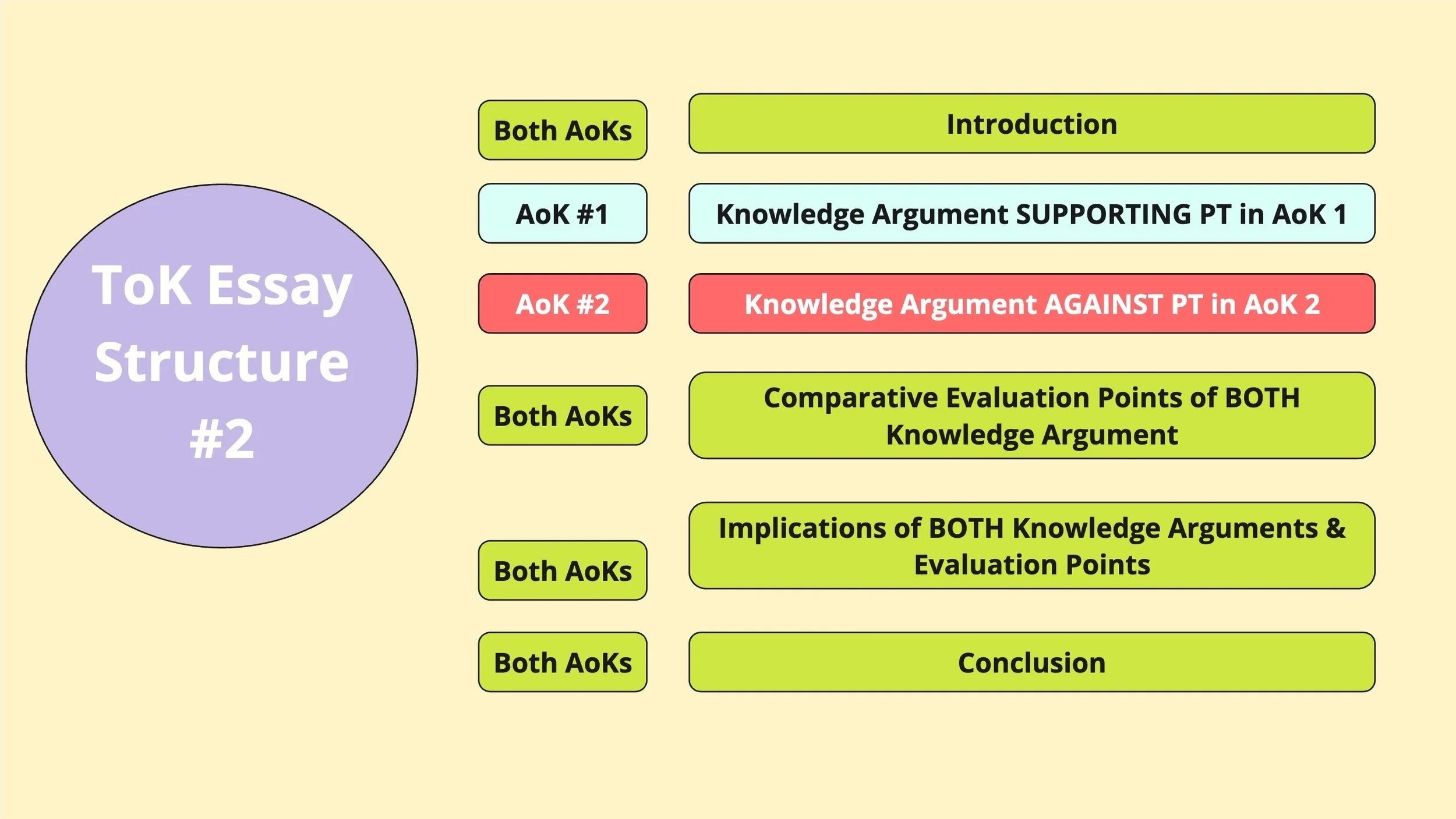
IB TOK Essay Structure Guide
Master the IB TOK Essay structure with our complete guide. Get step-by-step outlines for your introduction, AOK paragraphs (claims/counterclaims), and conclusion to hit top markbands.
Master IB TOK Guide
Master IB Theory of Knowledge (TOK) with our complete guide. Learn about the curriculum, areas of knowledge, and ace your TOK exhibition and essay with structure tips and examples.
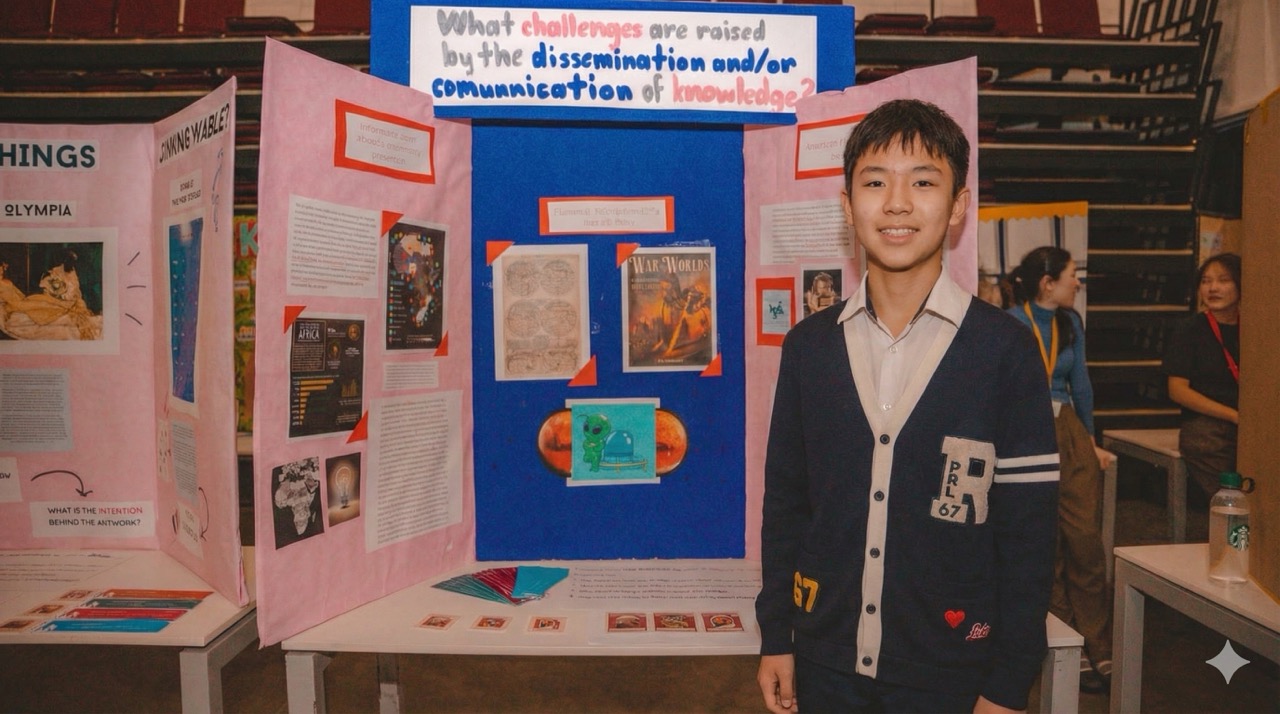
35 TOK Exhibition Object Ideas
Master your TOK Exhibition! Get 35 diverse object ideas (tweet, toy, map projection) and guided questions to effectively link them to your IA prompts and core themes.
TOK Exhibition Guide (DP1)
Master the IB TOK Exhibition (DP1) with this guide. Learn structure, view examples, and get tips on connecting real-world objects to knowledge questions for top marks.
Complete Guide to IB Theory of Knowledge Frameworks
Master IB Theory of Knowledge Frameworks. Learn how to apply the structure of the Areas of Knowledge (AoKs) in your essays and presentations for top results.
20 IB TOK Presentation Ideas with Examples
Struggling with your IB TOK Presentation? Discover 20 successful TOK Presentation Ideas with examples and expert tips to ace your internal assessment.

How to Structure Your IB TOK Essay Step-by-Step
Learn how to structure your IB TOK Essay step-by-step with this expert guide. Understand how examiners think and increase your TOK essay grading score with clear format tips.

Complete Guide to IB TOK Areas of Knowledge
Learn how to master the IB TOK Areas of Knowledge. Expert guide to understanding the AoK framework, features, and key debates for your TOK essay.

Professional Support for the Final Push
GRADUATES
TEACHERS
EXAMINERS
BOOK A FREE CONSULTATION TODAY
Stockholm based, supporting students worldwide. We are IB experts committed to achieving your academic goals.
ABOUT US