-1.png?width=150&height=56&name=logotype_lanterna_education_blue%20(4)-1.png)

The Extended Essay is Changing!
There are some significant changes to the EE syllabus that from this year onwards you have to bear in mind. In this blog, we're going to break down those changes and give you some helpful hints for EE success.
Out with the old, in with the new?
While we began by talking about the changes, it’s important to note that the bare bones of the extended essay are still the same. It is still a 4000 word (max) essay on a topic of your choosing and still counts towards your core points.
But, as we said, there are some key things that are different now about the extended essay. Essentially, if you have your brother/sister/cousin/friend’s EE hanging around from a few years ago, using that as a model might not be the most fruitful thing to do.
So, what’s changed?
The Matrix
This doesn’t directly relate to your extended essay, but as it’s how your final core points are added up, it’s good to remember.
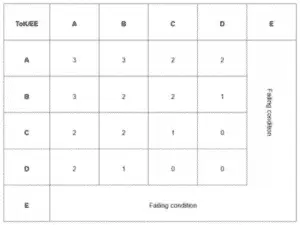
As you can see above, essentially you now need to get at least a D in your EE. An E, no matter what you got in TOK, means you fail. We wouldn’t fret about this though, as long as you put the work in, you’ll be fine!
Abstract and Appendices
There is no longer an abstract – so don’t waste any precious words on writing one! It is much better to lay out your argument clearly in your introduction.
The IB has also stated that it does not want students relying excessively on appendices or footnotes. This means that you shouldn’t in your essay be referring to something not actually in your essay, as an examiner doesn’t have to look it up or check your appendix. Instead, it’s much better to have everything embedded. If you have a diagram, for example, put it in the main body of your essay. This is especially true for any text sources, as the IBO is pretty firm that it doesn’t want you using referencing systems to get around the word count.
Reflections
This is a new addition to the EE. Previously you had meetings with your supervisor, but now it is a more formalised ‘reflection’ process. Essentially, you have 3 main meetings with your supervisor:
- First reflection
- Interim reflection
- Final reflection
As their names suggest, they happen at different stages in the extended essay process: one when you are just getting started, one when you are progressing with your essay, and one when you have finished your EE.
After all your meetings with your supervisor, you then have to formally fill out a ‘reflection’. Your reflection write-up is actually submitted and marked with your EE, and counts towards your final grade, so it’s important to do it well!
One simple way of making sure your reflections are tip-top is to make use of a Researcher’s Reflection Space. This may sound familiar to those of you who have taken the MYP! Essentially it’s a research diary where you write down any thoughts you’ve had on your research, anything useful you’ve read or any conversations you had that have influenced your ideas.
One of the things we like about the new system is that it encourages you to reflect upon your research from the start, making you think of how best to construct your evidence and argument. It also makes the process of writing your extended essay seem a bit more structured. You can set yourself clear targets for each reflection. So while on the surface it may seem extra work, we definitely think it’s worth it!
Marking System
We won’t bore you with all the ins and outs of the marking system. Instead, we definitely recommend looking at your specific subject’s mark scheme. These are invaluable when it comes to writing your extended essay.
However, one of the key changes (and a really good one we think), is that the mark scheme now only has 5 sections as opposed to 11 in previous years. 4 of these refer to your actual essay. We like this change because it means your essay is marked more as a whole. The entire craftsmanship of your EE is therefore considered, not just individual sections of it.
Research Question
Another change to note is that now your title actually needs to be a question. So, it needs to end with a question mark! This is to make sure your work is actually focused on the topic you are writing on, and help you create an argument.
Final Thoughts?
Overall, we think the new EE looks pretty great. There’s a bit more structure, and also a chance to properly reflect on your own work. Definitely check out the IBO’s website for more details.

We’re the Lanterna Team — a group of 600+ IB expert tutors, ranging from 45/45 IB graduates to IB teachers with 30+ years of teaching and examiner experience.
For over 20 years, we’ve supported tens of thousands IB students worldwide with one clear focus: making high achievement feel more doable. Our team of experienced tutors have come together to combine their deep curriculum knowledge with practical strategies that are proven to work.
Whether you’re building strong foundations in DP1, pushing for a final stretch in DP2, or looking for clarity on what to prioritise, we’re here to help you study smarter, stay confident, and get results.

IB Extended Essay (EE) Guide
What is the Extended Essay (EE)? Get a complete overview of this mandatory 4,000-word research paper in the IB Diploma Programme core.

100+ IB Extended Essay Topics with Examples
Struggling with your IB Extended Essay? Get inspired with 100+ Extended Essay Topics and learn the 10 steps for a top EE grade in your diploma.

IB Extended Essay: Complete Guide to EE Success
Unlock A success with this comprehensive IB Extended Essay guide. Learn the 10 steps to writing a high-scoring EE, from research question to final draft.

How to Write an IB Extended Essay Proposal
Learn how to write a strong IB Extended Essay Proposal. Get expert guidance on topic selection, research questions, project timelines, and resources needed.

How to Structure Your IB Extended Essay Outline
Learn how to structure your IB Extended Essay Outline with expert planning techniques. Master your EE with bullet-point, post-it, and spreadsheet methods for success.

Extended Essay Research Question: 5 Essential IB Tips
Learn how to master your IB Extended Essay research question with 5 essential tips from an expert tutor. Perfect your RQ and boost your EE grading potential.

Extended Essay: 8 Steps to Write Your IB EE
Learn how to write your IB Extended Essay (EE) with 8 expert steps, including mastering the PEEL method and using the marking criteria for a top grade.

25 Unique IB Extended Essay Ideas to Spark Your EE
Find your perfect IB Extended Essay idea! Discover 25 unique EE topics across Chemistry, Psychology, English, and Physics to spark your inspiration and conquer choice paralysis.